ESG & Sustainability - Reading time: 11 Min

In today's world, awareness of sustainability is more important than ever. Companies and individuals are increasingly aware of the impact of their actions on the environment and recognize the urgency of taking action to reduce their environmental footprint. A key aspect of these efforts is the carbon footprint, which measures the amount of carbon dioxide emissions caused by certain activities. But what exactly is behind this term, and why is it important for companies and individuals alike? In this blog post, we will get to the bottom of these questions and show how both companies and individuals can reduce their carbon footprint in order to make a positive contribution to environmental protection.
The carbon footprint measures the amount of greenhouse gas emissions (especially CO₂) caused directly and indirectly by the activities of people, companies or products.
The carbon footprint is a key tool for visualizing climate impacts, identifying reduction potential and taking targeted measures for greater climate protection.
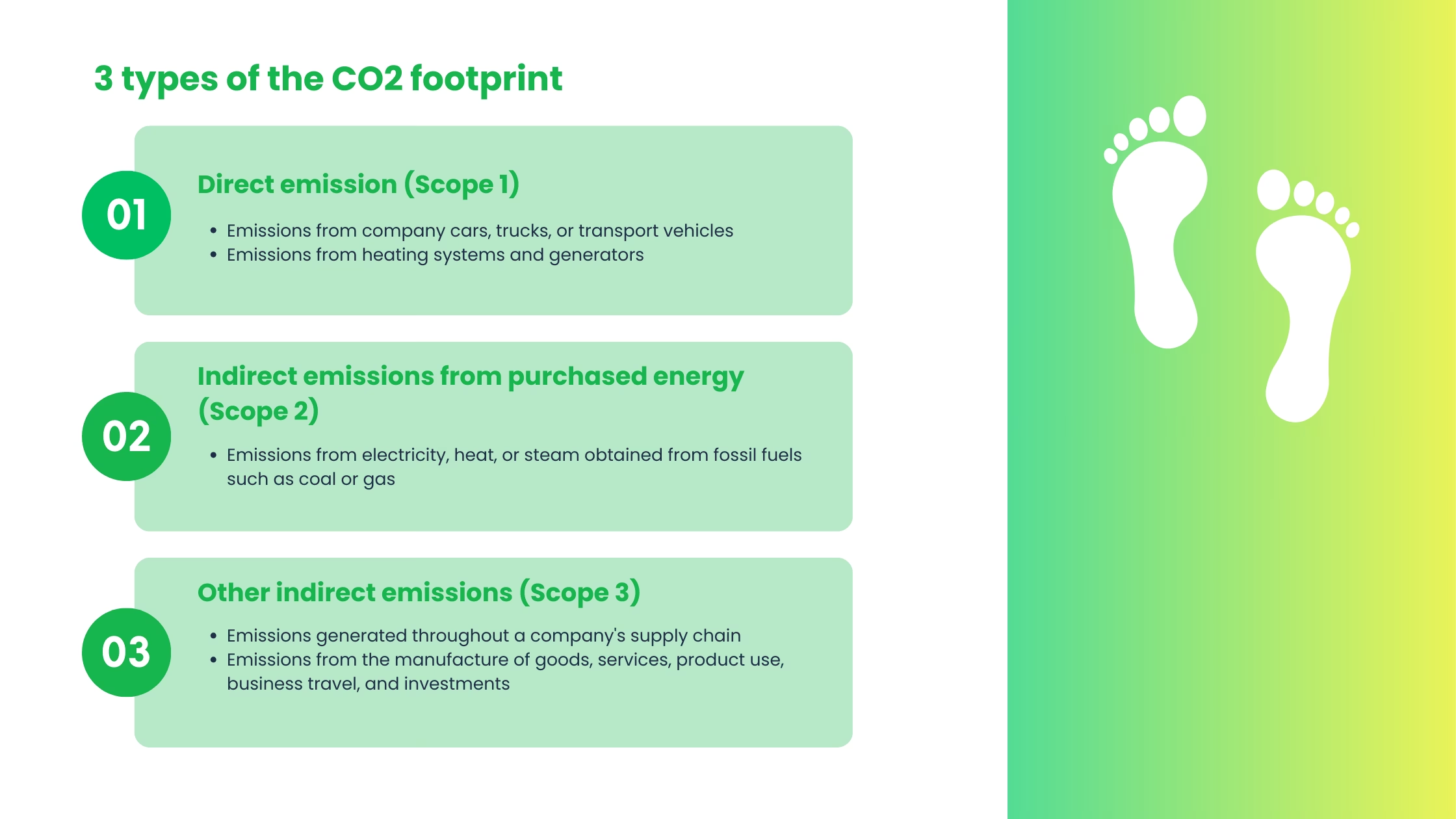
Balancing is usually carried out along the three scopes of the GHG Protocol:
It enables transparency, raises awareness of emission sources, forms the basis for climate strategies and increases credibility with stakeholders.
Effective measures include switching to renewable energies, efficiency measures, the circular economy, sustainable mobility and the reduction of Scope 3 emissions.
A clearly documented carbon footprint improves ESG ratings, facilitates regulatory reporting (e.g. in accordance with CSRD/ESRS) and can lead to cost savings and competitive advantages.
The CO₂ footprint measures the amount of carbon dioxide emissions caused by human activities and shows how much each individual contributes to global warming. Companies classify their emissions into three categories: Scope 1 (direct emissions), Scope 2 (indirect emissions through purchased energy) and Scope 3 (all other indirect emissions along the value chain). To understand and reduce their environmental impact, companies use standards such as ISO 14064 and the Greenhouse Gas Protocol as well as various tools to calculate their carbon footprint. A reduced carbon footprint not only improves a company's environmental footprint, but also offers financial benefits and strengthens its market position. Sustainability reports and transparent communication about the carbon footprint are crucial for building trust and credibility with stakeholders. Companies that actively take measures to reduce their emissions can better adapt to future regulatory changes, save costs and improve their reputation. In today's business world, carbon footprint is a key measure of a company's sustainability and long-term competitiveness.
The carbon footprint measures how much carbon dioxide emissions (CO₂) people cause through their actions. It provides information on how much each individual contributes to the greenhouse effect and global warming. The footprint covers a wide range of sources, including the burning of fossil fuels for energy and transportation, the manufacture and disposal of products, and agricultural emissions.
CO₂ is the best-known but not the only gas that contributes to global warming. In addition to CO₂, other gases such as methane (CH4), which is produced during incomplete combustion, nitrous oxide (N2O), carbon monoxide and gases containing fluorine also play a major role in global warming. However, CO₂ is particularly relevant due to its quantity and lifetime in the atmosphere. The gas is also colorless, odorless and tasteless and is considered a dangerous respiratory poison. The CO₂ footprint is often expressed in tons of CO₂ equivalent (CO₂e) to take into account the effect of all greenhouse gases. The internationally recognized standard, which is promoted by the Kyoto Protocol, summarizes the effects of all gases mentioned.
In Europe, the carbon footprint per person varies greatly between countries. In general, however, it is between around 5 and 15 tons of CO₂ equivalent, or CO2e, per year, depending on the standard of living, energy sources and industrial structure of the country in question.
For companies, the carbon footprint plays a major role in assessing and managing environmental impact. In order to implement effective strategies and reduce emissions, it is important to know and understand the different types of carbon footprint. These can be divided into three categories according to ISO standard 14064 and the guidelines of the Greenhouse Gas Protocol (to the guideline): Scope 1, Scope 2 and Scope 3. Find out more about the scopes in detail here.
Scope 1 emissions are direct emissions from sources owned or controlled by a company. This includes the combustion of fuels in company vehicles or own heating systems. This category includes all direct CO₂ emissions generated by business activities. Scope 1 emissions are often the first starting point for companies to reduce their carbon footprint.
A simple example of Scope 1 emissions are those of a logistics company that has its own fleet of trucks. The trucks transport goods throughout the country and use diesel as fuel. Burning the diesel directly produces CO₂ emissions, which are released into the atmosphere. Scope 1 emissions also include CO₂ emissions from the company's own generator. The generator is used when there are power outages to ensure the power supply. Another example is the emissions generated by the company's heating system. The system keeps the offices and warehouses warm. All of these direct emissions fall under Scope 1, as they are caused directly by the company's activities.
Scope 2 emissions come from the indirect energy that a company uses, such as electricity, heat or steam. These emissions are not generated directly by the company, but are nevertheless the result of business activities. It depends on how the purchased electricity or heat is produced. If a company switches to renewable energies, this can significantly reduce Scope 2 emissions.
An example of Scope 2 emissions is a manufacturing company that obtains the electricity it needs from the general power grid. The electricity required for the production facilities often comes from power plants that run on fossil fuels. The CO₂ emissions that arise from this and that the company uses count as Scope 2 emissions. Another example of this is office buildings that are heated and cooled using electricity from non-renewable sources. The emissions that arise from this also count as Scope 2 emissions. These types of emissions therefore include indirect CO₂ emissions that are attributable to the generation of the energy consumed by the company.
Scope 3 emissions, on the other hand, are somewhat more complex. They include all other indirect emissions that occur along a company's value chain. These include emissions from the production of purchased materials and goods, service processes, the use of products and their disposal, business travel, employee commuting and even emissions caused by the company's investments.
Scope 3 emissions are often the largest amount of CO₂ pollutants caused by a company. At the same time, however, they also offer the greatest opportunity to reduce them. However, they are the most difficult to calculate and control, as they depend on the activities of external partners and supply chains.
Sourcing of materials - A clothing manufacturer buys fabrics that are produced abroad. The CO₂ pollutants generated during the production of the fabrics, including the energy required for production and the transportation of the fabrics to the manufacturer, count as Scope 3 emissions.
Business trips - The employees of a consulting firm often have to fly or travel long distances by car for meetings with clients. The pollutants generated by these trips are included in Scope 3 emissions.
Use and disposal of products - An electronics manufacturer sells its devices worldwide. The emissions generated when the devices consume electricity during their lifetime and the emissions generated when the devices are disposed of at the end of their life are also part of Scope 3 emissions.
Employees' journeys to and from work - These daily journeys release pollutants. Even if a company cannot control this directly, these emissions count as Scope 3 emissions.
Measuring the carbon footprint of products and business activities is an important step for companies that want to understand and reduce their environmental impact. There are various approaches and tools that companies can use. One of the best-known standards for calculating greenhouse gas emissions is ISO 14064 and the Greenhouse Gas Protocol.
ISO 14064 is an international standard that provides guidelines for recording, quantifying and reporting greenhouse gas emissions. It consists of three parts. The first part sets out general principles and requirements for the accounting and reporting of greenhouse gas emissions. Parts two and three contain specific requirements for the quantification and verification of greenhouse gas emissions by organizations and projects.
The Greenhouse Gas Protocol (GHG Protocol) is an important guideline for recording greenhouse gas emissions. It was developed by the World Resources Institute (WRI) and the World Business Council for Sustainable Development (WBCSD). The guidelines provide companies with a method for recording, measuring and reporting their greenhouse gas emissions. Both direct and indirect emissions along the entire value chain are taken into account.
In addition to these international standards, there are also a number of tools and software solutions that can help companies measure their carbon footprint. Among the best known are the Carbon Footprint Calculator, Carbon Management Software and Life Cycle Assessment (LCA) tools. These tools offer companies the opportunity to calculate and analyze their carbon footprint based on various data sources and calculation methods.
Another way to measure the carbon footprint is through industry-specific comparative values and key figures. This allows companies to compare and evaluate their environmental performance with other companies in the same sector. This helps them to recognize good examples. In this way, they can improve their environmental performance by taking inspiration from leading companies.
Measuring the carbon footprint is an important step for companies on the way to a sustainable future. By using international standards, tools and benchmarks, companies can better understand their impact on the environment and implement targeted measures.
The Öko-Institut plays an important role in measuring and evaluating the carbon footprint of companies, products and services. It is an independent German research and consulting organization that specializes in environmental issues. The institute offers scientifically sound analyses to measure and reduce emissions. Some of the Öko-Institut's main tasks in this area are:
The Öko-Institut is strongly committed to developing practicable solutions for reducing CO₂ emissions and is a respected player in the field of climate protection measures in Germany and internationally. Its expertise in measuring and analyzing the carbon footprint contributes significantly to the development of strategies to combat climate change.
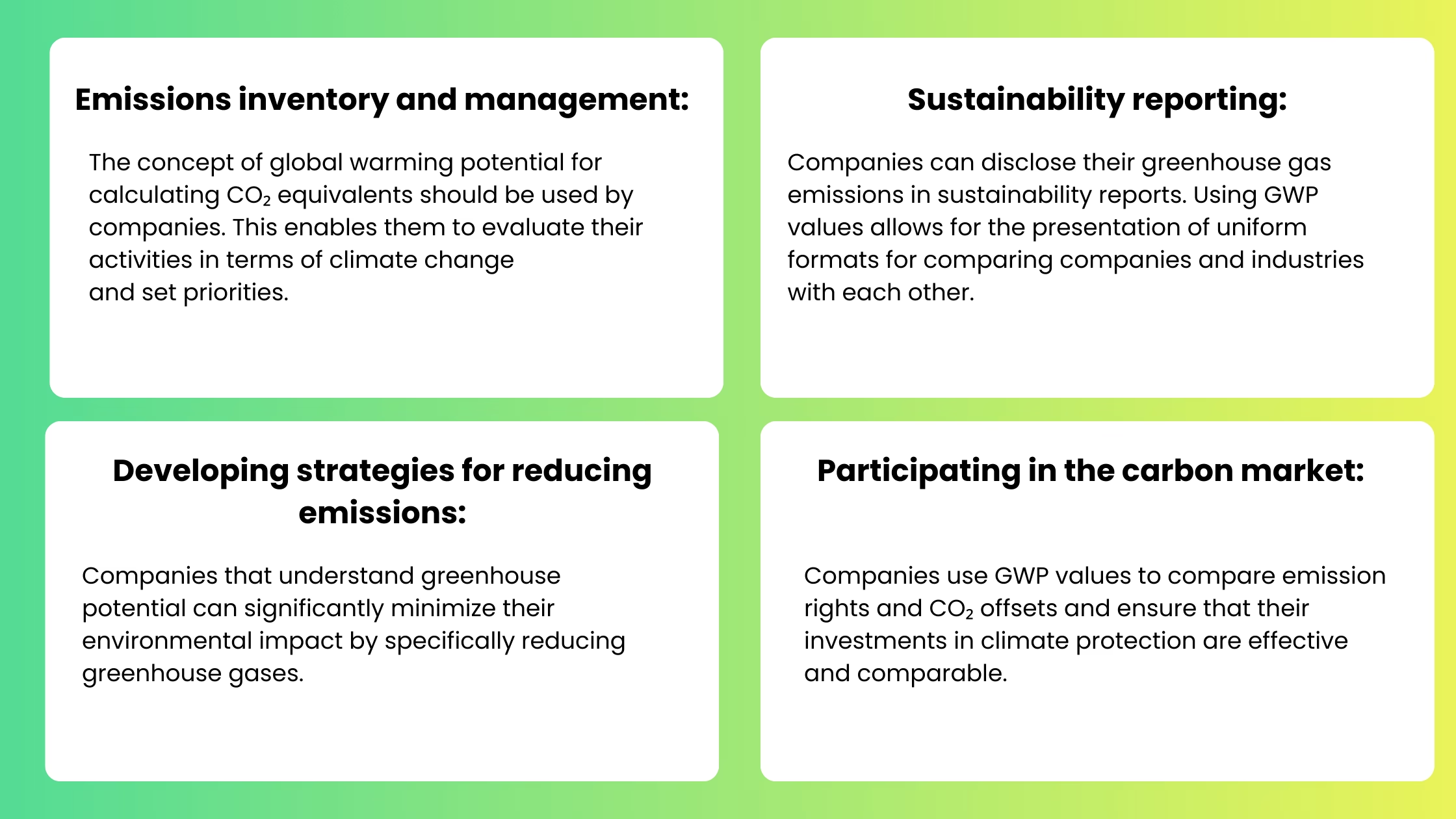
Global Warming Potential, or GWP for short (to the European Commission website), is a measure of how much a particular greenhouse gas (GHG) contributes to global warming compared to carbon dioxide (CO₂). The GWP is important for companies because it helps them to assess and compare the different effects of their emissions on climate change.
Understanding and considering global warming potential is an essential step in developing environmental impact reduction strategies and sustainability reporting. Only then can companies develop and implement meaningful strategies to reduce their environmental impact.
Companies should not only reduce CO₂ emissions, but also other greenhouse gases such as methane, nitrous oxide and more powerful gases. Carbon monoxide, for example, is also more dangerous than CO₂, especially when it comes to carbon monoxide poisoning. For example, methane has a 28-36 times greater effect on global warming over 100 years than CO₂. This means that methane in the atmosphere contributes significantly more to global warming than an equivalent amount of CO₂.
In order to emit less CO₂, companies must first find out how much CO₂ they release in different areas. Only then does it make sense to develop strategies that target the specific sources of their emissions. For example, they can improve their operating processes, become more energy efficient, use renewable energy or choose environmentally friendly means of transportation. They could also work with more sustainable suppliers or try to reduce their emissions along the entire supply chain.
To ensure that your CO₂ reduction measures do not remain isolated, but are strategically controlled and comprehensible, you should place the topic in an overarching framework. This is exactly where ESG (Environmental, Social, Governance) comes in: ESG combines climate and emissions targets with clear responsibilities, key figures, data processes and - where relevant - sustainability reporting. Read here to find out how to integrate CO₂ management (including inventory, target setting and measures along the supply chain) into an ESG strategy in a meaningful way.
If companies focus on their emissions and look for different ways to reduce them, they can contribute to climate protection on the one hand and increase their efficiency and save costs on the other.
A company's carbon footprint refers to all carbon dioxide emissions caused directly or indirectly by its activities. This measure of a company's environmental impact is very important for several reasons:
Environmental responsibility and climate protection
Climate change is one of the greatest challenges of our time. Companies play an important role in reducing greenhouse gas emissions. Simply by assessing and reducing their carbon footprint, they contribute to climate protection and act responsibly towards the environment. This is not only a moral obligation, but also meets the growing expectations of consumers, investors and society as a whole.
Regulatory requirements and compliance
There are more and more laws to reduce emissions. Companies need to know their carbon footprint and take action to reduce it. At the same time, they must comply with legal requirements and try to avoid penalties. Laws and regulations often also require companies to report their emissions and set reduction targets. Are you already familiar with the Carbon Border Adjustment Mechanism (CBAM)? It is an instrument of the European Union and aims to adjust imports from countries with lower climate protection standards to the European CO₂ price.
Financial savings and increased efficiency
Calculating and reducing CO₂ emissions is important in order to manage risks. Even simple improvements in efficiency, switching to renewable energies or optimizing logistics processes can significantly reduce operating costs. In the long term, these steps can save costs, for example by reducing dependence on fossil fuels and protecting companies against price fluctuations.
Reputation and market positioning
A low carbon footprint improves a company's image and can serve as a competitive advantage. Customers who care about the environment prefer products and services from companies that are also committed to protecting the climate. This can lead to customers remaining loyal and the company becoming successful in new markets. In addition, more and more investors and business partners are choosing companies that can prove that they are environmentally friendly.
Risk management and future viability
Reviewing and reducing CO₂ emissions is an important part of risk control. Companies that tackle this at an early stage are better prepared for future legal changes. They can also reduce risks associated with climate change, such as extreme weather events or resource scarcity. It is important that a company prepares for a future in which less CO₂ is emitted in order to continue to be successful.
A smaller carbon footprint not only brings environmental benefits for companies, but can also save money, avoid problems and improve their image. To reap the benefits, companies must first calculate their carbon footprint and then find strategies to reduce it.
By combining these approaches, companies can significantly reduce their carbon footprint and at the same time contribute to the global effort to combat climate change. It is important to constantly recalculate and reduce the individual carbon footprint. You should regularly review and make adjustments to keep up with new technologies, changes in the market and new regulations.
Clear and open communication about the carbon footprint is crucial for companies to demonstrate their commitment to sustainability and build trust with their stakeholders. This section looks at the importance of this practice and the ways in which sustainability reporting can be incorporated into corporate reports.
It is important to be open about and report on your carbon footprint as this is an important part of a comprehensive sustainability strategy for companies. When companies demonstrate their environmental performance, they can build trust, improve their reputation and build good relationships with their stakeholders.
Collecting and analyzing data to calculate the carbon footprint can be difficult because companies need to access many different data sources. It is also a challenge to find and measure the various sources of emissions. Implementing measures to reduce CO₂ often requires large investments, which can pose financial challenges, especially for smaller companies.
Obtaining data to calculate the carbon footprint can be complex and time-consuming. Companies often rely on many internal and external data sources to achieve accurate and meaningful results. This is difficult because the data is often not standardized or captured in a centralized system. Gathering accurate information on energy consumption, transportation activities and supplier emissions can therefore be complicated. This data may be held in different departments or in different formats.
There are many different types of emissions that can affect a company. These include direct and indirect emissions, such as the use of fossil fuels for heating and transportation or in the production of goods and services. Identifying and measuring these emissions can often be quite complicated. Sometimes they extend across different sites, departments or supply chains. For example, retail companies need to account for emissions from their own stores, their suppliers' factories and the transportation of products to customers.
In order to implement measures to reduce emissions, investments in new technologies, infrastructure or training for employees are often required. For many companies, this can be a financial challenge, especially for smaller companies with limited resources. In particular, expenditure on more energy-efficient equipment, renewable energy or more sustainable means of transportation can initially result in high initial costs. They may not be immediately offset by cost savings or other benefits.
Companies are under pressure to minimize their environmental impact in order to meet legal requirements and reduce the risk of reputational damage or legal consequences. Inadequate management of emissions can lead to financial and operational risks in the long term. Companies that do not closely monitor or reduce their emissions could face increased operating costs. They may have to pay fines for non-compliance with environmental regulations. Or they may face higher energy costs. In addition, they could lose the trust of their customers, investors and employees, which could have a negative impact on their reputation and long-term success.
But alongside these challenges, there are also opportunities: companies can gain a competitive advantage, save costs and tap into new markets through innovation and differentiation. They can also strengthen trust and loyalty with customers, investors and other stakeholders through transparent carbon footprint management.
Companies that actively reduce their carbon footprint can gain a competitive advantage by emphasizing their commitment to sustainability and environmental protection. This strengthens their brand reputation, opens up new business opportunities and attracts new customers.
If companies consistently reduce their emissions, they can not only contribute to climate protection, but also save money and become more profitable in the long term. They often achieve this by implementing energy-efficient measures and introducing sustainable technologies.
To reduce their carbon footprint, companies often need new ideas and technologies. Companies that are leaders in the development and implementation of environmentally friendly solutions can set themselves apart from others and reach new markets.
Transparent and proactive management of emissions can strengthen the trust and loyalty of customers, investors, employees and other stakeholders. By communicating their sustainability efforts, companies can build positive relationships with their stakeholders and maintain long-term partnerships.
You can find out exactly how to do this in our detailed guide "How to: Create a sustainability report".

A company's carbon footprint shows the extent of its impact on the environment and is important for environmentally friendly corporate management. This key figure is more than just a number. It shows how efficiently a company operates, which materials and energy sources it chooses and how seriously it takes sustainability. Nowadays, customers, investors and authorities are paying more attention than ever to environmental protection. The carbon footprint is therefore an important measure to assess how well a company is doing.
If companies actively reduce their CO₂ emissions, they can become leaders in environmental protection and thus have an advantage over the competition (product carbon footprint). This includes switching to renewable energies, using materials more sparingly, promoting the reuse of raw materials and finding ways to produce fewer emissions. In addition to lower costs and reduced energy consumption, these measures strengthen the company's image and promote customer loyalty.
Risk management is also an important aspect. Companies that pay close attention to their CO₂ emissions and reduce them are better prepared for future environmental regulations and higher costs for CO₂ emissions. They are also better able to cope with problems caused by climate change, such as supply chain difficulties due to extreme weather. If a company takes its carbon footprint into account in its planning, it can react more quickly to new laws and trends in the market.
Finally, social responsibility plays a central role. Companies that emit less CO₂ are committed to climate protection. In doing so, they also support the goals of the Paris Agreement, which in turn proves that they care about society. This also improves their relationship with stakeholders and ensures a better future for generations to come.
Overall, a company's carbon footprint is a key aspect of the modern business world that has a far-reaching impact on the environment, society and the economy. Companies that take this aspect seriously and invest in strategies to reduce their carbon footprint are positioning themselves as leaders in sustainability, improving their financial performance and actively contributing to a more sustainable and fairer world.
The carbon footprint (also known as the carbon footprint) measures the total amount of carbon dioxide emissions caused directly and indirectly by human activities. It indicates how much CO₂ a person, company or product releases over a certain period of time. This helps to measure the individual or collective contribution to climate change and identify areas where emissions can be reduced.
The carbon footprint defines the total of all greenhouse gas emissions caused directly and indirectly by a person, a company, a product or an activity - usually expressed in CO₂ equivalents (CO₂e).
Understanding the carbon footprint is crucial to recognizing the individual or corporate contribution to climate change. By identifying the sources of emissions, measures can be taken to reduce them. This not only helps to achieve global climate targets, but also increases resource efficiency and saves costs in the long term. A conscious approach to the carbon footprint makes it possible to promote sustainable technologies and ensure compliance with legal requirements as part of climate protection strategies.
Companies classify their greenhouse gas emissions into three categories in accordance with the Greenhouse Gas Protocol (GHG Protocol):
This subdivision helps companies to systematically identify the sources of emissions and develop targeted measures to reduce them.
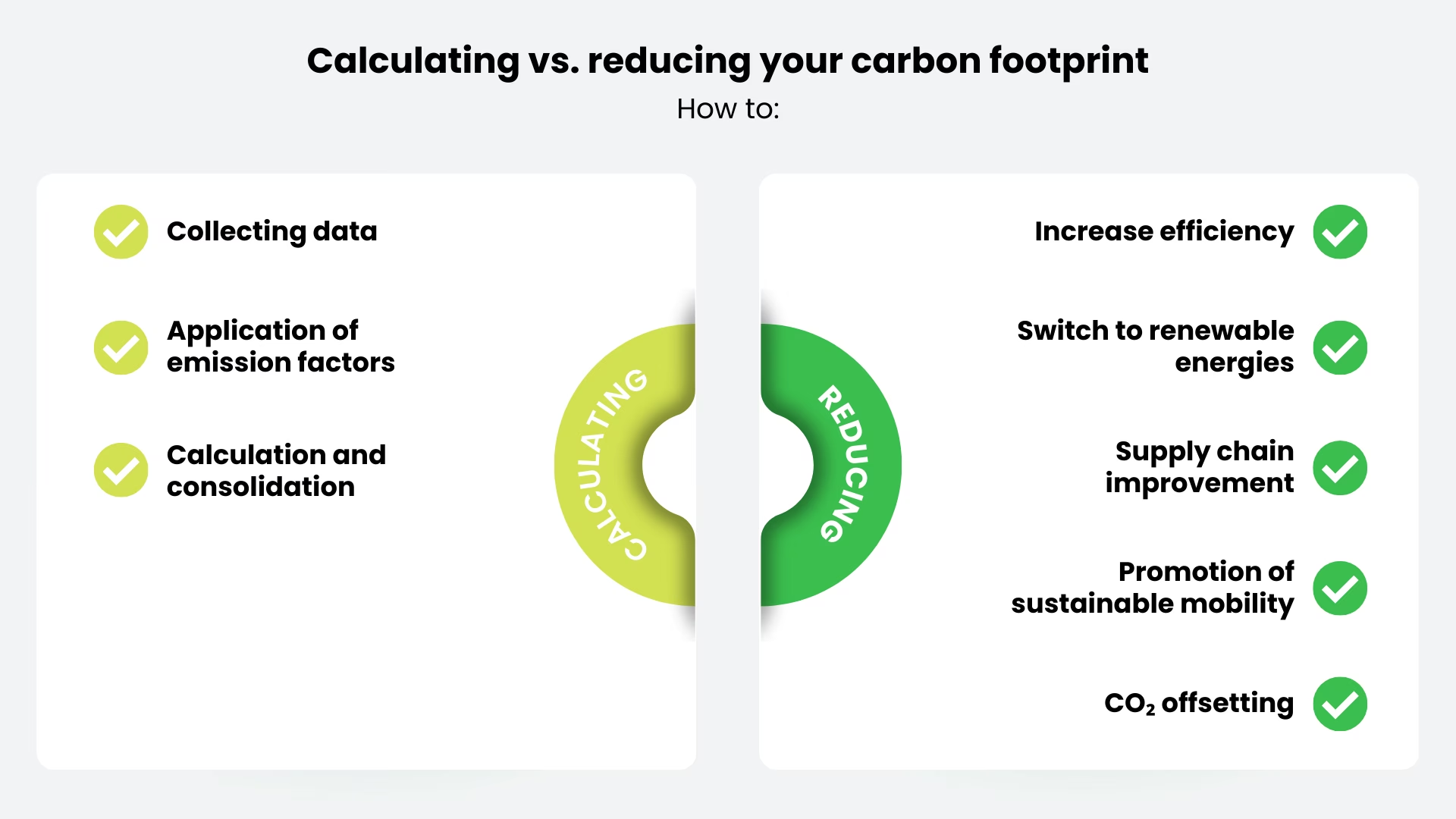
A company's footprint is calculated in several steps. First, all relevant consumption data is recorded, such as energy and fuel consumption and business travel. This data is then multiplied by corresponding emission factors, which indicate how much CO₂ is released. The sum of these calculated emissions gives the company's total carbon footprint. This makes it possible to identify sources of emissions and develop targeted measures to reduce them.
In order to calculate a company's carbon footprint, detailed consumption data is required. This includes energy consumption, such as electricity, gas and heating oil quantities, fuel consumption of company-owned vehicles, kilometers traveled and means of transport used for business trips, the use of raw materials and materials as well as the type and quantity of waste produced and its disposal. This data makes it possible to measure the company's direct and indirect emissions and develop targeted measures to reduce them.
The global warming potential (GWP) is a figure that indicates how much a greenhouse gas contributes to global warming compared to carbon dioxide (CO₂). CO₂ serves as a reference with a GWP of 1. Gases such as methane (CH₄) or nitrous oxide (N₂O) have higher GWP values, which means that they have a greater warming effect per kilogram than CO₂. The GWP is calculated over certain periods of time, often 100 years, and helps to compare the climate impact of different gases and convert them into CO₂ equivalents.
There are several recognized standards and protocols for corporate carbon accounting that enable greenhouse gas emissions to be recorded consistently and transparently:
The application of these standards helps companies to systematically record and evaluate their emissions and develop measures to reduce them.
Reducing emissions is particularly important in the fight against climate change. Both individuals and companies can reduce their carbon footprint through a number of measures:
Unavoidable emissions can also be offset by investing in climate protection projects.
The supply chain plays a crucial role, as a significant proportion of total emissions - often over 70% - come from upstream and downstream processes. These indirect emissions include activities such as raw material extraction, production, transportation and distribution. Decarbonizing the supply chain is therefore a key lever for reducing the footprint. Companies can reduce their emissions along the entire value chain through measures such as local sourcing, optimizing transport routes and working with suppliers to implement energy-efficient processes.
The calculation is associated with several challenges. A key difficulty is the availability and quality of data, particularly for indirect emissions along the value chain (Scope 3), as detailed information from suppliers is often lacking. In addition, the complexity of the emission sources requires precise delimitation and categorization in order to avoid overlaps or omissions. The selection of suitable emission factors and the application of internationally recognized standards such as the Greenhouse Gas Protocol or ISO 14064 are essential to ensure comparability and consistency. Finally, resource constraints in terms of time, personnel and financial resources can make it difficult to carry out a comprehensive carbon footprint assessment.
Reducing the footprint offers companies a number of advantages. By reducing emissions, operating costs can be lowered, for example through energy savings and more efficient use of resources. In addition, environmentally conscious action strengthens the company's image, which can lead to greater customer loyalty and the acquisition of new customers. In times of increasing legal requirements in the area of climate protection, a reduced carbon footprint helps to ensure compliance and avoid potential fines. In addition, a focus on sustainability can increase employee motivation and loyalty, as more and more skilled workers attach importance to environmentally friendly employers. Ultimately, reducing emissions helps to future-proof the company by mitigating risks associated with climate change and strengthening competitiveness in an increasingly sustainability-oriented market environment.
Involving employees in reducing a company's carbon footprint is crucial to the success of climate protection measures. Raising awareness and training can inspire employees to adopt environmentally friendly practices. The organization of workshops and regular communication about sustainability goals promote awareness and willingness to participate. In addition, ideas competitions can create incentives to attract innovative approaches to energy and material efficiency from the workforce. The formation of sustainability teams enables committed employees to actively participate in the implementation of environmentally friendly measures and thus reduce their individual carbon footprint. Finally, promoting environmentally friendly commuting, for example by supporting car pools or providing bicycle parking spaces, helps to reduce the emissions caused by commuting.

 DE
DE