CSRD - Reading time: 10 Min

The introduction of the European Sustainability Reporting Standards (ESRS) not only increases transparency for investors, stakeholders and the public, but also promotes more sustainable corporate governance and strategy. By specifying criteria and indicators for reporting, the ESRS enable a more efficient assessment and better comparability of companies' ESG performance. The ESRS also support the EU in achieving the goals of the Green Deal and the 2030 Agenda for Sustainable Development. Companies that commit to the ESRS can also better identify potential risks and opportunities related to sustainability and improve their market position and competitiveness in the long term. Since the 2024 reporting year, the sector-independent ESRS (Set 1) have been the binding basis for the first wave of CSRD reporting.
The ESRS (European Sustainability Reporting Standards) are binding European reporting standards for sustainability reporting that were introduced as part of the CSRD (Corporate Sustainability Reporting Directive).
All large companies with more than 250 employees, € 40 million in sales or € 20 million in total assets and capital market-oriented SMEs - in stages from 2024/2025.
The standards are intended to ensure uniform, comparable and transparent sustainability reports within the EU - particularly on environmental, social and governance (ESG) issues.
There are sector-independent and, in future, sector-specific standards. The most important modules relate to the environment (E), social affairs (S), governance (G) and cross-cutting issues such as strategy, risk management and dual materiality.
Companies must provide qualitative and quantitative information on topics such as climate risks, emissions, supply chains, diversity, working conditions and corporate governance.
The reporting obligation requires a detailed database, standardized processes and integration into existing corporate reports - especially for companies with no previous ESG experience.
They create trust among investors, promote transparency in the supply chain, improve risk management and facilitate access to sustainable financing.
The ESRS are now the binding basis for CSRD reporting (ESRS Set 1 applies to financial years from 2024). In addition, certain disclosure requirements and transitional provisions were adjusted via a "quick fix" in order to ease the burden of first-time application. Sector-specific ESRS and standards for certain non-EU companies have been postponed across the EU until 2026. In parallel, EFRAG is working on a simplification/revision of ESRS Set 1 on behalf of the EU - corresponding technical recommendations were presented at the end of 2025.
The European Sustainability Reporting Standards (ESRS) are part of the EU strategy for sustainable finance and are intended to help companies report on their sustainability performance in a standardized manner.
The sector-independent ESRS (Set 1) currently apply first; sector-specific standards and standards for certain non-EU companies have been postponed across the EU until 2026. Targeted transitional and simplification rules have also been adopted for companies that already had to comply with CSRD for the 2024 reporting year. In parallel, EFRAG is working on proposals for simplified ESRS in order to reduce the implementation effort.
The ESRS include detailed reporting requirements onimpacts, risks and opportunities, requiring companies to report comprehensively on their sustainability performance and the associated challenges. The ESRS are deeply rooted in the vision of the European Green Deal, which aims to achieve a climate-neutral EU by 2050. This includes the Sustainable Finance Disclosure Regulation (SFDR), which provides investors with clear information on the sustainability of financial products. Developed by the European Financial Reporting Advisory Group (EFRAG), the ESRS are intended to create a standardized format to measure and compare the sustainability of companies.
The ESRS consist of sector-independent standards (Set 1, currently mandatory) and sector-specific standards, the introduction of which has been postponed across the EU until 2026. The ESRS include general and specific standards for various sectors and address issues such as climate protection, environmental pollution, water resources, biodiversity, working conditions and corporate governance. The introduction of the ESRS brings benefits such as improved transparency and access to sustainable financing, but also poses challenges such as high implementation costs.
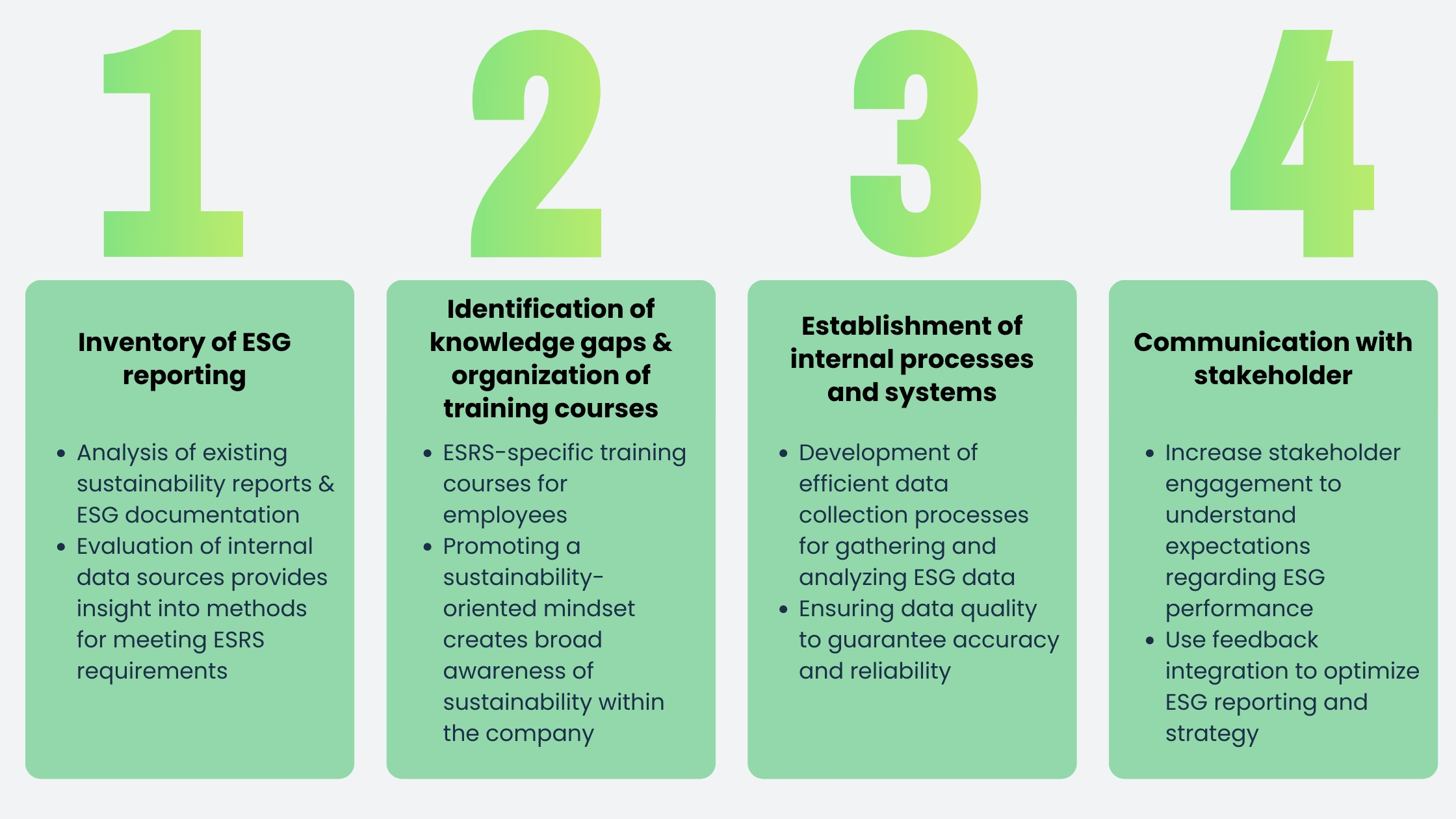
To implement the new standards, companies should analyze their current ESG reports, close knowledge gaps, optimize internal processes and communicate with stakeholders. The ESRS promote more sustainable corporate governance and could contribute to a more environmentally friendly and socially just economy in the EU in the long term, which can serve as a model for global standards.
The ESRS (European Sustainability Reporting Standards) are the binding European reporting standards according to which companies subject to CSRD must structure their sustainability disclosures. The initial basis is ESRS Set 1 (sector-independent), which applies to financial years from 2024. The ESRS standards mean as much as the sustainability disclosures that should be included in the reports. The aim is to create reporting that is comparable, auditable and digitally usable and therefore works much better in practice for the capital market, customers, banks and value chains.
The Corporate Sustainability Reporting Directive, or CSRD for short, is a legal framework that requires companies to produce detailed and reliable reports on their sustainability performance. This link with the European Sustainability Reporting Standards (ESRS) emphasizes the importance of the ESRS for companies. The CSRD requires companies to transparently disclose their environmental, social and governance performance. In doing so, it strategically positions companies in a market that is increasingly environmentally aware. The ESRS and CSRD are part of a comprehensive plan that aims to promote and standardize sustainable practices across the EU economy. This encourages companies to rethink and adapt their sustainability strategies to meet the new requirements.
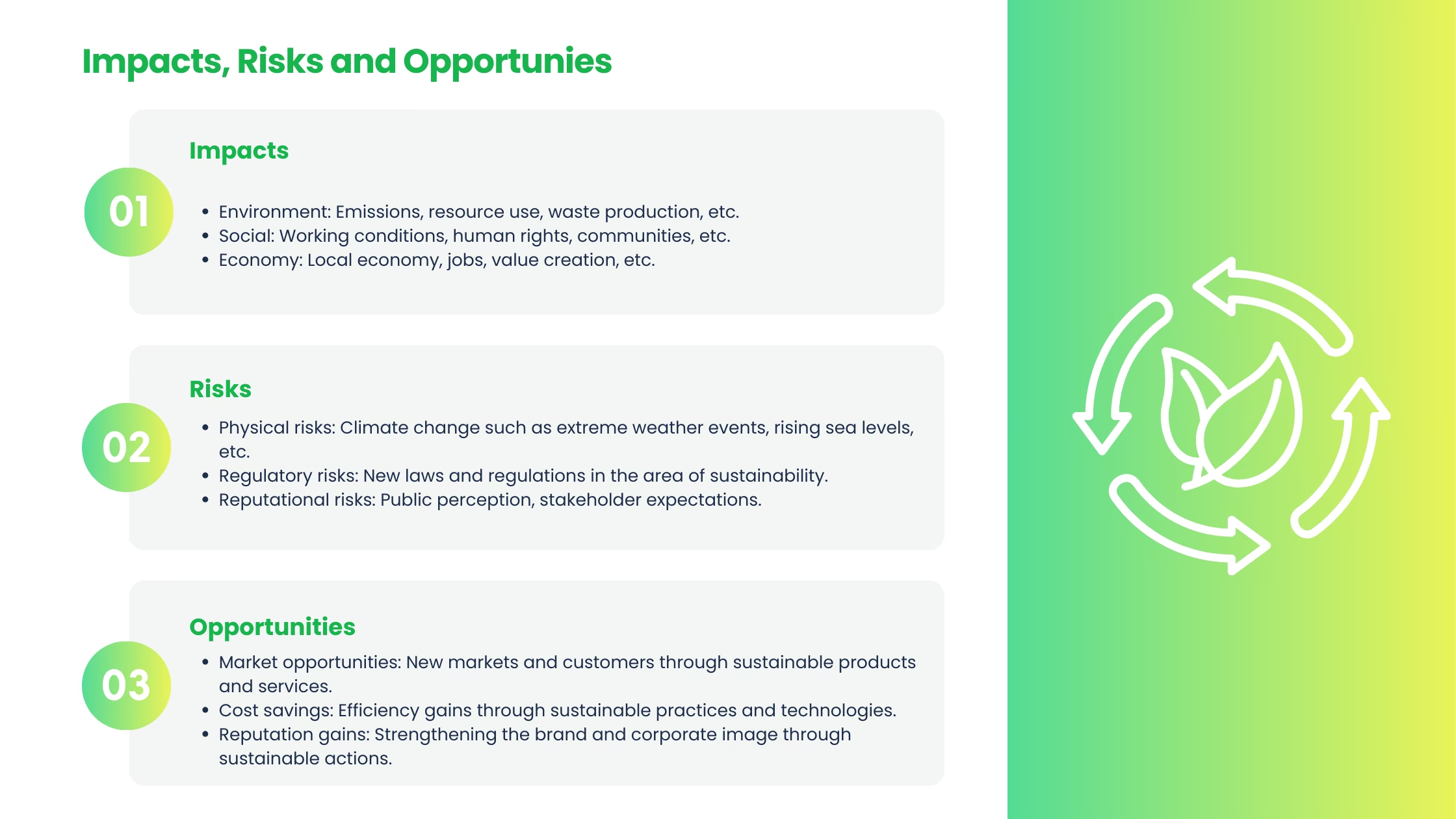
As the ESRS are part of the EU's Corporate Sustainability Reporting Directive, they set out detailed requirements for companies' sustainability reporting. The terms "impacts", "risks" and "opportunities" play a central role in the context of the ESRS. Here is a brief explanation of what they are all about:
"Impacts" refers to the effects that a company has on the environment, society and the economy. This includes both positive and negative effects. As part of the ESRS, companies must explain how their business activities and practices influence the following aspects:
"Risks" refers to the risks that may arise for the company itself as a result of sustainability aspects. These include
"Opportunities" refers to the chances that can arise from sustainable business activities. These opportunities may include
Companies must report comprehensively on these three aspects as part of the ESRS. This includes:
By considering "impacts", "risks" and "opportunities", companies should provide a comprehensive picture of their sustainability performance and the associated challenges and opportunities. This not only helps to meet legal requirements, but can also contribute to strengthening stakeholder confidence and long-term success.
The development of the European Sustainability Reporting Standards is deeply rooted in the vision of the European Green Deal to establish a pioneering role for the EU on the path to a sustainable, inclusive economy that is climate-neutral by 2050. This goal requires major changes in all sectors of the economy. Clear and reliable reporting on sustainability is considered very important in this context.
In this context, the Sustainable Finance Disclosure Regulation, or SFDR for short, provides a legal framework that offers investors clear information on the sustainability risks and opportunities of financial products. The disclosure requirements can be used to channel the flow of capital into more sustainable economic activities. The SFDR shows how environmental, social and governance (ESG) are taken into account in investment decisions and advice. It is therefore important to have standardized, comparable and reliable ESG data.
As a result, it has become clear how important it is to have uniform and comprehensive reporting on environmental, social and corporate governance. This enables various groups, such as investors, customers and politicians, to receive reliable information. To meet this need, the European Financial Reporting Advisory Group (EFRAG) is developing European standards for sustainability reporting. This initiative aims to create a uniform format for measuring, comparing and evaluating the sustainability of EU companies. In November 2022, EFRAG published the first set of ESRS.
The ESRS consider sustainability in all areas - environment, society and corporate governance. They want to improve reporting on these topics so that it is more than just a duty. The aim is to make companies more valuable and strengthen the trust of their stakeholders.
Setting binding sustainability reporting standards for large companies in the EU is an important step forward for Europe's sustainability goals. The ESRS standards provide a clear framework for sustainability reporting. They respond to the desire for greater transparency and at the same time help to accelerate the transition to a more sustainable economy. The European Commission voted on the ESRS on July 31, 2023.
The first mandatory version (ESRS Set 1) was issued by the European Commission as Delegated Regulation (EU) 2023/2772 and applies to financial years from 2024. Targeted quick-fix amendments followed in July 2025 to ease the initial application for companies in the first wave and create more certainty for implementation.
The EU has adopted specific transitional and simplification rules ("quick fix") to enable companies in the first CSRD wave to prepare their reports in a more practicable manner. This mainly concerns selected disclosure requirements and their application dates. The aim is to reduce complexity in the first reporting year without changing the core of the ESRS.
The European Sustainability Reporting Standards (ESRS) are an important step forward in environmental, social and governance reporting. They provide companies with a detailed system to make their sustainability practices clearer and more accountable. The key features of the ESRS aim to set a common standard that thoroughly addresses the diverse and complex challenges of sustainability.
The ESRS can be implemented automatically with our CSRD module, from the materiality analysis to the finished report.
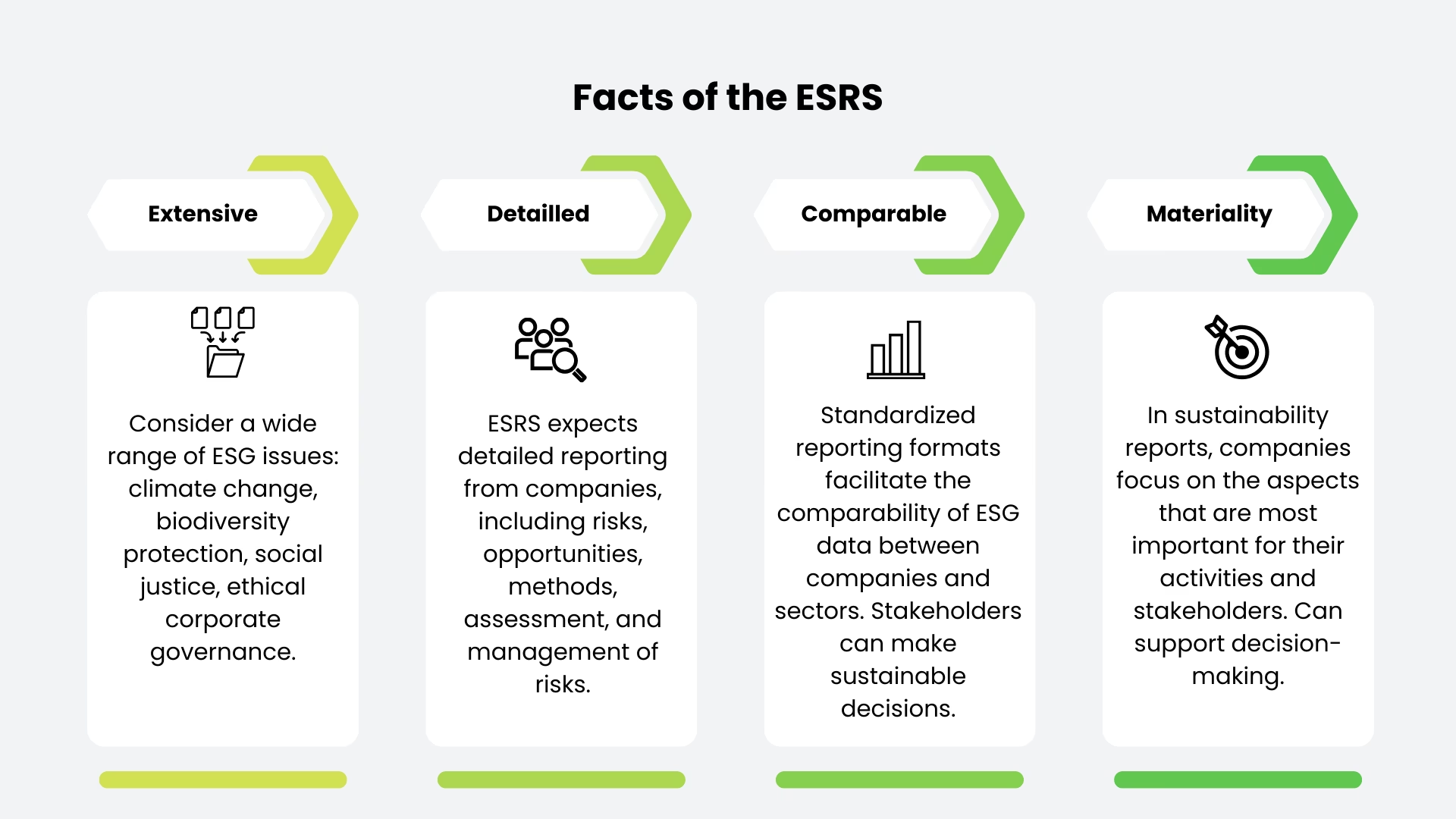
Extensive
The ESRS cover more than usual reports and deal with many important topics for sustainable development. These include areas such as climate change, biodiversity conservation, social justice and ethical business management. By covering a range of topics, the standards ensure that companies present a comprehensive picture of their sustainability and its impact. This makes environmental, social and governance reporting more relevant and effective.
Detailed
Another feature of the EU directives on sustainability reporting is the level of detail required of companies. In addition to ESG measures, companies must also disclose risks and opportunities. This includes methods to identify, assess and manage these risks. More detailed information should help all stakeholders to better understand a company's ESG performance and make informed decisions.
Comparable
By introducing standardized reporting formats and metrics, the ESRS facilitate the direct comparison of ESG data between companies and sectors. This comparability is very important for investors and other stakeholders who want to make sustainable decisions. The ability to compare the sustainability performance of different companies helps to raise awareness of good practice and encourage competition for sustainability.
Focused on materiality
A central principle of the European sustainability reporting standards is the emphasis on materiality, also known as materiality assessment. Companies are encouraged to focus on the sustainability aspects that are most relevant to their specific business activities and stakeholders. This includes the consideration of double materiality, where both environmental impacts and social aspects are relevant. This means that reporting must be tailored and clearly focused to show the particular challenges and opportunities a company sees in its sustainability efforts. It is important that the reports are not only comprehensive and detailed, but also relevant and targeted to help with decision-making.
The introduction of the European Sustainability Reporting Standards (to the standards) was initiated by the European Financial Reporting Advisory Group (EFRAG) on behalf of the European Commission. It marks an important milestone in the evolution of sustainability reporting within the European Union.
The new standards are divided into two sets, data points: One for all sectors (Set 1) and one that will be defined later for specific sectors (Set 2). They are intended to enable reporting that addresses the specific needs of different sectors while at the same time respecting the EU's environmental and social objectives.
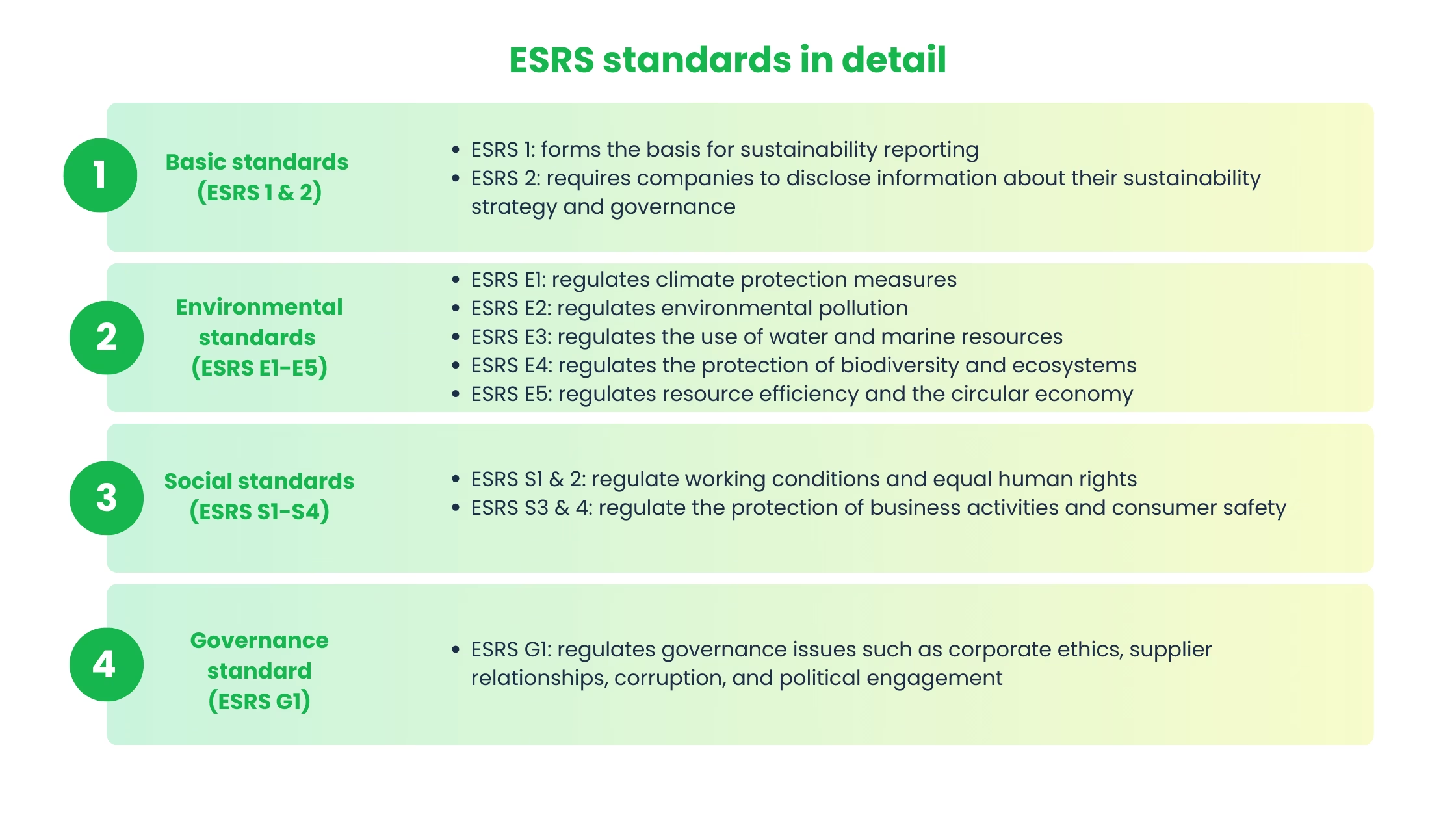
These standards address specific environmental issues that are crucial to achieving the EU's environmental goals:
These standards cover a broad spectrum of social responsibility areas:
The ESRS standards provide a clear framework for companies to openly and consistently demonstrate and improve their sustainability. This helps to increase awareness and responsibility for environmental and social issues.
The new European standards for sustainability reporting are an important step for companies. They bring both advantages and challenges. This detailed examination of the advantages and disadvantages shows what companies need to pay attention to when reporting.
Improved transparency and credibility with investors and customers:
When companies report in accordance with European standards, they show that sustainability is important to them. This makes them more trustworthy and improves their reputation with current and future investors and customers. This openness can attract more customers and interest investors who value sustainability.
Easier identification & management of ESG risks and opportunities:
The detailed reporting requirements of the ESRS enable companies to analyze their ESG risks and opportunities in greater depth. As a result, companies understand their sustainability better. They can then act more quickly to reduce risks and take advantage of opportunities. This approach can make the company stronger and more competitive.
Strengthening sustainable financing options:
If companies comply with European sustainability reporting standards, their access to environmentally friendly financing improves. Many investors and banks want to see clear evidence that a company is acting sustainably. This can lead to better credit conditions and help companies to finance their environmental goals.
High implementation and reporting costs:
Adapting to the detailed reporting requirements of the new European standards can be expensive. A lot may need to be invested in new systems, processes and training. This could be particularly difficult for smaller companies because they often do not have as many resources as large companies.
Complexity of requirements can be a challenge:
The complexity and scope of reporting can be difficult for companies of all sizes. It is necessary to address many different ESG (environmental, social, governance) issues and provide accurate information. This requires good planning and perhaps new systems for managing and analyzing data.
The new European sustainability standards bring challenges for companies, such as high start-up costs and difficult implementation. But they also provide an opportunity to become more open and trustworthy when it comes to sustainability. By teaching companies to better manage environmental, social and corporate risks and to utilize new sources of financing, these standards can help them to be more stable and successful in the long run.
It is a good idea to see the application of the new European sustainability reporting standards as an investment in the future. They not only help you to comply with the law, but also promote sustainability and the value of your company.
To prepare for the new European sustainability reporting standards, companies should plan well and strategically. Careful planning will help to follow the new rules and use them as an opportunity to improve sustainability and report on it more openly. Here are some useful steps to take:
5. VSME as a supply chain response (for non-compulsory SMEs)
Preparing for the EU guidelines on sustainability reporting and thus for the ESRS is complicated, but it is worth it. It not only helps companies to comply with rules, but also to become more sustainable. If companies involve all parts of their organization and focus more on sustainability, they can not only improve their reports according to the European standards. They can also be good for the environment and society in the long term.
The introduction of European standards for sustainability reporting is a big step towards a greener and fairer economy in the EU. Not only do these standards help to make environmental, social and governance (ESG) data clearer and more comparable, but they also encourage big changes. By setting clear rules for reporting, they encourage companies to review their ways of working and make sustainability the main objective of their strategy.
The European Sustainability Reporting Standards (ESRS) could change the way companies operate in the long term. They encourage companies not only to think about money, but also to recognize the value of sustainable action. In this way, they promote an economy that is durable, robust and socially responsible. This change not only helps to achieve the EU targets for a climate-neutral and fairer Europe. It also helps to tackle global problems such as climate change, the disappearance of animal and plant species and social injustices through delegated acts.
The EU directives on sustainability are important for two main reasons. Firstly, they provide clear rules on how companies should report on their sustainability efforts. Secondly, they help companies to develop and apply sustainable business practices and plans. These rules are also important to make investors, customers and all people aware of sustainability. They also help to ensure that more money flows into environmentally friendly technologies and sustainable projects.
In the future, the EU rules on sustainability reporting could serve as an example for other countries. These could then help to set the same standards for sustainability worldwide. This would make it easier to understand and compare environmental, social and governance (ESG) data in the same way everywhere. It would also help us to work together for a greener economy.we urgently need solutions to environmental and social problems. The European rules on sustainability reporting show how important and progressive it is to work towards this. These rules make it clear that the EU is serious about being a leader in the global drive for greater sustainability.
Parallel to implementation, EFRAG is working on proposals to simplify ESRS Set 1 ("draft simplified ESRS") on behalf of the European Commission. In addition, sector-specific standards have been postponed across the EU until 2026 so that companies can initially focus on the sector-independent requirements.
The European Sustainability Reporting Standards are standards set by the EU Commission that require companies to disclose detailed information about their sustainability practices. They cover a wide range of topics, including environmental, social and governance issues, and aim to improve the transparency and comparability of sustainability reporting in the EU. The ESRS were developed by the European Financial Reporting Advisory Group (EFRAG) and are a central component of the Corporate Sustainability Reporting Directive.
Large companies that meet at least two of the following criteria are affected: a balance sheet total of EUR 25 million or more, net sales of EUR 50 million or more and a workforce of 250 or more. Listed small and medium-sized enterprises (SMEs) with more than 10 employees, excluding micro-enterprises, are also subject to this obligation. The introduction will be gradual: From 2024 for companies already subject to reporting requirements, from 2025 for all large companies and from 2026 for listed SMEs.
The European Sustainability Reporting Standards require companies to identify and assess their impacts, risks and opportunities (IROs) as part of the dual materiality analysis. This involves considering both the company's impact on the environment and society and the impact of sustainability issues on the company itself. This approach makes it possible to identify relevant sustainability issues and develop appropriate measures to minimize risks and exploit opportunities. The IROs therefore form the basis for transparent and comprehensive sustainability reporting in accordance with the standards.
The European Financial Reporting Advisory Group (EFRAG) plays a central role in the development and updating of the ESRS. As technical advisor to the European Commission, EFRAG is responsible for developing and updating the standards. EFRAG develops the ESRS in a transparent process that includes public consultations and the involvement of various interest groups. This ensures that the standards are practical and effective. EFRAG also supports companies during implementation by providing guidelines and explanatory documents to facilitate the application of the standards.
The European Sustainability Reporting Standards are an integral part of the CSRD and define the requirements for sustainability reporting by companies. Companies must disclose detailed information on their material impacts, risks and opportunities in relation to environmental, social and governance issues. Reporting is based on the principle of dual materiality, which takes into account both the company's impact on sustainability issues and the impact of these issues on the company. They comprise general standards (ESRS 1 and ESRS 2) as well as topic-specific standards, each of which contains specific disclosure requirements. Implementation requires companies to carefully analyze their business activities and relationships in order to identify and transparently report relevant sustainability information.
They provide a comprehensive framework for sustainability reporting by covering a wide range of environmental, social and governance (ESG) topics. Companies must take dual materiality into account, i.e. assess both the impact of their business activities on the environment and society and the relevance of sustainability issues for their own business development. Application is mandatory for all companies covered by the CSRD and thus ensures uniform and comparable reporting within the EU. Through standardized disclosure requirements, they promote transparency and comparability of sustainability information, which enables investors and other stakeholders to make informed decisions. In addition, reporting in accordance with ESRS is an integral part of the management report, which means that sustainability aspects are more closely integrated into overall corporate reporting.
The two basic standards include:
Together they form the foundation for uniform and transparent reporting in Europe.
The environment-related standards (E1-E5) are intended to support companies in disclosing their environmental practices. These include the ESRS E1 standard, which focuses on climate change, as well as other standards covering topics such as pollution, water and marine resources, biodiversity and ecosystems, resource use and the circular economy. These standards aim to improve the transparency and comparability of reporting in the EU.
The social standards that require companies to report on their social impacts and responsibilities are divided into S1-S4. These include S1, which focuses on the company's own workforce, S2, which addresses the workforce in the value chain, S3, which considers affected communities, and S4, which focuses on consumers and end users. These standards aim to create transparency about working conditions, human rights and social impacts along the entire value chain.
Governance Standard G1 - Corporate Governance requires companies to disclose information about their management. This includes aspects such as the role of the administrative, management and supervisory bodies, internal control systems, risk management processes and measures to combat corruption and bribery. The aim is to create transparency about corporate governance and strengthen stakeholder confidence.
The standards are developed and regularly updated by the European Financial Reporting Advisory Group. This process includes the preparation of draft standards, public consultations to obtain feedback and the subsequent finalization of the standards. After revision by EFRAG, the standards are adopted and published by the European Commission as delegated acts. Through continuous monitoring and adaptation, EFRAG ensures that the standards always meet the current reporting requirements in the EU.
The application of the standards offers companies several advantages. Standardized reporting in accordance with ESRS enables companies to increase the comprehensibility, relevance and comparability of their sustainability information, which strengthens the trust of investors and stakeholders. They also fulfill the legal requirements of the Corporate Sustainability Reporting Directive and avoid legal risks. Transparent disclosure of sustainable practices can improve access to sustainable financing and serve as a strategic competitive advantage by positively influencing the company's image and strengthening its market position. In addition, ESRS-compliant reporting helps companies to systematically manage their efforts, identify areas for improvement and set meaningful targets, leading to more sustainable business performance in the long term.
Implementation poses several challenges for companies. The collection and integration of extensive data along the entire value chain requires resources and can be difficult due to the complexity of supply chains. In addition, companies must adapt their internal processes in order to comply with the detailed reporting obligations, which can be a considerable burden, especially for small and medium-sized enterprises (SMEs). Alignment with existing international standards such as GRI, SASB or TCFD requires additional efforts to ensure consistency and comparability. Furthermore, ensuring data quality and accuracy, especially when collecting environmental and social data, can be complex and time-consuming. Finally, companies need to ensure that they have the necessary internal skills and systems in place to effectively implement the new requirements and ensure compliance.
EFRAG has published several guidelines to support companies with implementation. These include the materiality analysis guide, which explains the process of dual materiality, and the value chain guide, which describes the reporting requirements for the entire value chain. In addition, the list of ESRS data points provides a detailed overview of the necessary disclosure requirements. These tools are designed to help companies implement the ESRS efficiently and effectively.
The ESRS are closely linked to other EU sustainability initiatives and serve as a central instrument for implementing the CSRD. They harmonize reporting on environmental, social and governance aspects and support the objectives of the European Green Deal and the EU Taxonomy Regulation by promoting transparency and comparability of sustainability information. By standardizing disclosure requirements, the ESRS make it easier for companies to meet regulatory requirements and help channel capital into sustainable investments.

 DE
DE