EUDR - Reading time: 19 Min
In the middle of a dense forest of rules and regulations under EU law: the EUDR. The EU Deforestation Regulation (EUDR/VO 2023/1115) introduces new requirements for companies along the supply chain of timber and forest products. This requires affected companies to comprehensively review their supply chains and implement effective measures to ensure compliance with the strict requirements. In particular, transparency and traceability are crucial to ensure that products are manufactured without deforestation and comply with all legal requirements.
The EU Deforestation Regulation (Regulation 2023/1115) obliges companies to ensure that certain products are deforestation-free and legally compliant.
Large and medium-sized enterprises: From December 30, 2026
Small and micro enterprises: From June 30, 2027
Products may not originate from areas that have been deforested or degraded since December 31, 2020
All companies that market, supply or export relevant products in the EU.
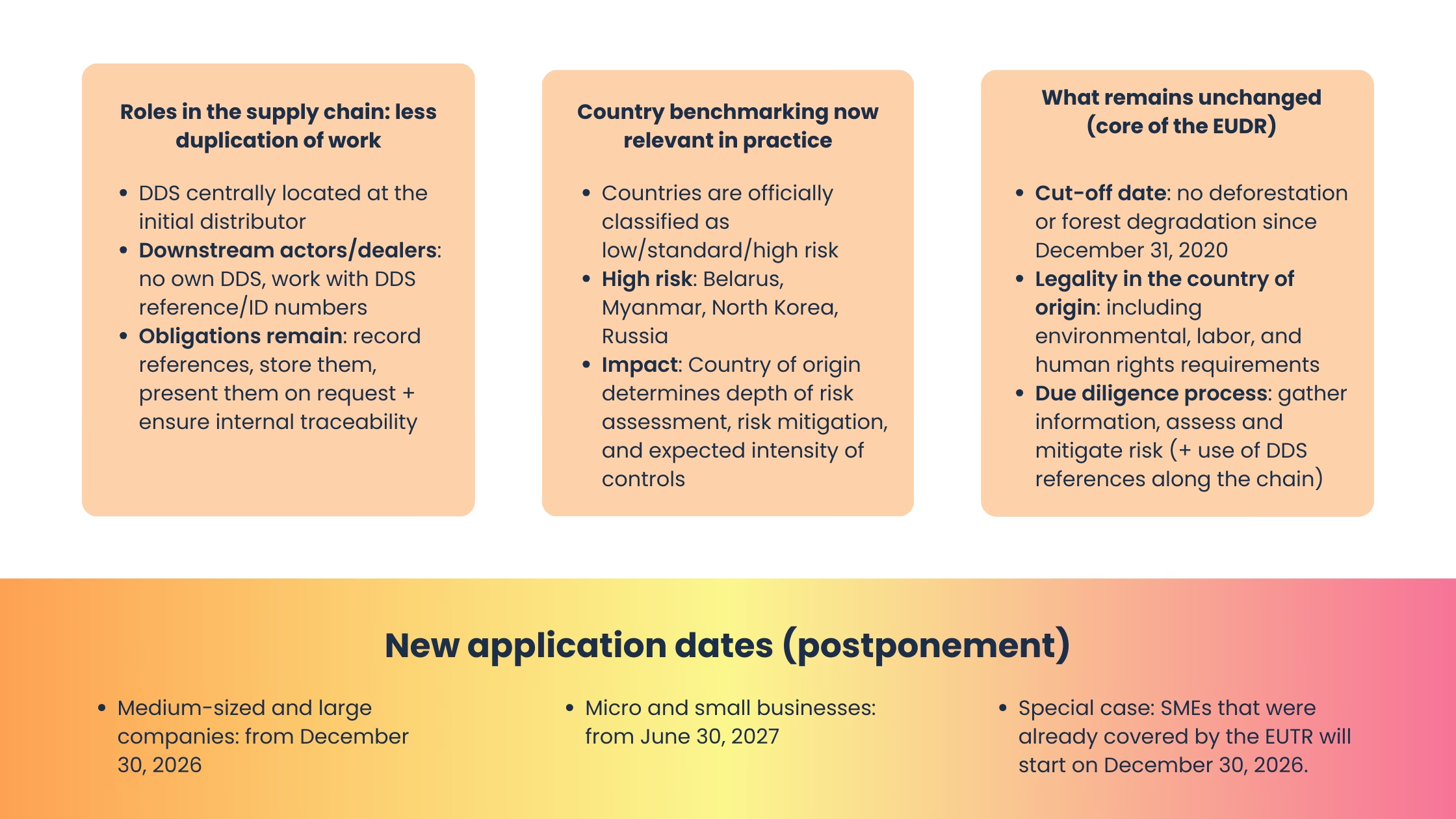
A lot has happened recently, particularly with regard to the EUDR postponement, deadlines, roles in the supply chain and country benchmarking. The central thrust remains the same: deforestation-free, legally compliant supply chains, but with more clarity and less duplication in implementation.
A summary of the most important innovations of the EUDR Regulation:
This makes it clear that many companies have more time, but at the same time it is now all the more worthwhile to use the additional months for a clean, scalable implementation.
A second focus is on reducing the burden on downstream players. The EUDR remains strict, but the administrative logic along the chain is becoming more practicable:
The important thing to remember is that relief does not mean that everything is done. Downstream companies also need reliable processes for traceability, good data and internal controls. Without this information, it is ultimately not possible to act safely.
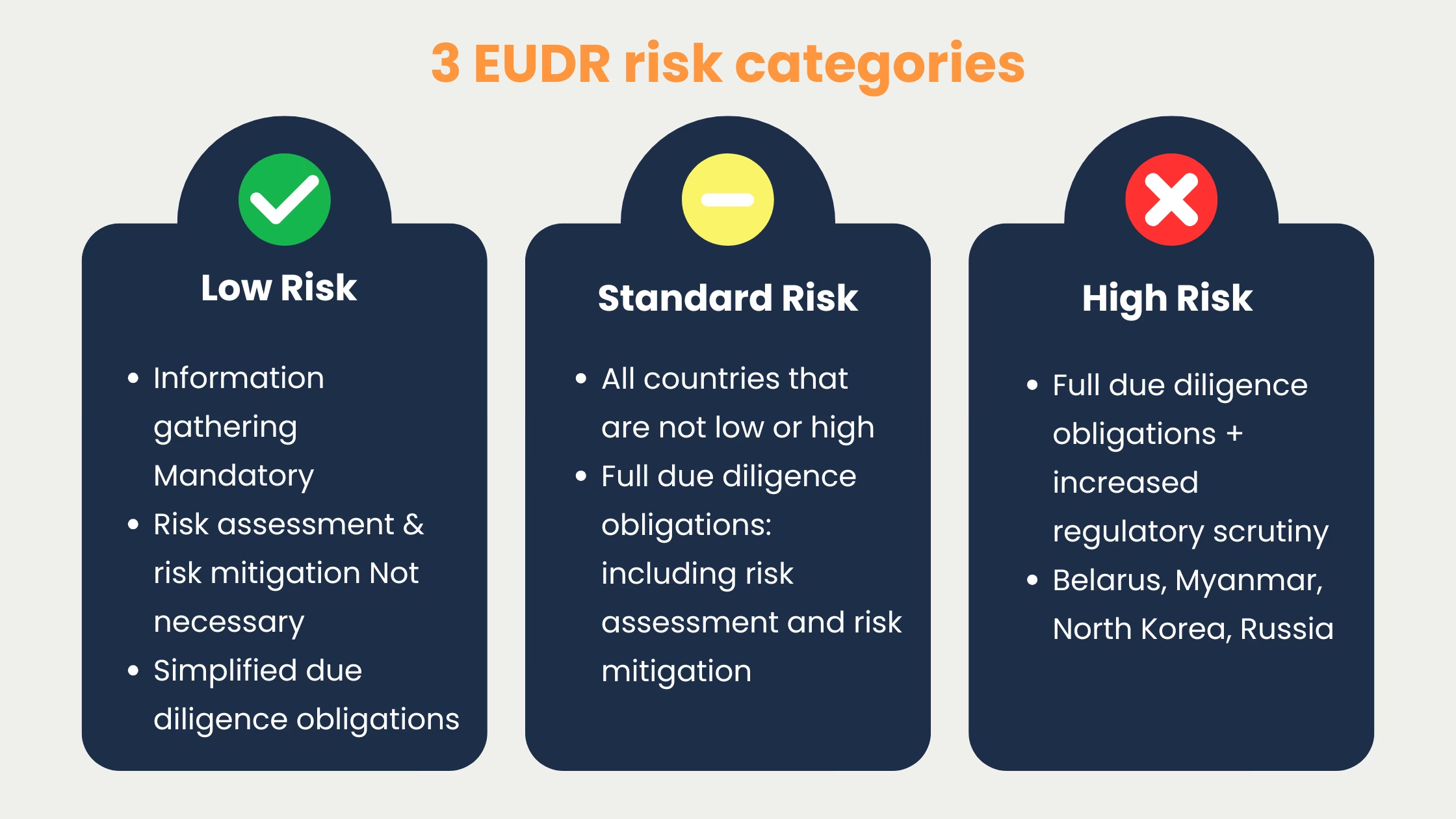
In addition, country benchmarking is now operationally relevant. The EU classifies countries according to risk (low/standard/high), which has an impact on the expectation of risk depth, audit intensity and controls:
And what remains unchanged?
On October 21, 2025, the European Commission presented new measures to ensure a smooth introduction of the EU Deforestation Regulation. The aim of the adjustments is to facilitate implementation for companies without weakening the central obligations of the regulation. You can find all the first-hand information in the official press release from the EU Commission.
The regulation is due to come into force on December 30, 2025 as originally planned. An extension of the deadline will only apply to micro and small companies, which will not have to fully implement their obligations until December 2026. Medium-sized and large companies, on the other hand, remain obliged to fully comply with their due diligence obligations by the end of 2025.
This is also changing:
The proposal still has to be adopted by the EU Council and Parliament before the next steps can be taken.
On October 2, 2024, the EU Commission proposed postponing the start of application of the EU regulation on combating deforestation by 12 months. The reason for this proposal is feedback from international partners and member states that need additional time to adequately prepare for implementation. On 14.11.2024, the EU Parliament voted in favor of the postponement by one year. The regulation will therefore only apply to large and medium-sized companies from December 30, 2025 instead of December 30, 2024. Micro and small companies will not have to implement the directive until June 30, 2026 instead of June 30, 2025. These adjustments are intended to give global players more time to implement the regulations smoothly without jeopardizing the objectives of the law.
In addition to the vote on the postponement of the law, the MPs proposed changes to the text of the law. In addition to the existing risk categories of "low", "standard" and "high", a new category is to be introduced: "no risk". Countries with stable or growing forest areas, for example, fall into this category and are therefore subject to less stringent requirements, as their deforestation risk is classified as minimal.
Following intensive discussions between the EU Parliament and the EU Council, it was decided at the meeting on December 3, 2024 to delay the application of the EUDR by one year. The new implementation date is now December 30, 2025.
The proposed extension of a 4-level risk assessment and a category for "no-risk countries" has now been ruled out. The final text will be published in the Official Journal of the EU, making the formal implementation of the postponement effective.
The postponement also affects the deadlines for other interlinked provisions, including the Commission's authorization to classify countries according to their deforestation risk. This classification will now take place six months later, in June 2025, to give companies and traders sufficient lead time before their due diligence obligations take effect.
The EU Deforestation Regulation (EUDR/VO 2023/1115) replaces the EU Timber Regulation (EUTR/EU 995/2010), which first banned the import of illegally produced timber into the EU in 2010. The Deforestation Regulation came into force in June 2023; large companies are expected to have to fully implement the regulations from December 2026. Comprehensive due diligence is required before placing certain products such as wood, coffee, soy, palm oil, cattle, rubber and cocoa on the market.
The EUDR sets out clear responsibilities for companies to ensure the protection of forests and respect for human rights along the supply chain. This includes verifying the origin of products and ensuring fair working conditions and human rights. The rights of indigenous peoples in particular are becoming increasingly important. Transparency and traceability are crucial to ensure that products are free from deforestation and comply with all legal requirements. Due diligence procedures are divided into three stages and require information on the product, risk assessment and mitigation. Early implementation of these measures is recommended to avoid potential risks and penalties and to help protect forests.
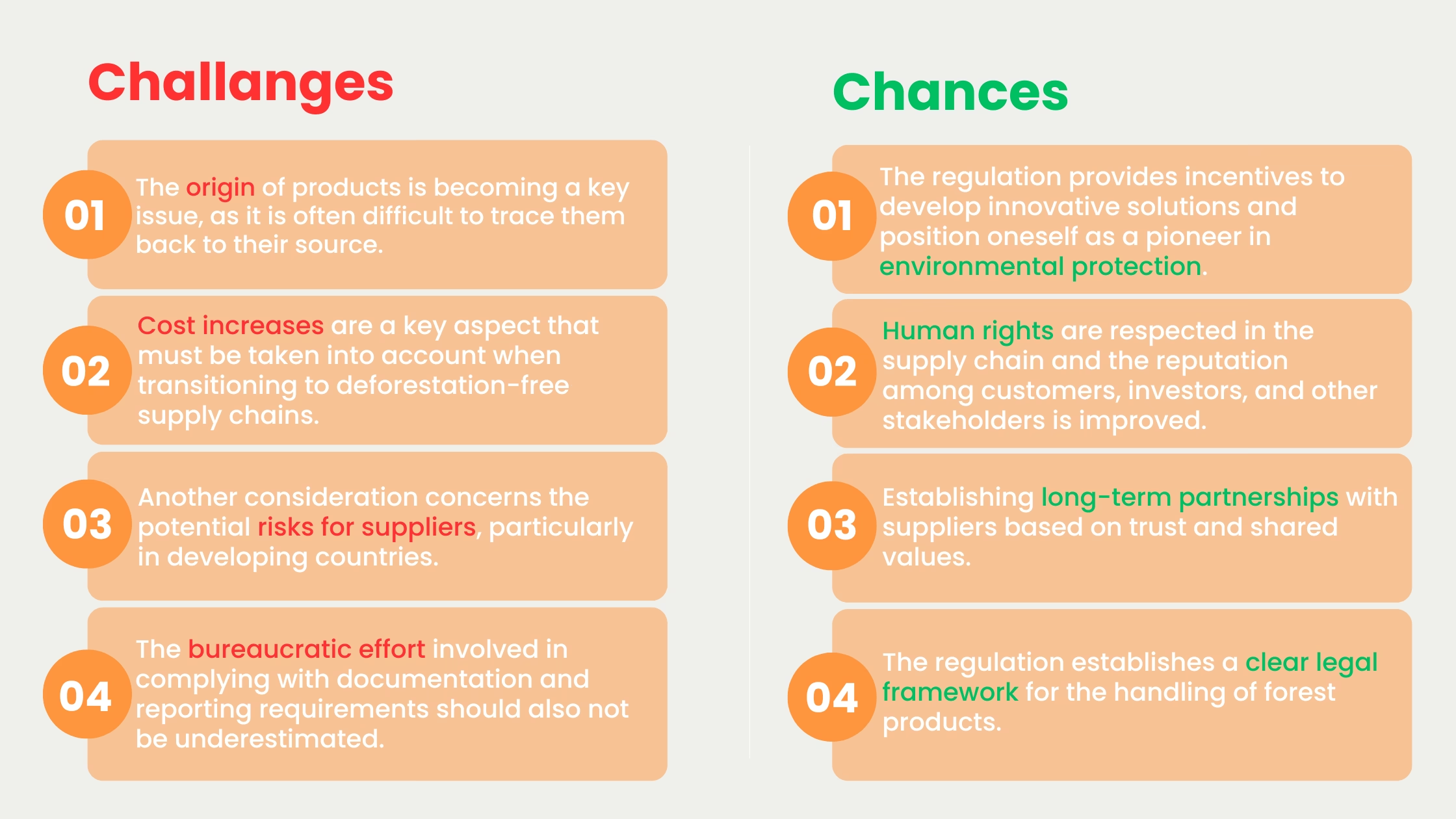
The introduction of the Forest Protection Act brings opportunities and challenges for companies. By complying with the regulations, companies can contribute to environmental protection, promote sustainable practices and build long-term partnerships. At the same time, it requires additional investment, increased complexity along the supply chain, cost increases and bureaucracy.
In order to successfully implement the EU regulation on deforestation-free supply chains, a number of key points need to be considered. These include analyzing the supply chain and existing solutions, designing and implementing due diligence requirements, clarifying responsibilities and monitoring and reporting on implementation. Efficient communication with partners, correct collection and use of geodata and the use of technologies and tools to support compliance are also crucial. It is also important to keep an eye on legal developments.
Overall, the EU Deforestation Regulation provides clear guidelines for companies to ensure the protection of forests and promote sustainable development. It is important to understand the impact on companies and supply chains, respond appropriately and remain competitive in the long term. Compliance with the regulation is verified through controls, following a risk-based approach. Sanctions are provided for violations of the regulation.
The EU Deforestation Regulation(EUDR/VO 2023/1115) is the EU's response to a problem that is no longer far away: Deforestation and forest degradation are directly linked to global supply chains and therefore also to products that are traded, processed and consumed in Europe every day. The regulation obliges companies to prove that certain raw materials and products are deforestation-free and have been produced in the country of origin in accordance with the law. This is the EUDR definition of forest.
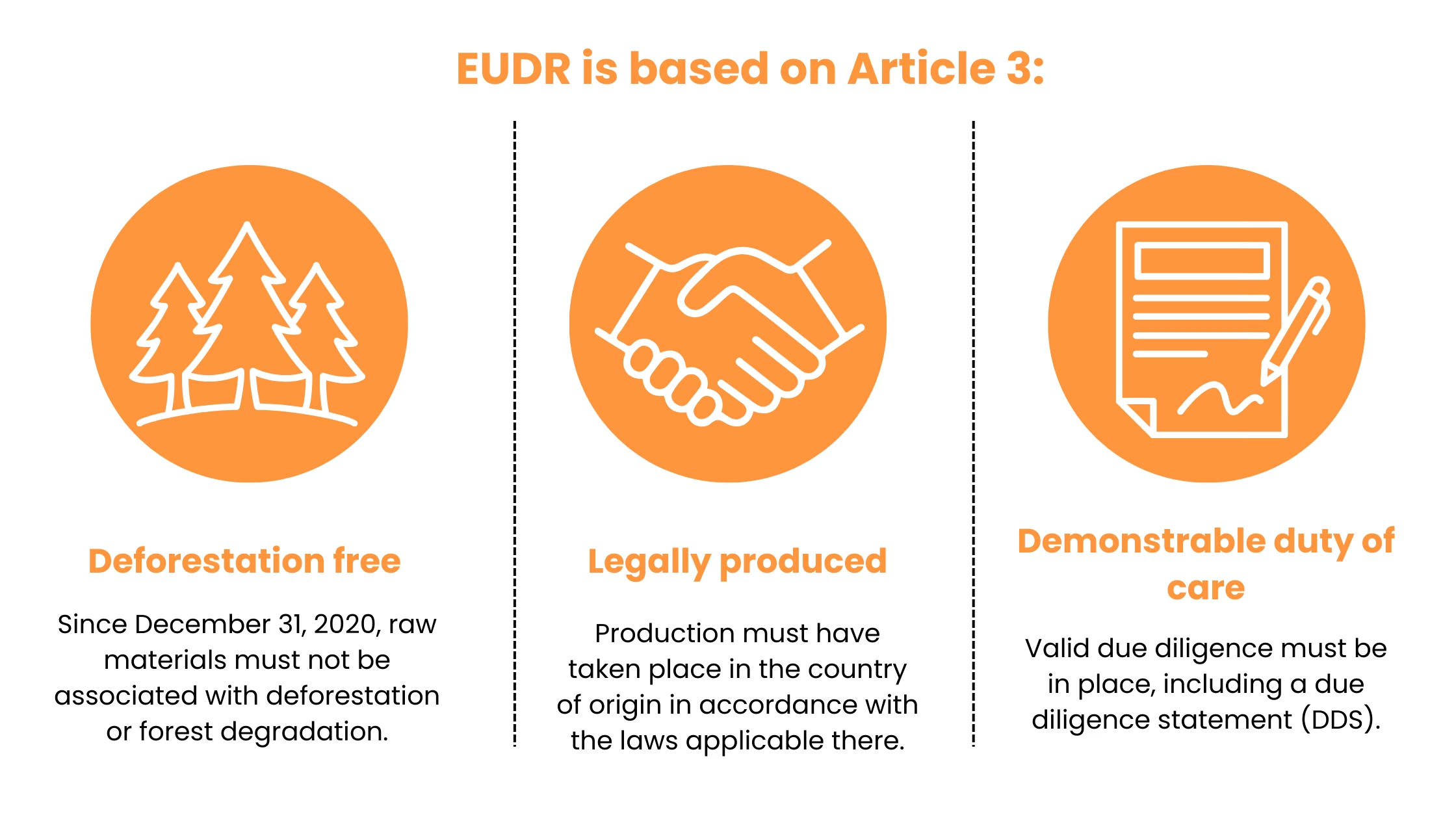
The Regulation is based on Article 3: A product may only be placed on the EU market or exported from the EU if three conditions are met simultaneously:
✅ Deforestation-free: Since December 31, 2020, the raw materials must not be associated with deforestation or forest degradation.
✅ Legally produced: Production must have taken place in the producing country in accordance with the laws applicable there (e.g. land use rights, relevant permits, labor and social regulations).
✅ Duty of care verifiable: A valid duty of care must be in place, including a declaration of due diligence (DDS) (depending on the role) and verifiable documentation.
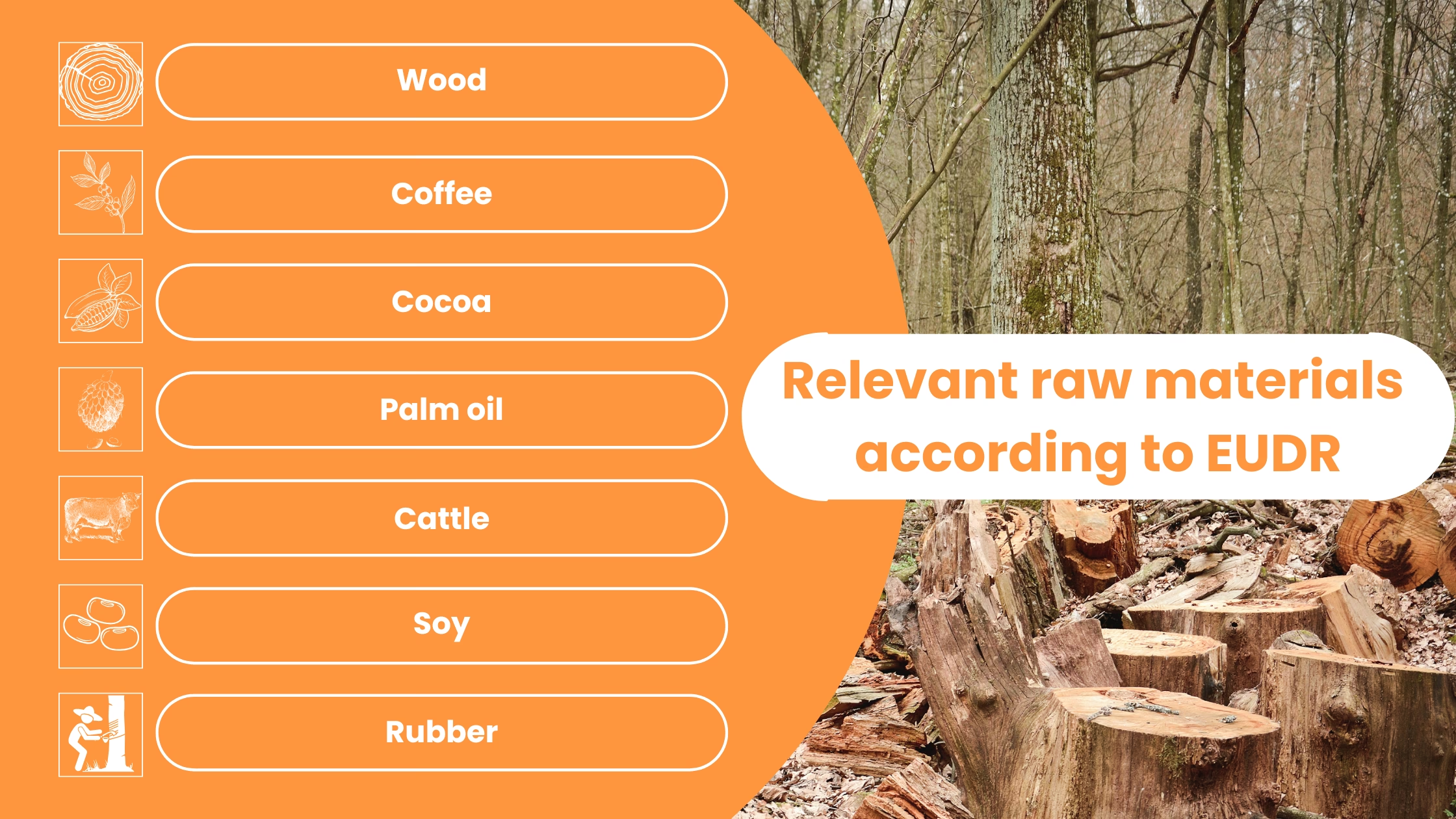
The focus is on seven raw materials that are particularly relevant for deforestation risks according to EU logic: Cattle, cocoa, coffee, palm oil, soy, wood and rubber. This also includes products made from these raw materials (e.g. furniture, leather, chocolate, depending on the customs/product categories specified in the regulation).
The Deforestation Ordinance is based on a clear triad of due diligence obligations:
The realities on the business side also show why this step is necessary: an iov42 study came to the conclusion that around 18% of European timber importers are not even aware of the EUDR and only some of them really feel prepared.
And the transparency gap is also large: in the Global Forests Report 2024 by CDP and the Accountability Framework initiative, many of the 881 companies show activity, but only 186 provided truly comprehensive, high-quality information. Only 64 reported having achieved at least one completely deforestation-free supply chain.
The Deforestation Regulation is not a quick fix, but the result of a political process lasting several years. The draft was presented by the European Commission in November 2021. Political agreement between the Commission, the Council of the European Union and the European Parliament followed in December 2022. The regulation formally entered into force on June 29, 2023.
The distinction between entry into force and application is important and crucial for companies. A lot has happened here recently: the EU amended the Deforestation Regulation in December 2024 and again in December 2025. The aim was to make the introduction more feasible without abandoning the basic logic.
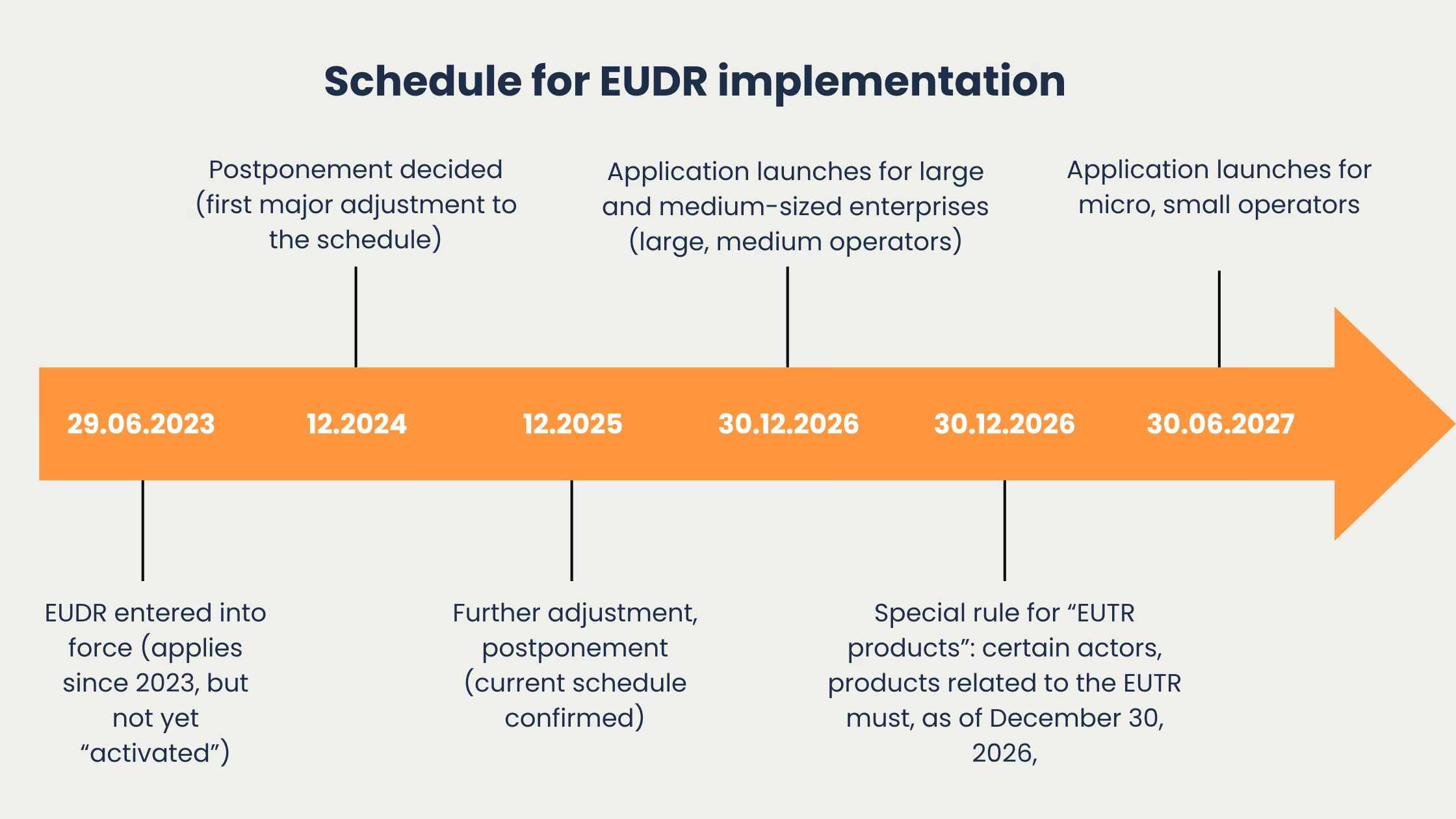
The current schedule (as of February 2026) is as follows:
At the same time, the EU has introduced targeted simplifications to avoid unnecessary duplication of work in the supply chain. One example is the due diligence statement: In principle, it should now only be submitted by the company that places the goods on the EU market for the first time.
The EUDR is more than just another compliance project: it directly links environmental and climate protection with market rules. Forests are not only a source of raw materials, but also a carbon sink, a sanctuary for biodiversity and the livelihoods of many communities. Deforestation therefore has a double impact: it destroys ecosystems and exacerbates climate change.
The Deforestation Regulation is intended to ensure that only products that have not been associated with deforestation or forest degradation since December 31, 2020 enter the EU and are sold here. In addition, the products must have been legally manufactured in the country of production, including the environmental and human rights standards applicable there.
The bottom line is that the regulation creates a new minimum standard. Anyone who wants to act in the EU must not only be aware of deforestation risks, but also prove, manage and document them. Practical figures show that precisely this ability to provide transparency, data quality and reliable evidence is not yet where it should be in many supply chains.
The EUDR aims to ensure that deforestation and forest degradation are no longer bought in. To achieve this, the regulation relies on a principle that is particularly effective in practice: market access only for deforestation-free products that meet the requirements. This turns responsible procurement from a best practice issue into a concrete expectation for companies.
The aim is for companies to identify and avoid deforestation risks in the supply chain at an early stage. To achieve this, procurement will need reliable evidence, good data and reliable suppliers in the future. This should not be a special project, but part of normal day-to-day business.
The objective behind this can be summarized in three points:
In addition to forest protection, the regulation has a second effect, as it changes how agricultural supply chains will function in the future. If the EU market sets clear requirements in terms of origin, land use and evidence, it will redefine what is still considered to be deliverable. This is not about regulating agriculture across the board.
Instead, the aim is to promote more sustainable practices because they are more economically viable. In practice, this means that those who produce in a traceable manner, document cleanly and reduce risks can more easily secure or even expand access to European supply chains.
This is changing many things along the supply chain. Sustainability is becoming more measurable because origin and cultivation areas must not only be claimed, but must be verifiable. Companies are taking a closer look at how land has been used and what risks are associated with this - especially in sensitive regions. And instead of changing suppliers immediately in the event of problems, supplier development is becoming more important: good data, training, common standards and stable processes will count for more than short-term sourcing in the future.
Overall, the EUDR is thus shifting the understanding of sustainability away from pure voluntary commitments towards an implementation that works in purchasing, quality management and cooperation with suppliers in the long term.
Forests are climate stabilizers, which is precisely why the EU Deforestation Regulation is also relevant as a climate protection instrument. Because if deforestation is reduced, carbon reservoirs are preserved and emissions are avoided. At the same time, preserving forests and ecosystems protects biodiversity and resilience, i.e. the ability of natural and economic systems to deal with crises.
For companies, the climate impact is particularly noticeable in two areas:
The EUDR is therefore not just a forest protection rule, but a building block that should help to make climate policy effective along global supply chains.
The European Deforestation Regulation makes it clear that sustainability is more than just green. It is not just about protecting forests, but also about ensuring that supply chains are legally clean and social standards are adhered to, precisely because deforestation is often associated with land conflicts, unresolved rights and poor working conditions in practice.
For companies, this means that it is not enough to report a few environmental indicators. Clear standards and reliable partnerships are crucial, especially in complex supply chains where risks are not the exception but rather the rule.
In practice, it is aimed at:
In everyday life, the EUDR means above all that companies must set up their purchasing in such a way that deforestation and legal risks are identified at an early stage and reduced where necessary. This requires a due diligence system that really works, not just as a document, but in the purchasing, quality, compliance and IT processes.
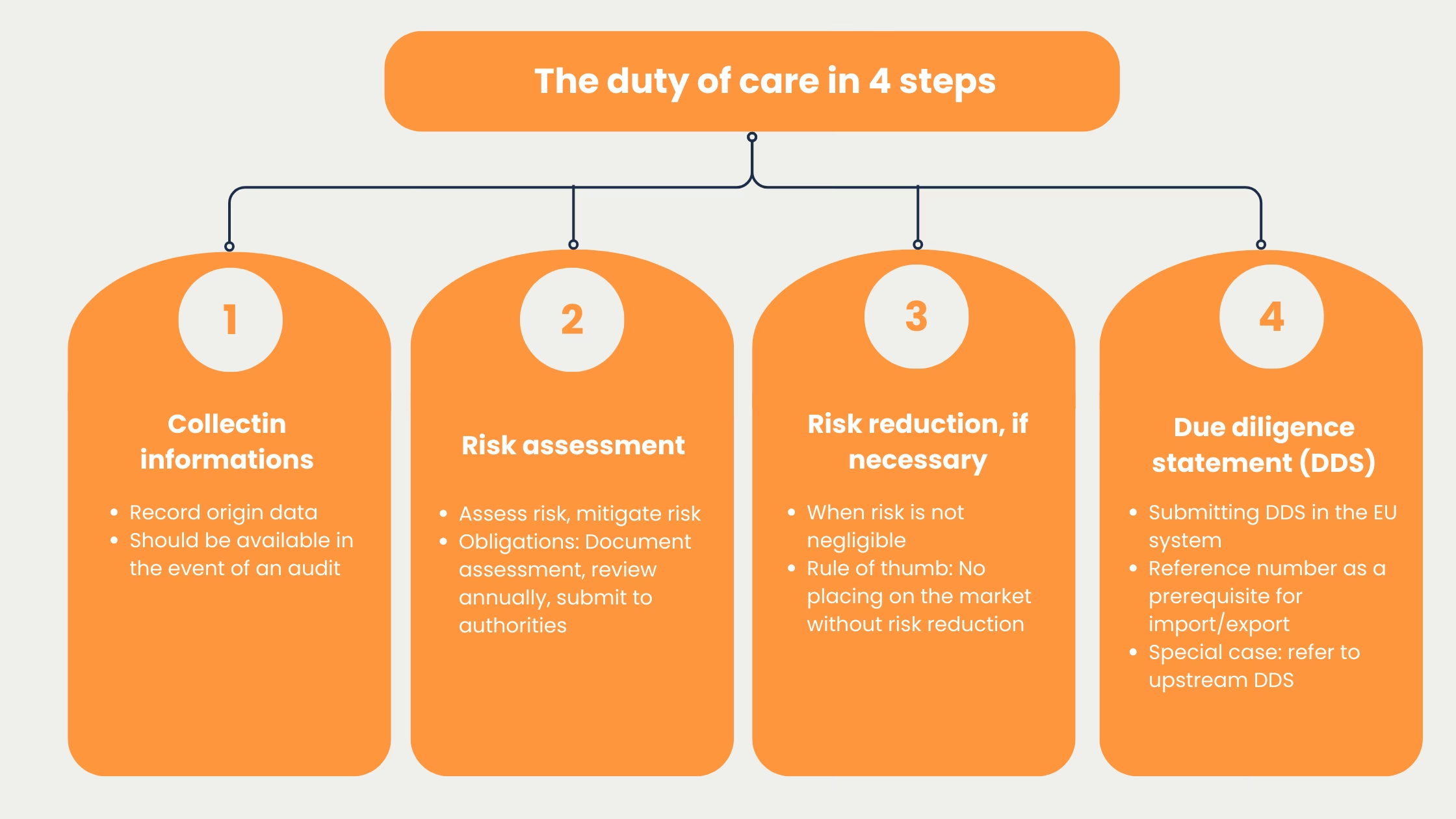
Essentially, the duty of care consists of four components:
Due diligence starts with the collection of all relevant information on the origin of the delivery. In practice, this is rarely due to a lack of willpower, but rather to data quality, data formats and a lack of systematization. Geolocation data in particular must be available in a structured form and technically recorded in such a way that it can later be processed properly and used in the EU system.
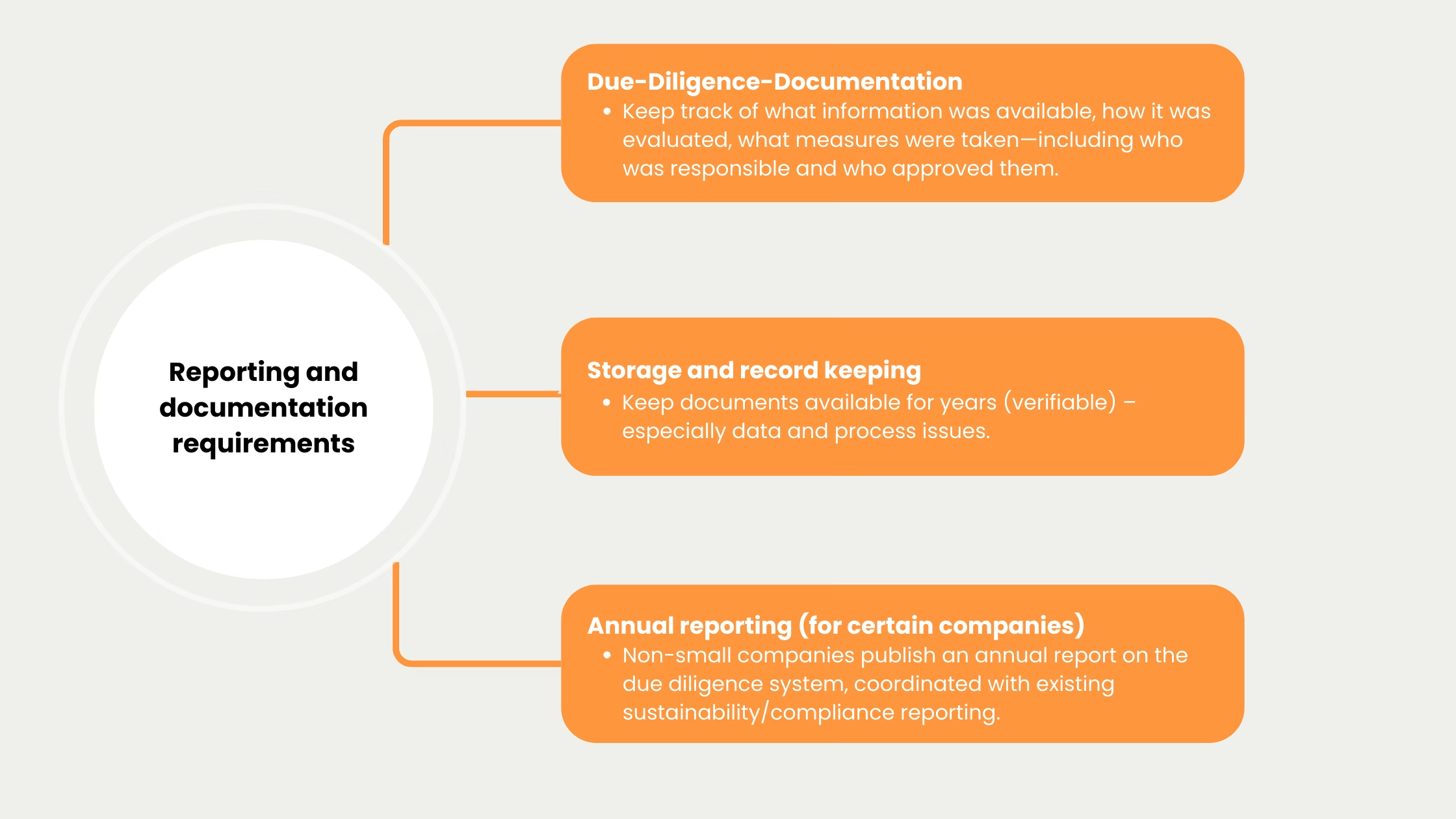
At least the following information packages should be available for each flow of goods or batch and be retrievable for 5 years:
Practical implementation: This information must be stored in such a way that it can be used quickly in the event of an audit.
Based on the information collected, market participants and non-SME traders check whether there is a risk of a breach of the regulation as part of the risk assessment. If a risk is identified, appropriate risk mitigation measures must be taken until only a negligible risk remains.
To-dos that are often underestimated in practice:
Criteria that belong in the risk assessment
Result of the risk assessment:
This logic is important because it forces EUDR compliance into an operational rhythm: without clear criteria, approvals and escalation paths, the assessment becomes a case-by-case discussion and that is precisely what does not scale in real supply chains.
If the risk is not negligible, a guideline is not enough. Then you need concrete, documented measures. Typical steps are
An important practical rule: no product may be placed on the market or exported without documented risk reduction in the event of a relevant risk. This is the point at which many programmes "tip over": if measures are not operationalized, EUDR quickly becomes a blocker for sales and supply.
The due diligence declaration (DDS) is the formal step that makes EUDR compliance "effective": It is submitted digitally in the EU information system. After submission, the system generates a reference number. This reference number is not just internal proof - in practice, it is the prerequisite for importing or exporting relevant products and is passed on along the supply chain.
This is how the EU system works in practice:
Special case: Reference to an upstream due diligence declaration
In many supply chains, not all companies submit their own DDS. Instead, reference is made to an upstream due diligence declaration. In this case, the reference number of the upstream DDS is entered in the system, along with the verification number. Both numbers can be called up in the system and serve as a unique link.
Practical rule: Even if you "only" reference, you are still obliged to keep the information available in such a way that it is traceable during audits. It is crucial that reference numbers, batches and internal approvals fit together properly.
Since the adjustment at the end of 2025, it is particularly important to clearly define the roles in the supply chain: As a rule, the company that places the goods on the market in the EU for the first time issues the due diligence declaration (DDS). Downstream actors use this declaration as a reference. Nevertheless, the responsibility for ensuring that one's own processes run smoothly remains; no one can sit back and relax completely.
It is fundamentally important that all steps in the supply chain are traceable. This is the EUDR basic requirement - complete traceability.
In practice, EUDR compliance is not only decided in the audit folder, but often very specifically at customs: certain information must be provided in the customs declaration for the import or export of EUDR-relevant goods, otherwise the goods will not be released.
Mandatory information for import & export
The following information is always required in the customs declaration for relevant goods:
Important: The goods will only be released if the coding is complete (incl. reference number). If something is missing, the import/export cannot be processed in case of doubt.
EUDR compliance does not work without proper documentation. Companies must be able to show how they arrived at their decisions. This requires two things: firstly, evidence that really stands up to scrutiny, and secondly, a reliable process that creates and updates these documents on an ongoing basis and makes them easy to find.
Three levels are central to this:
In practice, it is helpful to treat documentation obligations not as a filing problem, but as a design issue:
For many companies, the EU information system becomes the linchpin here, because due diligence statements are created and managed there, including references that are used further down the chain.
No company fulfills the deforestation ordinance on its own. The crucial information almost always originates within the company's own organization. This is precisely why cooperation with suppliers is becoming an important success factor: not as a communication measure, but as a structured, contractually and procedurally secured data exchange. And yes: in many supply chains, these are de facto dependencies, without data there is no trade. A three-stage approach has proven its worth:
Since the simplifications, it is even more important that cooperation in the supply chain is properly organized. If the DDS lies with the first distributor and others work primarily with references, the supplier data really must be correct. This is the only way to ensure that reference numbers, batches and internal approvals match and nothing gets lost along the way. Attention should be paid to this with batches, deliveries and the DDS.
Many underestimate that the deforestation regulation not only affects legal and purchasing, but also data and systems. The EU information system is the central working platform for due diligence declarations and references. If you define clear responsibilities early on and structure the data properly (for uploads such as GeoJSON, for example), you will save a lot of effort later on and make far fewer mistakes.
With country benchmarking, the EU has created a central instrument to systematically classify the deforestation risk per country of origin. Since May 22, 2025, an official classification has been available for the first time, which divides countries into three categories: low risk, standard risk and high risk. Benchmarking is therefore a decisive lever for the question of how deep due diligence must go - and where companies can work with simplified requirements.
The logic of the classification is important here: the EU publishes explicit lists for low risk and high risk. All countries that are not explicitly on these lists are automatically classified as standard risk. This makes "standard" the basic category - and the risk classification determines how extensive risk analysis and risk mitigation must be in practice. This applies to country benchmarking in detail.
Low risk: Countries in this category are considered to be at comparatively low risk of deforestation-related violations. Companies in this category benefit from simplified due diligence obligations: Information collection remains mandatory, a comprehensive risk assessment and risk mitigation is generally not required. Typical examples (excerpt) include
Standard risk: This category is the "default" classification: It applies to all countries that are not explicitly listed as low or high. For imports from standard risk countries, the full due diligence obligations of the EUDR continue to apply, including risk assessment and, if necessary, risk mitigation measures.
High risk: Countries in this category are subject to particularly strict expectations, not only because of the full due diligence requirements, but also because they are accompanied by a higher level of regulatory scrutiny. In the first official classification, only four countries were listed as high risk:
For the EUDR (Regulation EU 2023/1115), the most important thing is how the raw material is legally classified. The decisive factor is whether it belongs to the relevant raw materials and whether the specific product is listed in Annex I. The goods concerned are defined there via CN/customs tariff codes, in some cases only for certain subgroups ("ex" codes). This applies to HS codes and TARIC codes according to the EUDR.
The Deforestation Ordinance is linked to seven raw materials:
Important in practice: As soon as a product contains one of these raw materials, was fed with it or was manufactured from it, it is worth taking a look at Annex I. Only if the product category is explicitly listed there does it fall within the scope. Composite products are also affected by the EUDR - this applies to composite products.
The regulation does not work with sectors, but with product groups via customs tariff codes. This may seem cumbersome at first glance, but it provides clarity: one and the same material can be in scope or out of scope depending on its classification, which is precisely why correct tariff classification (CN code) is a key step in any EUDR analysis.
Typical product groups that fall under Annex I (depending on the CN code) are e.g:
What has changed recently: In the course of the targeted revision, Annex I was technically adapted, among other things by removing certain printed products from the scope (Annex I adjustment "ex 49").
In addition to the principle of Annex I decisions, there are a number of special cases in the EU Deforestation Regulation and the accompanying Guidance/FAQ that are regularly overlooked in projects.
Important exceptions and delimitations include:
In practice, these special cases often lead to misclassifications. Here are the most important distinctions.
Some special features apply to timber and timber products under the EU Deforestation Regulation. This is mainly due to the fact that timber supply chains often pass through many processing and trading stages and therefore pose a challenge precisely where the EUDR is most stringent: traceability back to the area of origin and reliable geolocation data.
When it comes to implementing wood, companies frequently encounter three recurring bottlenecks:
A frequent stumbling block: The transitional regulation between the EUTR and EUDR plays a major role for wood. For timber and timber products that were produced before June 29, 2023 and are placed on the market from December 30, 2025, the EUTR continues to apply up to and including December 31, 2028. Only after this date does the Deforestation Regulation apply exclusively. The date of production and time of placing on the market are therefore decisive.
It is important to note that these wood transitional rules run independently of the general EUDR deadlines according to company size; wood is a special case here.
FLEGT also causes misunderstandings in practice. The FLEGT regulations remain in force and are intended to ensure that only legally harvested timber from partner countries enters the EU. A FLEGT license therefore confirms legality - but it does not replace the EUDR requirements for freedom from deforestation and due diligence (incl. DDS).
Note: FLEGT can help with "legal", the Deforestation Ordinance also requires "deforestation-free" and "DDS/verifiable due diligence".
We have compiled all the information you need in detail in our guide. In this guide, you will learn everything about the relevance and background of the EUDR, which companies are affected and what obligations they have to fulfill.
Whether a company falls under the EUDR depends less on the sector and more on its role in the flow of goods. The regulation makes a rough distinction between "operators" and "traders". Since the amendment at the end of 2025, an additional distinction has been made between initial distributors, traders and downstream market participants:
These are the due diligence obligations for market participants and traders in detail.
One point in particular is crucial for the timetable today: although the regulation has been in force since 2023, it will only become mandatory from the application deadlines. Following the amendments in December 2024 and December 2025, the current timetable (as of February 2026) is as follows
EUDR and the cut-off date: Find out how to deal with goods in stock and later placing on the market here.
What the deadlines mean in practical terms: The additional time is not a break. It is an opportunity to set up the issue properly, as role clarification (operator/trader/downstream), data flows and internal approvals usually take longer in practice than the pure legal review. The amending regulation also regulates EUTR continued application until 31.12.2029 for certain "old goods" wood or wood products (produced before 29.06.2023, placed on the market from 30.12.2026).
In November 2021, the EU Commission presented a draft law for deforestation-free supply chains. On December 5, 2022, a final draft law on the requirements for companies was agreed by the EU Commission, the Council of Ministers and the European Parliament. The EUDR came into force the following year, on June 29, 2023. After the countries and ministers pleaded for the law to be postponed to allow more time for implementation, the official postponement of the law was announced in the EU Parliament on December 3, 2024.
At the end of 2025, application was postponed again by one year. Large companies must now fully implement the regulations from December 30, 2026, while micro and small companies have a further six months and the regulations will therefore apply to them from June 30, 2027. There is a special case here: micro/small companies that were already covered by the previous EU Timber Regulation (EUTR) must also implement the EUDR from December 30, 2026. A review of important points is planned after just one year.
In future, companies should ensure that their supply chains are deforestation-free. This serves to protect the environment and climate. In concrete terms, this means that the areas on which the raw materials were produced must not have been deforested or damaged since December 31, 2020.
The regulation deliberately differentiates between company size and role. Large and medium-sized companies usually have to fulfill more formal obligations. SMEs are relieved in some cases. This applies in particular where the rules are intended to prevent the same work being done more than once in the supply chain. These thresholds apply in detail to corporations and SMEs.
This is typically more significant for large/medium-sized companies:
Where SMEs are typically relieved (without "all-clear"):
A point that is often overlooked in practice: Despite simplifications, SMEs also need clean processes. If information is missing or not properly documented internally, things quickly become difficult, for example with customer requirements, inspections or in supply chains with many intermediate stages.
Traceability is the backbone of the Deforestation Ordinance. It is understood in much more concrete terms than traditional batch or supplier verification. It is crucial that a product can be traced back to the area on which the raw material was produced. To achieve this, companies must record the relevant information in such a way that it can be processed in the EU information system as part of the due diligence declaration.
What is particularly important in practice:
In short: traceability is not just about knowing our suppliers, but a combination of area reference, data structure (geo-data) and system-compatible documentation. Geodata in the EUDR - that is what is required.
The regulation does not require a guarantee of "zero risk". However, it does require companies to assess and manage risks in such a way that ultimately only goods are traded where the risk is negligible - or has been reduced accordingly through measures. EU instruments such as country benchmarking help with this, but are no substitute for the company's own risk assessment.
What the risk assessment typically boils down to:
Since the adjustment at the end of 2025, the following has applied in practice: the declaration of due diligence (DDS) is usually submitted by the first distributor, with downstream actors then working primarily with reference numbers. This saves duplication of work, but the checks beforehand still have to be carried out properly. If the risk assessment is sloppy, the DDS quickly becomes a problem instead of a safeguard. Here we have put together a guide for you on how to implement EUDR step by step.
The EUDR not only checks whether a product is deforestation-free. There is a second, often underestimated requirement: the product must have been legally produced in the country of origin. Depending on the country, this includes, for example, rules on land use rights, environmental regulations, labor rights, human rights and the rights of indigenous peoples.
It is not enough to simply exclude deforestation. Depending on the raw material and origin, companies must also show that the goods were produced legally in the country of origin. This includes, for example, land titles and land use, necessary permits as well as labor and social standards.
The regulation is designed so that authorities can carry out checks. Therefore, evidence, decisions and approvals must be clearly documented and remain accessible for years. This also includes complete documentation of the company's own due diligence system.
There are some simplifications for SMEs (e.g. no annual reporting obligations via the due diligence system), while non-SMEs are subject to significantly more formal requirements.
In the end, EUDR compliance becomes a triad: legally clean, verifiable and organized internally in such a way that the whole thing works in a repeatable way, not just once for a project, but as an ongoing standard process.
The EU relies on the member states to enforce the EUDR. Each state appoints its own authorities to monitor the rules and enforce them on a day-to-day basis. Control is therefore not carried out centrally from Brussels, but locally, ideally with uniform standards and closely interlinked with customs and market surveillance.
The checks are risk-based. Depending on the risk category of the country of origin, authorities must carry out a minimum number of checks: at least 1% for low risk, 3% for standard risk and 9% for high risk. For companies, this means that the chance of an inspection depends heavily on the origin of the raw materials or product. Therefore, data, evidence and internal decisions must be fully and comprehensibly documented at all times.
Checks under the EUDR are more than just paperwork. Authorities check whether the information is comprehensible and whether the internal assessments are really conclusive. They also check whether the processes in the company are set up in such a way that the rules are actually complied with in the end. This can happen on an ad hoc basis, for example in the event of indications or anomalies, and there are also regular checks within the framework of the defined minimum quotas.
In practice, an inspection usually consists of several parts. Authorities compare documents, carry out plausibility checks and look particularly closely at information on origin and geodata. There are often spot checks that are examined in greater depth. Depending on the case, on-site measures are also possible. If a risk is acute, authorities can also intervene immediately and temporarily stop the flow of goods, for example by securing goods or temporarily suspending the placing on the market or export.
The EUDR can hardly be implemented without a digital infrastructure. This is why the EU information system plays a central role. Due diligence declarations are recorded and managed there and can be reused in the supply chain. Downstream companies can refer to existing entries by adopting the reference and verification numbers, either manually or via a CSV upload.
Technical scaling is also provided for large volumes of data: The system supports a machine connection via an API to manage declarations and data records in bulk. This makes the system a central access point for the authorities: it facilitates targeted screening, supports risk-based selection decisions and creates a uniform basis on which checks can be documented in a comprehensible and repeatable manner. There are also user guides that describe how to use the system in practice.
The EUDR Regulation is deliberately harsh in its sanctions logic because it uses market access as a lever. In addition to the financial dimension, the focus is primarily on measures that have an impact on the market: goods can be withdrawn from the market, distribution or supply bans can be imposed and, in certain constellations, confiscation or seizure is also relevant in order to stop risks immediately.
The framework for fines is also designed to be tangible. Many summaries point out that sanctions can reach up to 4% of (EU-wide) annual turnover. The decisive factor here is not so much the percentage as the message: infringements should not be calculable, but represent a real compliance risk, both financially and operationally.
Enforcement is carried out by the competent authorities in the Member States. They can not only impose penalties, but also order immediate measures to rectify problems. This may include recalling products or withdrawing them from the market. If a risk is acute, they can also initiate provisional steps to prevent damage.
In addition, there is an element that is often underestimated in practice: public visibility. Under the "naming and shaming" concept, the specialist literature on the EUDR emphasizes that legally binding decisions can be published, which adds a communicative and reputational level to sanctions.
In the EUDR, the risk of reputational damage is not a marginal issue. When procedures or decisions become public, pressure quickly arises from many sides. Not only from authorities, but also from customers, investors, NGOs and the media. Violations are often immediately interpreted as a sign that controls are lacking, data is incorrect or suppliers are not being managed well enough. This can happen even if it is "only" an internal process or a system that has not worked properly at one point.
In addition to fines and sales bans, there may be other consequences. Business relationships can quickly become shaky because customers do not want to take risks. Contractual penalties or reversals become more likely, and internal questions arise about management and organizational responsibilities. EUDR violations are therefore rarely just a legal problem. They can very quickly develop into a real business risk that runs through the entire value chain.
For importers and exporters, the EUDR is primarily changing trade. Trade is increasingly becoming a question of data capability and process stability. Anyone moving flows of goods into or out of the EU must adjust to the fact that deliverability no longer just means price, quality and availability, but also reliable evidence along the flow of goods. This has a direct impact on contract design, supplier portfolios, procurement strategies and logistics, especially where supply chains have previously worked with intermediaries, mixed flows or incomplete documentation.
In practice, risk management is also shifting as a result. Goods from complex regions of origin are more frequently only procured if data, geo-information and proof of legality are available in sufficient quality. At the same time, there is increasing pressure to standardize information flows in such a way that they also function with large volumes (keyword: digital interfaces, structured data uploads and consistent references).
The trade policy dimension should also not be underestimated. Several trading partners have criticized the EUDR in international forums as a potential barrier to trade. While this debate does not automatically lead to a weakening of the requirements, it is an indication that EUDR compliance will be a permanent factor in trade relations, negotiations and market access discussions in the future.
For many supplier countries, it is not so much the objective of the EUDR regulation that is the problem, but its implementation in everyday life. Especially where millions of small farmers produce in small-scale structures, there is often a lack of resources and infrastructure. Collecting geodata, documenting digitally, registering farms and maintaining data on an ongoing basis costs time and money. Small cooperatives, local exporters and individual producers are often unable to do this without support. This concern is particularly evident in countries such as Côte d'Ivoire. Smaller cocoa companies there say that the costs and organizational effort can quickly threaten their existence, while large corporations usually find it easier to cope with such requirements.
Indonesia also repeatedly points out that small farmers in particular can quickly fall out of EU supply chains without digital infrastructure or reliable internet. Not because they automatically produce less, but because they are often unable to provide the required proof in the short term.
This creates a risk that comes up again and again in the discussion. If implementation is not designed to be inclusive, large, data-rich companies in particular could end up benefiting, while smaller providers are forced out of the market. This is why support for producer countries is so important. Technical assistance, funding and practical support are needed to ensure that the EUDR really works in international trade.
As demanding as the requirements are: The EUDR also opens up a new opportunity for international trade, namely competition based on verifiable sustainability. Where intransparency can still create a price advantage today, in the long term this will shift towards supply chains that can demonstrate data quality, legality and stable partnerships. This is exactly the kind of level playing field that makes sustainable practices more economically attractive, especially in industries where deforestation risks have been difficult to quantify.
In addition, the EU is increasingly supporting implementation through cooperation and support formats. One example is the "Team Europe Initiative" on deforestation-free value chains, which is supported by the European Commission and aims to strengthen partnerships with producer countries and facilitate the transition to deforestation-free supply chains. Such programs are a signal that the EUDR is not only understood as a control instrument, but also as an impetus for investment, capacity building and more resilient supply relationships.
And finally, the EUDR has an impact beyond the EU. It sets a standard to which other markets, buyers and financing logics can orient themselves. In the medium term, this could mean that deforestation-free and legal supply chains are not just "EU compliance", but a global reference point - with positive effects for companies that make structured investments early on and for producing regions that can demonstrably scale sustainable production.
The EU regulation on deforestation-free supply chains marks significant progress towards greater sustainability and environmental protection. Companies and market participants are required to implement the requirements of the regulation in order to counteract the negative consequences of deforestation.
Successful compliance with the EU Deforestation Regulation requires companies to implement appropriate measures precisely. The rules of the Deforestation Regulation must be seamlessly integrated into operational processes in order to meet the requirements. This includes checking and adapting supply chains as well as the conscientious procurement of wood, products and raw materials. Companies are called upon to ensure transparency along the supply chain and to provide information about the origin of their products.
The use of innovative technologies is proving to be a key aspect in meeting the constantly increasing legal requirements and guidelines. Through the targeted use of technology, companies can work more efficiently, optimize processes and at the same time ensure compliance with all legal requirements. With a modern technological infrastructure, companies can not only meet their compliance requirements, but also lead the way in terms of legal conformity.
By taking consistent measures to comply with regulations, companies can not only meet legal requirements, but also actively contribute to the protection of forests - a significant step towards a sustainable future for us all.
The EUDR replaces the EU Timber Regulation(EUTR EU 995/2010). The EUTR first banned the import of illegally produced timber into the EU in 2010 and obliged importers to provide evidence of legally harvested timber. An important step towards reducing the risk of illegal timber imports.
However, it will remain valid for three years for timber products derived from trees felled before the Deforestation Regulation came into force and entering the EU market during the transition period between EUDR and EUTR (Article 37(2)).
The transitional period extends from the adoption of the ordinance on 30.06.2023 until its application from 30.12.2025.
In this respect, it is questionable what will happen to raw materials that were placed on the market before the Regulation was applied but will be placed on the market or exported in another form in 2026.
As an example, a relevant raw material, namely cocoa, was introduced during the transition phase. No geolocalization data was recorded. Now the chocolate made from these beans (relevant derived product) with CN code 1806 is to be placed on the market from 30.12.2025.
During the transitional period before the application of the EUDR, an operator (and non-SME trader) placing a derived product on the market must be able to prove, e.g. by means of evidence, that the relevant raw material was on the market before the Regulation came into force. If the raw material is placed on the market or exported after 30.12.2025, the standard obligations under the EU Regulation apply.
"Market participants" are affected. The definition can be found in Article 2(15) EUDR, according to which an operator is a natural or legal person who places relevant products on the market (including via an import) or exports them in the course of a commercial activity. Commercial activity is understood to mean processing, distribution and use, see Article 2(19).
An example of further processing would be if company A imports cocoa butter (HS code 1804) and company B uses it to produce chocolate (HS code 1806) - in this case, both are considered operators. Operators who import Annex I products into the supply chain without prior due diligence (e.g. importers of cocoa) are obliged to submit a due diligence declaration, regardless of the size of their company.
Under the Forest Protection Act, companies that place products on the EU market are obliged to comply with the full due diligence obligation. This obligation also applies to traders and includes the assumption of due diligence by micro-enterprises and natural persons if this has been passed on. The specific form of the obligation depends on the country of origin of the goods and requires a risk analysis and, if necessary, mitigation measures.
SMEs have less stringent due diligence obligations than non-SME market participants and traders. Micro, small and medium-sized enterprises (SME operators) that trade are not required to carry out their own due diligence, but they must ensure that the traded goods have been produced without deforestation and in compliance with the law. This requires information on buyers and sellers as well as reference numbers of the due diligence declaration, which must be kept for five years.
The regulation on deforestation-free supply chains defines small and medium-sized enterprises on the basis of balance sheet total, net turnover and number of employees in accordance with Article 3 of Directive 2013/34/EU. Thus, small enterprises are those with a balance sheet total of EUR 4 million and net sales of EUR 8 million and no more than 50 employees during a financial year. Medium-sized companies are defined as those with a balance sheet total of at least EUR 20 million, net sales of at least EUR 40 million and no more than 250 employees.
Nevertheless, it is important to emphasize that it is the responsibility of every company to comply with due diligence obligations.
Article 7 EUDR describes this case in more detail. In this respect, it should be noted that the first natural or legal person established in the Union who makes these relevant products available on the market is considered to be an operator within the meaning of this Regulation.
This means that the first company based in the EU to place the products on the market must comply with the due diligence obligations.
The relevant raw materials and products are listed in Annex I. According to Article 2(2) EUDR, "relevant products" are defined as products listed in Annex I that contain, have been fed with or have been produced using relevant raw materials.
The relevant raw materials are listed below:
This is an exhaustive list. No threshold values apply. The requirements apply to products manufactured both in the EU and outside the EU. The regulation therefore applies to all products listed in Annex I, regardless of their place of manufacture.
However, the list can be amended by the Commission by means of a delegated act. The European Commission will examine whether it makes sense to extend the scope of the regulation to other raw materials. This will be done on the basis of an impact assessment that takes into account the effects of the raw materials on deforestation and forest degradation. The first review is planned within two years of the Regulation coming into force.
The raw materials and products must fulfill the following conditions cumulatively in accordance with Article 3 EUDR:
The term deforestation is defined in Article 2(3) of the EUDR as follows: "deforestation" means the conversion of forests into agricultural land, whether or not caused by human activity.
By contrast, "agricultural use" means the use of land for agricultural purposes, including agricultural plantations and abandoned agricultural land, as well as land for the rearing of animals, according to Article 2(5). This means, for example, that wood from a legally logged forest area for road construction does not fall under the definition of deforestation.
In the EUDR, not only illegal deforestation is excluded, but also any form of deforestation in general. Products are considered deforestation-free if they are produced on land that has not been deforested or degraded since December 31, 2020, see Article 2(13)(a) and (b).
As far as forests are concerned, Article 2(4) is based on the FAO definition. This means land with an area of more than 0.5 hectares with trees over 5 meters high and a canopy cover of more than 10% or with trees that can reach these values in the respective location. Areas that are predominantly used for agricultural or urban purposes are excluded.
A forest is considered degraded if structural changes to the forest cover, such as the conversion of primary forests into plantations or plantation forests, are carried out (Article 2(7)).
The EU Commission will regularly review the effectiveness of the Deforestation Regulation and adapt it if necessary (Article 34 EUDR). After one year, an impact assessment must show whether the Regulation should also protect "other wooded land" ecosystems in order to protect further biodiverse landscapes from deforestation for EU consumption (see paragraph 1). The term " other wooded land" is defined by the Food and Agriculture Organization of the United Nations (FAO) and Article 2(12) EUDR:
Other wooded areas" are areas not classified as "forest" of more than 0.5 hectares with trees over 5 m high and a canopy cover of 5 to 10 % or with trees that can reach these values on the respective site, or areas that are overgrown with shrubs, bushes and trees by more than 10 %, with the exception of areas that are predominantly used for agricultural or urban purposes.
Two years after the law comes into force, the EU will review whether further ecosystems, such as peatlands and wetlands, should be protected (see paragraph 2). The inclusion of additional high-risk raw materials such as maize and biofuels as well as the possible obligation of financial institutions to prevent investments in deforesting companies is also being examined (see paragraphs 3 and 4). This should help to curb the promotion of deforestation by the financial sector.
Five years after entry into force, the first general review is carried out with a report to the EU Parliament and Council. The focus is on the impact on producer countries, in particular small producers, as well as indigenous peoples and local communities (see paragraph 6). The need for further trade facilitation instruments will also be examined. An important aspect is the possible shift in trade flows with potential attempts at circumvention.
The main obligations can be found in Articles 4, 5, 8, 9, 10, 11 and 13 of the EUDR. For example, operators must comply with the due diligence obligation under Article 8 before placing on the market or exporting relevant products in order to demonstrate that the relevant products comply with Article 3, Article 4(1). In other words, it is not permitted to place the product on the market without first having complied with this obligation. Similarly, traders who are not SMEs ("non-SME traders") must comply with the obligations in Articles 8 to 13 in relation to the relevant raw materials and relevant products that they make available on the market, Article 5(1).
No separate due diligence shall be required for SME operators if those products have already been subject to due diligence in accordance with paragraph 1 and a due diligence declaration has already been submitted for them in accordance with Article 33 (Article 4(8)). In such cases, SME operators shall provide the reference number of the due diligence declaration to the competent authorities upon request. Note: For components of relevant articles that have not yet been subject to due diligence, the due diligence obligation referred to in paragraph 1 shall be fulfilled by SME operators.
Market participants and traders that are not SMEs must carry out a three-stage due diligence procedure in accordance with the EUDR in order to minimize the risk of deforestation(Article 8). The product may only be sold or exported on the Union market once the procedure has been completed.
In accordance with Article 6, it is also possible to appoint an authorized representative to submit the due diligence declaration. However, the authorized representative remains responsible for compliance.
After risk mitigation measures have been implemented and reduced to a minimum level, it is possible to submit the due diligence declaration and distribute the product on the internal market. The information or due diligence declarations are transmitted to authorities and customs via the information system in accordance with Article 33 in order to facilitate the exchange between Member States. The exact requirements and contents of a due diligence declaration are set out in Annex II of the Regulation.
It is important to note that the supporting documents must be kept for five years(Article 9(1)). This is particularly important as companies are obliged to transparently present the risk assessment process and any risk mitigation measures taken and to carry out regular reviews (at least annually)(Article 10 (4) and Article 11 (3)). If necessary, the measures must be adapted.
The introduction of the Regulation entails country benchmarking(Article 29), which is to be published by the EU Commission by 30.12.2025 at the latest. According to Article 29(2), the Commission is required to develop a system and publish the list of countries or regions no later than 18 months after the entry into force of the Regulation, as soon as the main obligations of the Regulation become effective. This system is based on an objective and transparent assessment analysis that takes into account both quantitative and qualitative criteria.
This means that a risk analysis or risk categorization is carried out according to country of origin. Initially, all countries are assigned a normal risk. With the help of assessment criteria that take into account quantitative, objective and internationally recognized data, a distinction will be made in future between low, normal and high risk countries.
List of criteria under Article 29(3) EUDR:
a) Extent of deforestation and forest degradation;
b) Extent of expansion of agricultural land for relevant raw materials;
c) Production trends for relevant raw materials and relevant products.
In the assessment under the Regulation, additional criteria such as provision of information by governments, NGOs and industry, agreements to combat deforestation, national laws, transparent data availability, protection laws for indigenous peoples and international sanctions may be taken into account in accordance with Article 29(4).
The extent of monitoring by the authorities should be in line with the risk classification. Accordingly, the requirements for the risk analysis are lower if it is a low-risk country. However, this does not exempt from precise knowledge of the origin of the goods and the associated exclusion of deforestation and illegal practices. However, this does not exempt from precise knowledge of the origin of the goods, whereby the exclusion of deforestation and illegal practices remains guaranteed.
The authorities of the respective member state are responsible for checking the due diligence declaration and associated documents prior to customs release in accordance with Article 14 EUDR. The frequency of checks depends on the risk of non-compliance, with country benchmarking playing a role. This is known as the risk-based approach (Article 16(3)): The risk criteria are based on a comprehensive analysis that takes into account factors such as the relevant commodities, supply chain length and complexity, stage of processing, forest boundaries, past non-compliance, risks of circumvention and other relevant information. For goods from high-risk countries, the inspection rate is 9 percent of operators and products; for standard and low-risk countries, it is 3 percent and 1 percent respectively (Article 16(8) to (10)). Other factors can influence the frequency of checks.
The scope of the checks is governed by Article 18, with the main focus on information provided by the parties, such as due diligence checks, including risk assessment and mitigation procedures (paragraph 1(a)), but sample checks, including on-the-spot checks, are also possible (paragraph 2(e)). In accordance with Article 19(1), the documents and records of SME traders are also checked.
Operators and non-SME traders are obliged to assist the authorities in carrying out checks in accordance with Article 18 (Article 4(6), Article 5(6)). This includes, among other things, access to the premises and the provision of documents and records.
The traceability of products is a decisive factor when it comes to protecting our forests. Through transparent processes and clear documentation, we can ensure that wood and wood products come from sustainable and legal sources. But how exactly does traceability work and what does geolocalization mean?
Traceability refers to the ability to trace the entire path of a product from its origin to the end consumer. This includes all stages of the supply chain, from timber harvesting to processing and marketing. Through an effective traceability system, companies can guarantee that their products comply with environmental and sustainability guidelines.
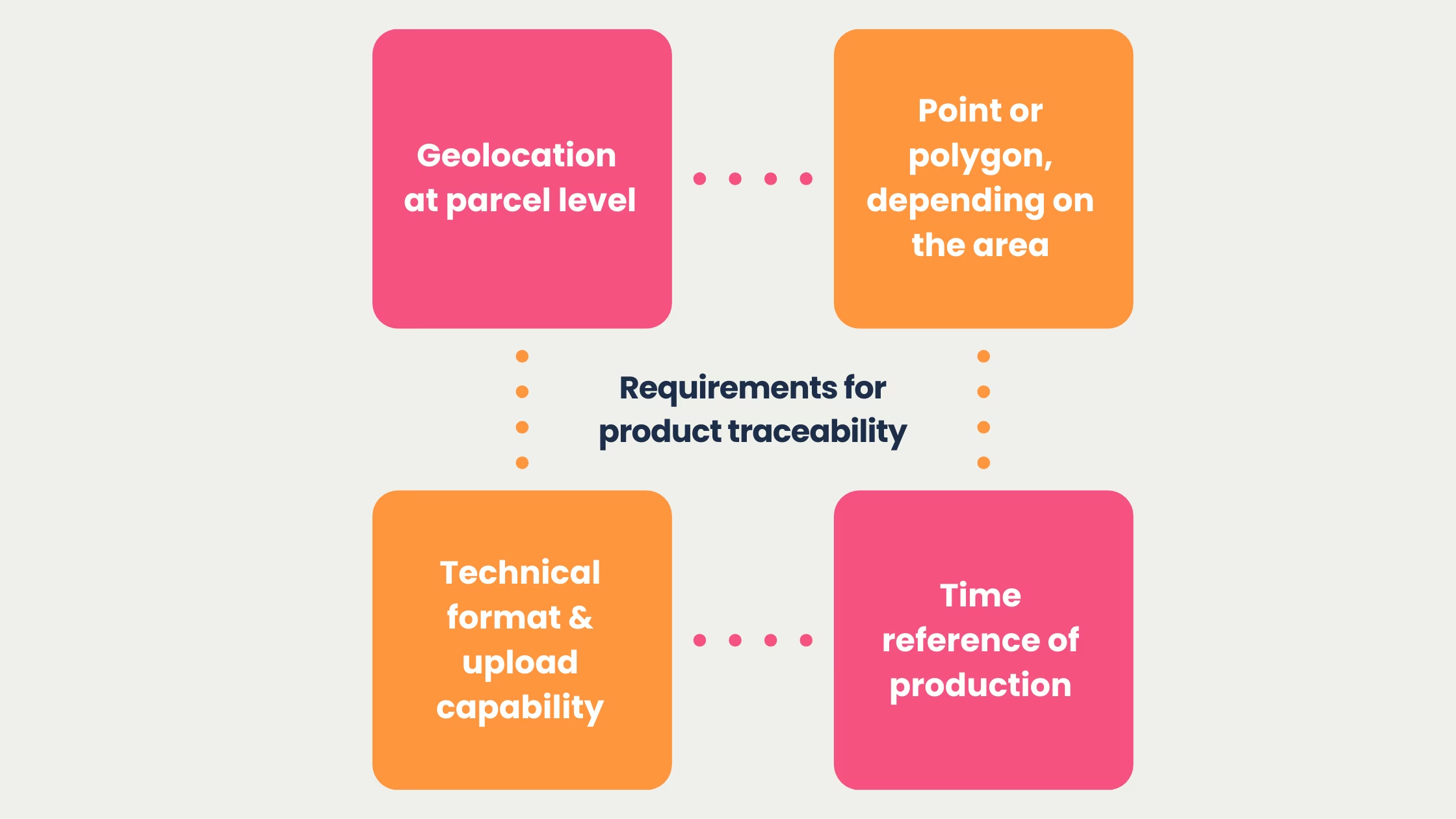
In this respect, Article 2(28) EUDR clearly defines what is meant by "geolocation": The geographical location of a parcel of land, indicated by latitude and longitude coordinates in the form of at least one latitude and one longitude value and using at least six decimal places;
for land with an area of more than four hectares used for the production of the relevant commodities other than cattle, this shall be indicated in the form of polygons, using sufficient latitude and longitude values to describe the outline of each parcel.
The geolocation of all relevant properties in accordance with Article 9(1) is a key focus of the requirements under EUDR. In this area, companies face a variety of challenges. Particularly as no relief is possible with regard to the length or complexity of their supply chains.
This is because even in the case of bulk goods such as soya, all land involved must be identified upon delivery and no mixing with raw materials of unknown origin or from damaged areas is permitted. This also applies to composite products such as wooden furniture.
If a part of a relevant product does not comply with the regulations, it must be separated before being placed on the market or exported. If this cannot be done, the entire product is considered non-compliant. Proof of compliance with Article 3 is crucial. The operator must record the geolocation of all properties involved, otherwise the product may not be placed on the market.
The origin of each raw material and product must be proven without exception.
The geolocation of a property can be done using cell phones, portable GNSS devices and digital applications such as GIS.
It should be emphasized that there are no exceptions. If a part of a relevant product does not comply with the regulations, it must be separated before being placed on the market or exported. If this cannot be done, the entire product is considered non-compliant. Proof of compliance with Article 3 is always crucial. The operator must record the geolocation of all properties involved, otherwise the product may not be placed on the market.
Article 9(1)(d) explains the requirements for geolocation. It is also important to record the time or period of production or the harvest date and the production period. This is necessary in order to verify that the product is actually deforestation-free in accordance with Article 3(a). The cut-off date of 31.12.2020 is therefore relevant.
There are special features with regard to cattle: The geolocation must include all farms where the cattle were kept, i.e. including grazing areas and slaughterhouses.
The EUDR allows natural or legal persons to raise substantiated concerns with the competent authorities if they consider that one or more operators or traders are in breach of this Regulation (Article 31(1)).
The authorities examine possible violations of the Regulation. If there are justified concerns, they carry out checks, listen to market participants and traders and, if necessary, take the necessary measures to stop trade in the products concerned (para. 2). The competent authority shall inform the persons who have expressed justified concerns of the measures taken within 30 days (para. 3).
Ensuring transparency and efficiency in the enforcement of the aforementioned regulation is the central concern of the official measures. These measures are intended to ensure the integrity of the market and strengthen consumer confidence. In view of this, companies are faced with a significant challenge. The aim is to fully comply with the legal requirements while always acting in line with social expectations.
Member States may take provisional measures in case of possible infringements of the Regulation, such as seizure of raw materials or products, suspension of placing on the market, making available or export (Article 23).
Where infringements are detected, authorities shall require operators or distributors to take appropriate and proportionate corrective action (Article 24(1)). These measures include rectifying the infringements, preventing the further distribution of the product concerned and, if necessary, recalling or disposing of the product (para. 2). In addition, the market participant must take preventive action to avoid future infringements (para. 3). If the necessary measures are not taken, the authorities intervene to ensure implementation (para. 4).
Sanctions must also be imposed in the event of infringements; these must be effective, proportionate and dissuasive in accordance with Article 25(2). They include fines, confiscation of products and revenue and trade bans.
Article 25(2)(a) should be emphasized in particular: With regard to the fines, there should be an appropriate relationship to environmental damage and the value of the goods. The amount is based on the fact that the economic benefit from the infringements is withdrawn. In the case of repeated infringements, the fines increase gradually, with a maximum amount of at least 4 percent of the turnover or total annual turnover.
EU member states will define specific sanctions by 20.12.2025. The EU Commission publishes lists of sanctioned companies for risk assessment and consumer information.

 DE
DE