EUDR - Reading time: 10 Min
With the EU Regulation against Deforestation (EUDR), the European Union is tightening the requirements for companies that import or trade in deforestation-relevant raw materials such as soy, coffee, palm oil, cocoa, beef, wood or rubber. A key instrument is the planned country benchmarking system: in future, it will classify countries of origin according to their deforestation risk and thus help companies to implement their due diligence obligations on a risk-based basis. Although the system is still under development, it is already clear that the future classification will have a concrete impact on due diligence processes. This article explains how benchmarking works, what criteria the EU is applying and how companies can make strategic preparations today.
To enable companies to implement their due diligence obligations on a risk-based basis and to focus monitoring on high-risk areas.
They must provide more comprehensive checks, evidence and documentation - regardless of the quantity of raw materials traded.
No, although it simplifies the obligations, it does not release you from the responsibility for risk assessment and documentation.
It is automatically considered a standard risk country, which means that all due diligence obligations are applied in full.
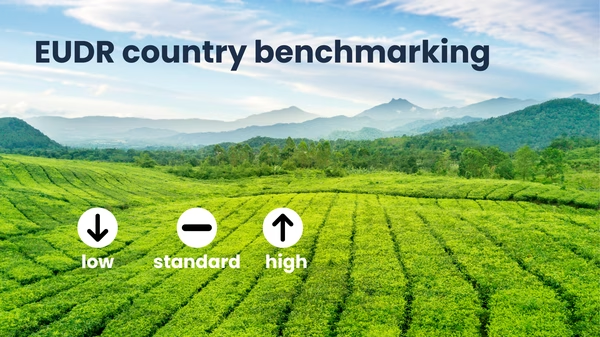
With the EU Commission's country benchmarking system, the implementation of the Regulation on deforestation-free supply chains (EUDR) is taking shape. For the first time, countries of origin of raw materials such as soy, coffee, cocoa, palm oil, wood, beef and rubber are officially categorized into three risk levels: low, standard and high. This classification has a direct impact on companies, as it determines whether the full due diligence steps (including risk analysis and risk mitigation, if applicable) are required or whether simplified due diligence applies in the case of low risk (information + DDS, without formal risk analysis, provided there is no risk of circumvention/mixing). While significantly stricter due diligence obligations apply to batches from high-risk countries, classification as low-risk allows for simplified implementation - without completely eliminating responsibility. Benchmarking should be regularly reviewed and adapted so that companies must keep their supply chains and compliance processes up to date. Those who start now to systematically record countries of origin, design internal processes flexibly and integrate suppliers in risk regions more closely will gain an important head start in EUDR implementation. The article explains how the benchmarking system works, the differences between the risk levels and provides specific recommendations for operational practice.
The benchmarking system of the EU Deforestation Regulation helps companies to better assess which countries pose an increased risk of deforestation or forest degradation. The EU not only takes into account direct deforestation, but also whether environmental and forest protection laws are complied with in the respective country. In May 2025, the EU Commission published an official list of countries for the first time. The classification is not static; the Commission envisages a first review in 2026. This classifies countries of origin into three risk categories: low risk, standard risk and high risk. The aim is to align companies' due diligence obligations on a risk basis - i.e. with greater effort where the risk is particularly high. This provides greater clarity for companies: anyone sourcing raw materials such as coffee, cocoa or wood from high-risk countries can now view the respective classification directly and adjust their due diligence obligations accordingly. This means that resources can be used in a more targeted manner without completely eliminating the duty of care.
It remains important: Certain obligations must also be complied with for low-risk countries. However, the classification relieves companies in terms of the depth of risk analysis and documentation. The benchmarking system thus creates an important framework for greater legal certainty and efficiency in the implementation of and compliance with the EUDR.
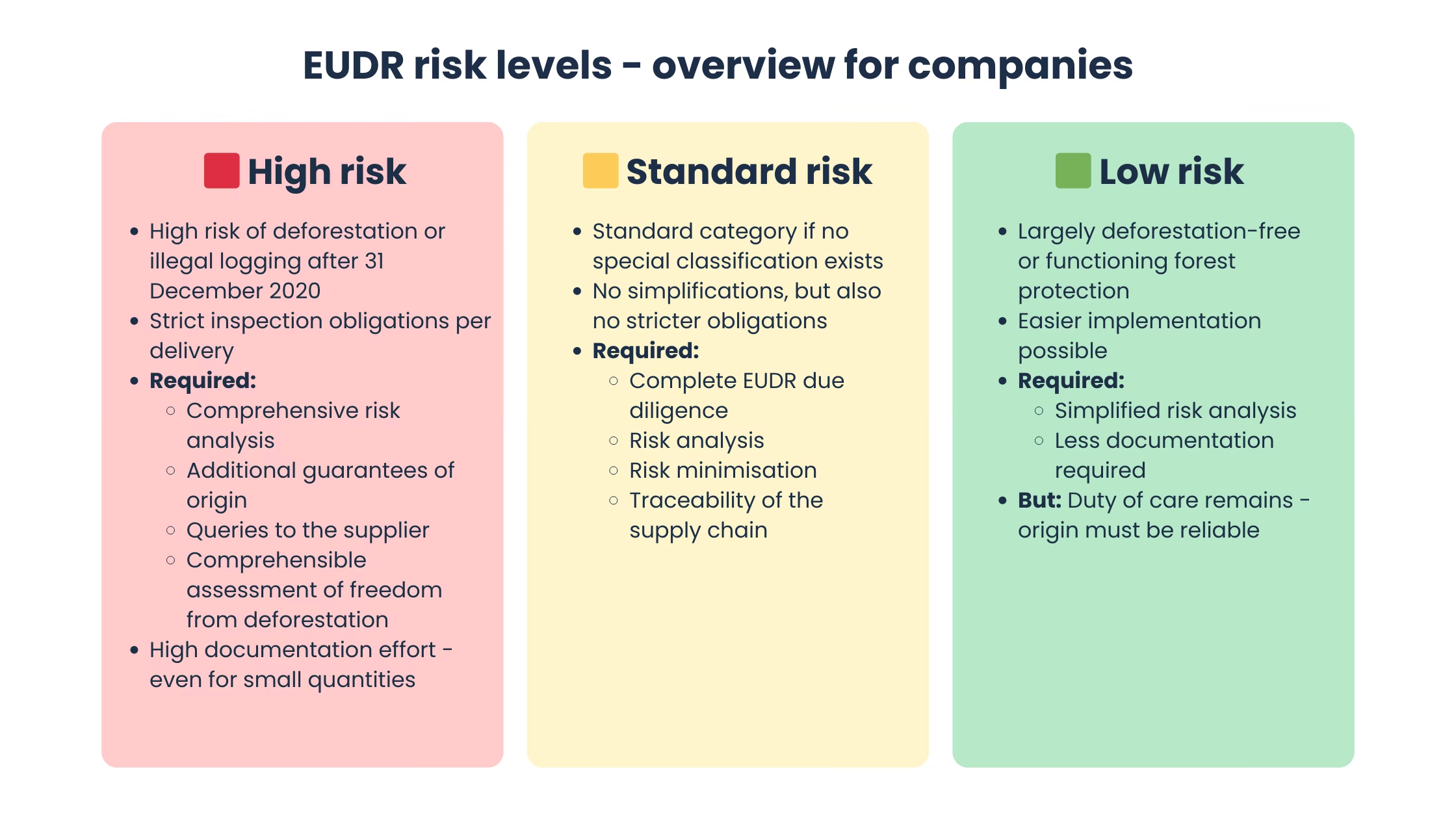
The EU Commission's country benchmarking divides countries and territories of origin into three risk levels: high risk, standard risk and low risk. This classification has a direct impact on the extent to which companies must fulfill their due diligence obligations - for example in terms of risk analysis, data procurement and internal documentation.
Important: Even for countries with "low risk" status, the EUDR still applies and companies are not automatically exempt from their obligations. They must ensure that their deliveries really do come from uncritical regions. Even in low-risk countries, there can be differences, for example between well-monitored export areas and less controlled regions. Companies must also check and document that the requirements of simplified due diligence are met (in particular that there is no risk of circumvention or commingling). A formal risk analysis in accordance with Art. 10 and risk mitigation measures in accordance with Art. 11 are then generally not required. The aim of the system is to use effort in a more targeted manner: Less bureaucracy for clearly unproblematic supply chains, but more control where the risk is high. In this way, the EU wants to prevent problematic imports from slipping through and ensures clear but adaptable rules with the three risk levels.
Responsibility for the country benchmarking system lies with the European Commission. In accordance with Article 29 of the EUDR, the Commission is obliged to draw up and regularly update a public list classifying countries or regions of origin according to their deforestation risk. The first version of this classification was published on May 22, 2025 and is available on the official homepage of the EU Commission's Green Forum. The list is reviewed regularly and can be adjusted in the event of changes to the framework conditions, for example in the event of increasing deforestation, changes to legislation in countries of origin or new scientific findings.
For companies, this means that if the risk classification of a country changes, they must adjust their due diligence obligations accordingly. If a country that was previously considered a low risk is classified higher in the future, the effort required for audits and documentation will increase. Companies should therefore keep a regular eye on the benchmarking system and structure their internal processes flexibly. The EU Commission assesses countries according to clear, comprehensible criteria: Art. 29(3) lists the primary criteria (including deforestation and forest degradation, expansion of agricultural land, production trends) and para. 4 further factors including information from states, NGOs or indigenous groups. Feedback from discussions with EU states, countries of origin and civil society organizations is also included in the assessments.
The benchmarking system is more than just a country classification, as it becomes the central management tool for the practical implementation of due diligence obligations. The risk classification of a country of origin determines how thoroughly a company must analyze, document and monitor its supply chains. The EUDR does not differentiate between sectors, but is based on the risk associated with the geographical origin of a raw material. If a country is classified as "low risk" by the EU, companies can apply the simplified due diligence obligation: They must fulfill the information requirements and submit a DDS, but are generally not obliged to carry out a risk analysis (Art. 10) or take risk mitigation measures (Art. 11), provided that a risk of circumvention and commingling can be ruled out.
However, due diligence obligations as a whole cannot be waived. The situation is different for countries with normal or high risk: Here, the full due diligence obligation remains in place, including detailed risk analysis, due diligence declaration, risk mitigation measures and comprehensive verification documentation, and the full due diligence steps (Art. 9-11) apply in addition to the submission of the DDS. In this way, benchmarking is intended to help focus efforts where they are most urgently needed and at the same time relieve the burden on companies whose products originate from regions with a demonstrably low risk of deforestation. This creates planning security, transparency and efficiency without lowering the level of protection for forests.
A practical example: A furniture manufacturer sources wood from both Finland and Indonesia. If Finland is classified by the EU as a low-risk country, the company can rely on a simplified verification procedure for this source of supply. For the wood from Indonesia (standard risk), the company must carry out full due diligence (Art. 9-11) and then submit the DDS.
If a country of origin is classified as "low-risk" by the EU, it will be easier for companies to implement their due diligence obligations under the EUDR - but these obligations will not be completely eliminated. This means that even in the case of low-risk countries, companies must collect and document the required information (Art. 9) and submit a DDS. They must also verify that the simplified due diligence obligation is applicable - in particular that there is no risk of circumvention or commingling. The difference: the assessment can be based more heavily on existing sources, for example government inspections, publicly accessible data or recognized certificates. A detailed case-by-case examination of each individual batch/relevant product is not necessary as long as the overall risk assessment is conclusive, well-founded and kept up to date.
For example, a company imports palm oil from a country that has been classified as low-risk by the EU. In this case, it may be sufficient to use the national traceability data of the country of origin. The only prerequisite for this is that it is reliable and based on sectoral control systems. Own field inspections, satellite monitoring or additional audits can then be omitted if the overall risk is actually low and the sources of information used are reliable.
Companies must continue to be able to substantiate their risk assessment with concrete information. Even in the case of low-risk countries, they should regularly check whether political, economic or environmental conditions have changed. Anyone relying on a simplified audit today must ensure that they keep a constant eye on their supply chains. This can be done, for example, through automatic updates from benchmarking databases or a fixed review cycle in the compliance system. In practice, the focus is therefore shifting from individual case audits at product level to robust system audits at country level. This enables efficient processes - provided that companies are structurally in a position to take on this responsibility.
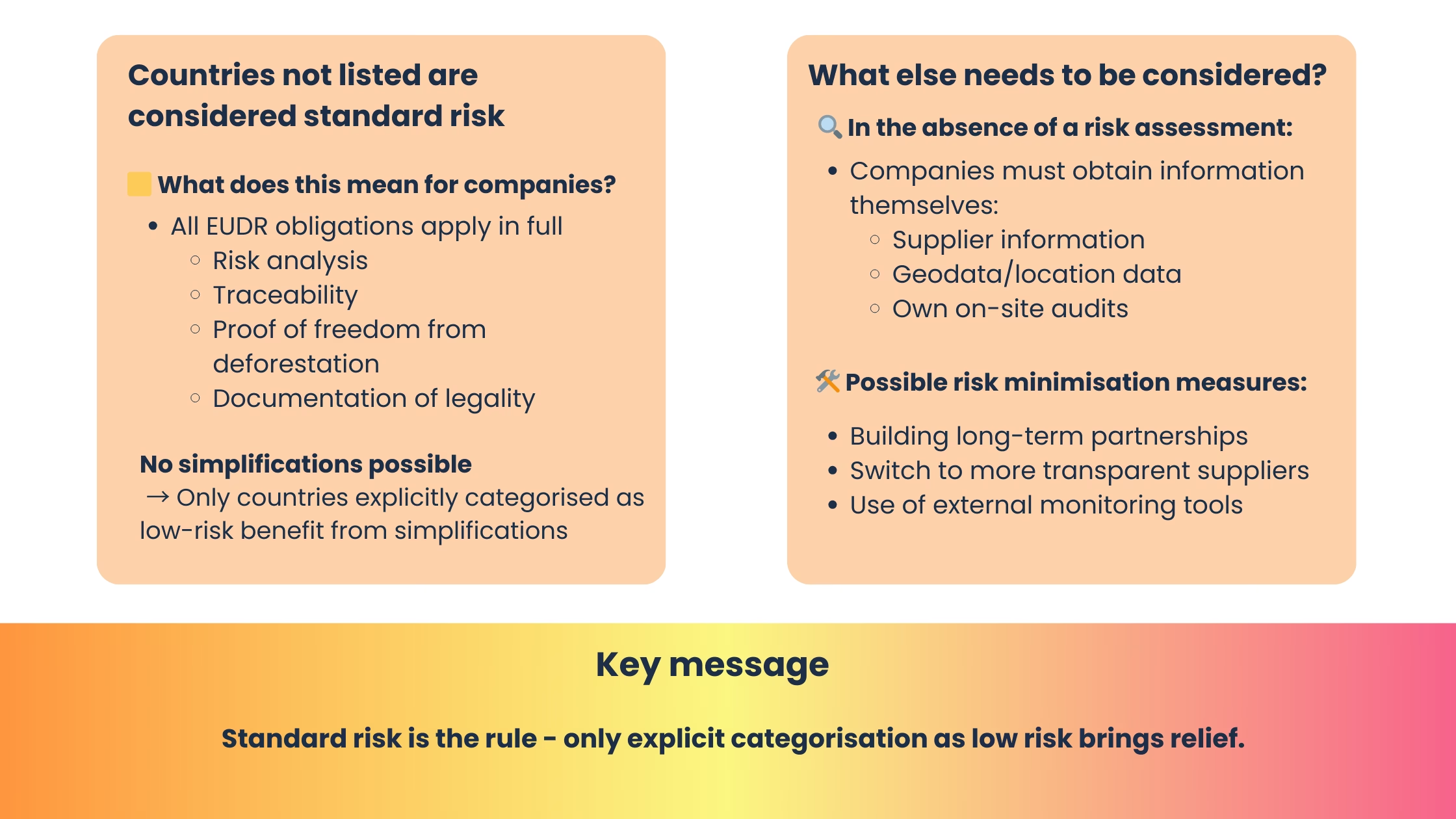
Unless a country of origin is explicitly classified as 'low' or 'high' risk, it is considered a standard risk. For companies, this means that all due diligence obligations of the EUDR, including risk analysis and - if necessary - risk mitigation measures, must be met in full and no relaxations apply here, including risk assessments. In addition, the entire supply chain must continue to be fully documented and the deforestation-free and legality of the products must be actively verified.
Standard risk is particularly challenging where supply chain-related information is difficult to access or where the plausibility of geodata, legality and freedom from deforestation involves a great deal of effort. In such cases, companies are forced to obtain more in-depth information themselves, for example through additional supplier information, location data or on-site audits. Proactive measures such as establishing long-term partnerships, switching to better documented sources of supply or using external monitoring tools may also be necessary - depending on the risk situation. The decisive factor is therefore: standard risk is the normal case - not an exception. Only those who have been expressly classified as low risk by the EU can count on relief. All others should prepare themselves organizationally and procedurally for the full range of EUDR obligations.
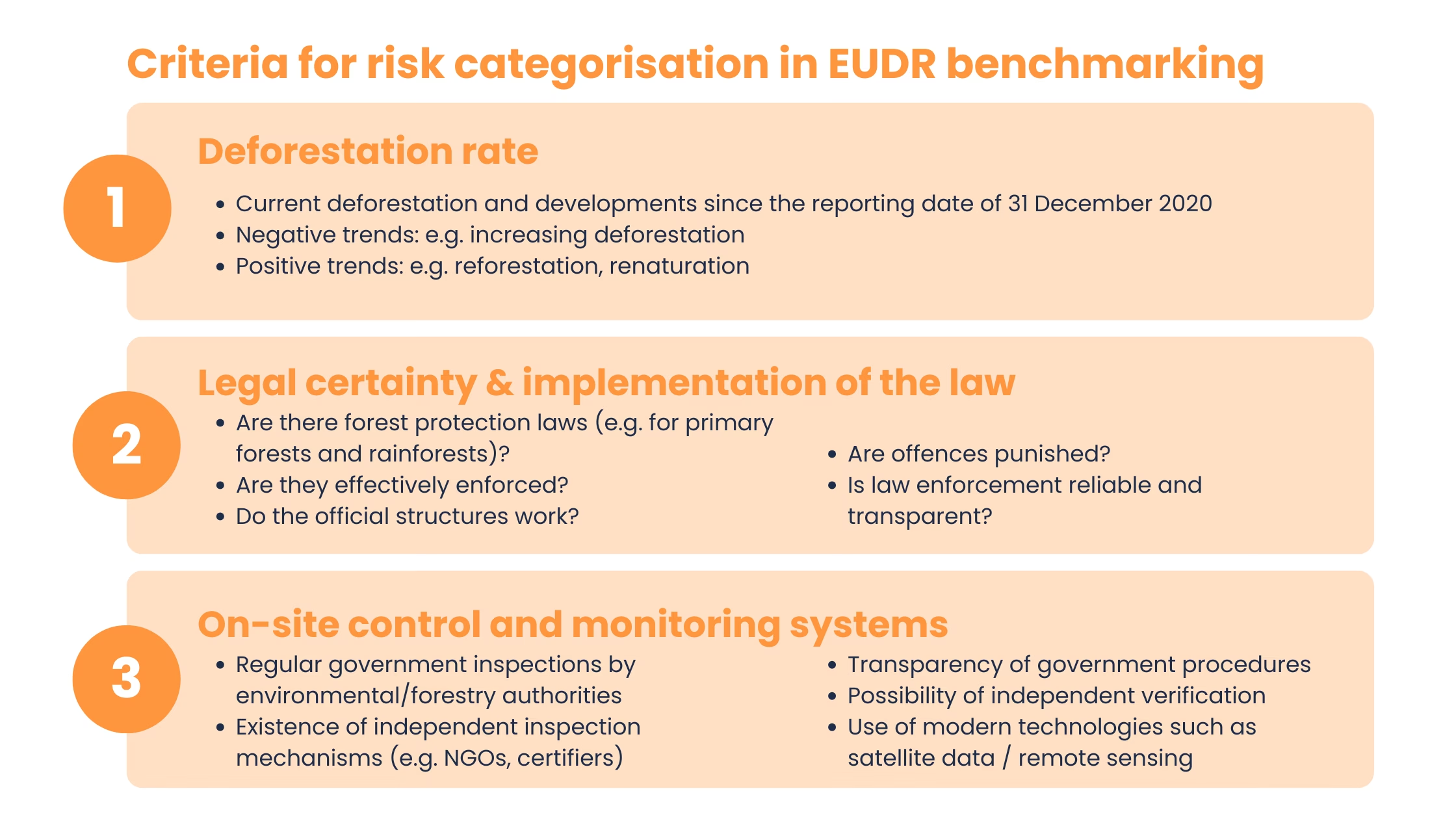
The classification of countries or regions as part of the EUDR benchmarking system is based on a number of criteria, which together are intended to provide as realistic a picture as possible of deforestation risks. A central element is the rate of deforestation and forest degradation and its trend. Negative trends such as ongoing deforestation or an increase in deforestation are particularly relevant. The Global Forest Resource Assessments (FRA) developed by the Food and Agriculture Organization of the United Nations (FAO) was used as the data source for the deforestation rate in accordance with Article 29(3)(a), as this is the most important internationally recognized source. The Commission has announced a first review of the classifications for 2026 to take into account, inter alia, the updated FAO-FRA data (published in October 2025).
However, positive developments, such as indications of reforestation or renaturation, are also taken into account. Another key indicator is legal certainty in the respective country. The decisive factor is not only whether there are laws to protect primary forests, rainforests or other forested ecosystems - but also whether these are applied effectively.
The EU also examines the quality of local government control and monitoring systems. This includes whether environmental or forestry authorities carry out regular inspections, whether there are independent inspection mechanisms (e.g. by NGOs or certifiers) and whether modern technologies such as satellite data are used. The transparency of government procedures and the possibility of independent verification are also included in the risk assessment. According to Art. 29(3), the classification is primarily based on quantitative criteria (deforestation, forest degradation, expansion of agricultural land, production trends). In addition, according to Art. 29(4), the Commission also takes into account governance and implementation aspects, e.g. law enforcement and control systems. It forms the basis for the assessment of these two criteria. FAO databases such as FAOSTAT are used for indicators on land expansion and production trends.
In summary, the benchmarking system goes far beyond the mere deforestation rate. It also looks at how reliably and credibly a country implements forest protection in practice - and how well companies can rely on official data and local controls.
The country classification is based primarily on quantitative criteria (Art. 29(3)) and on internationally available data sets, in particular the FAO FRA. Additional information can also be used for classification. The process is dynamic and is to be reviewed for the first time in 2026. This includes remote sensing data that uses satellite images to detect and document changes in forest areas over long periods of time. This technical data is supplemented by on-site reports, assessments by expert commissions and international governance indicators. In addition, publicly available forest monitoring data, country reports and governance indicators can be used as supporting evidence for the company's internal risk analysis and plausibility check (especially for standard and high risk). It is important that such sources do not automatically replace the legal evidence, but rather underpin the company's own assessment.
Governance indicators such as Transparency International's "Corruption Perceptions Index" also play a role in identifying risks due to ineffective administration or corruption. EUDR benchmarking is therefore based on a multi-source model: quantitative measurements and qualitative assessments are combined so that there is no one-dimensional view of individual indicators. This methodology aims to provide the best possible objective picture of a country's or region's deforestation risk.
The development of the EU benchmarking system is not a purely administrative task - it is the result of an exchange with many stakeholders from politics, business, science and civil society. The European Commission leads this process and is responsible for classifying the countries. It regularly coordinates with the EU member states, for example in committees, working groups or consultations. In this way, national experiences and assessments are also incorporated into the evaluation. In addition, the Commission obtains specific expertise, for example from environmental authorities, scientists, satellite data experts or lawyers who are familiar with forest and environmental laws. This ensures that the assessment is based on up-to-date knowledge - for example on the question of how forests are defined or how reliable remote sensing data is. External groups are also involved: NGOs, industry associations, companies and representatives of affected countries are allowed to contribute or comment. This open and broad-based dialog ensures greater transparency - and that the risk classifications meet with broad acceptance.
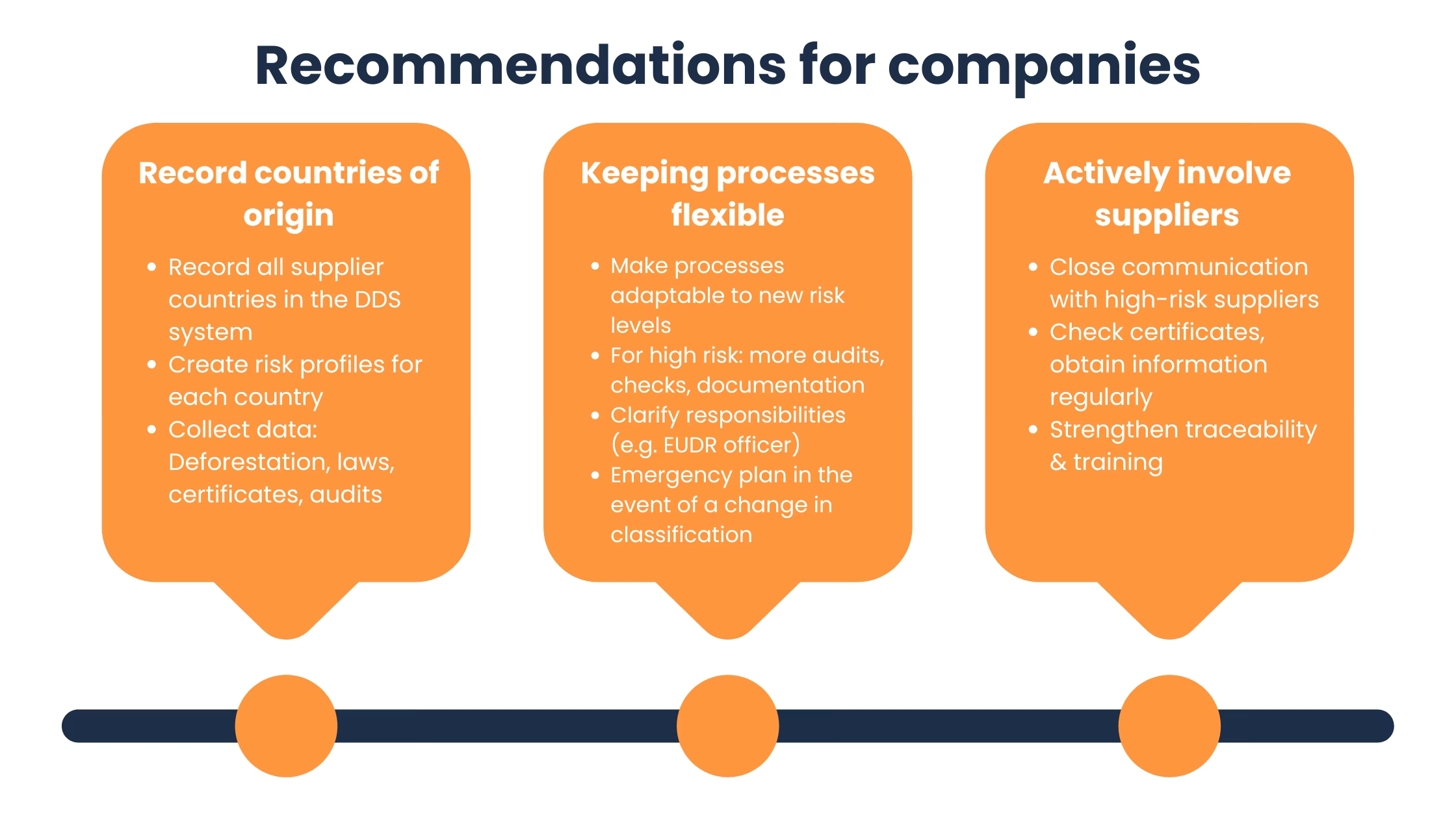
Companies should adapt their supply chains to EUDR benchmarking at an early stage. It is important that they systematically record all countries and regions of origin of their raw materials and create a separate risk profile for each country. This should not only focus on countries with known deforestation problems - even seemingly uncritical regions can suddenly be upgraded. In order to be well prepared, companies should collect the most important information on each country of origin and store it centrally.
These include, for example:
This enables companies to react quickly in an emergency and demonstrate their duty of care.
Companies must be able to react quickly to new risk classifications under the EUDR. This means that internal processes should be organized in such a way that they can be adapted immediately if necessary, for example in terms of the frequency of supplier audits, the scope of documentation or the control measures used. Engagement in the countries of origin, for example through discussions with suppliers or additional on-site inspections, must also be stepped up if there is an increased risk. In the case of high-risk origins, risk analysis and - if the risk is not negligible - suitable risk mitigation measures are required. In practice, these may include additional evidence, closer monitoring or external audits. There should also be a contingency plan in case the risk classification of a country changes at short notice. It therefore makes sense to create clear internal responsibilities, for example through a special task force or an EUDR officer. This person or group should regularly review the current requirements of the EU Commission, initiate necessary measures and ensure that all compliance requirements are met.
For companies that source many of their raw materials from countries with a high risk of deforestation, close cooperation with suppliers is particularly important. Only if information is clearly exchanged at an early stage can potential risks be identified and avoided in good time. This includes, for example, regular requests for relevant information, checking certifications (as supporting evidence, not as a substitute for EUDR verification) and building long-term partnerships with trustworthy suppliers. The aim should be to make the entire supply chain as transparent as possible. Companies should not only inform their suppliers about the EUDR obligations, but also explain to them what this means in concrete terms for day-to-day practice. Certifications can help to create trust. In addition, digital traceability systems and joint training or inspection projects offer useful ways to reduce risk and jointly meet the requirements of the EUDR.
With country benchmarking, the EU Commission has created a central management tool for the implementation of the EUDR. The classification of countries of origin as low, standard or high risk provides guidance and helps companies to prioritize their due diligence obligations based on risk. The following applies: the obligations do not cease to apply to low-risk countries either. Companies must continue to collect and document the required information and submit a due diligence declaration (DDS). At the same time, the "low-risk" classification generally allows for a simplified due diligence obligation, provided there is no risk of circumvention or commingling.
Important in practice: Benchmarking is dynamic and can be updated as new findings emerge. Companies should therefore check the classifications regularly and set up their processes in such a way that they can react quickly in the event of upgrades. At the same time, it is worth taking a look at the timetable: The EUDR obligations will become strict for most companies from December 30, 2026, and for micro and small enterprises from June 30, 2027.
Country benchmarking is an evaluation system of the EU Commission that classifies countries of origin into three risk levels: low, standard and high. The aim is to support companies in implementing their due diligence obligations in accordance with EUDR. Depending on the classification, different strict requirements apply to risk analysis and documentation.
The benchmarking system is to be regularly reviewed and updated. In the event of significant changes in the deforestation situation or governance in certain regions, the classification can also be adjusted at short notice. Companies must therefore continuously adapt their supply chains and compliance processes to the current risk classifications.
In the case of "low risk", companies can apply simplified due diligence: They must collect and document the information (Art. 9) and submit a DDS, but in principle do not have to carry out a risk analysis (Art. 10) or take risk mitigation measures (Art. 11), provided that a risk of circumvention or commingling can be excluded.
Yes, the EUDR continues to apply: information obligations and DDS remain in place. The easing mainly concerns the fact that Art. 10/11 are generally not applicable as long as there is no risk of circumvention/mixing.
If a country of origin is not explicitly classified as low or high risk, standard risk applies.
Companies must regularly adapt their processes and actively monitor the risk classifications. If a country is upgraded, the requirements for testing and verification increase. Internal processes should therefore be flexible enough to be able to react quickly.
In this case, companies must ensure a clear geographical allocation for each batch. If this cannot be proven beyond doubt, the risk classification for the higher risk must be assumed. Separation and traceability within the supply chain is therefore becoming increasingly important.
Certifications can be a useful indicator and proof of sustainable supply chains, but do not replace the relevant classification by the EU benchmarking system. They can support but do not replace the official country classification or the EUDR obligations (information/DDS or risk analysis depending on the risk).
Benchmarking is practically relevant as soon as the EUDR applies to the company: large and medium-sized companies from December 30, 2026, micro and small companies from June 30, 2027 (special regulations may apply depending on status). It makes sense to align the supply chains and internal processes with this in advance.

 DE
DE