EUDR - Reading time: 9 Min
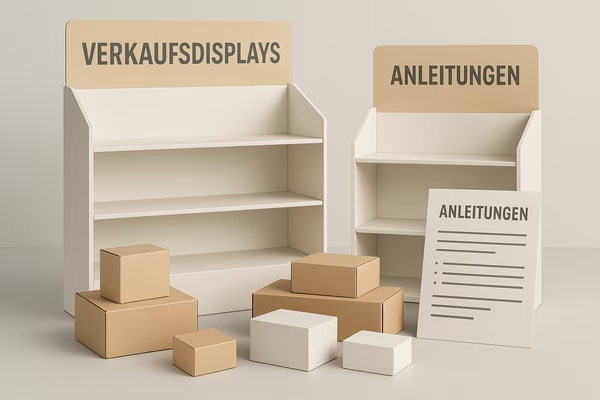
With the EU regulation on deforestation-free supply chains (EUDR), the requirements for companies are increasing, especially where wood and paper-based materials are used in large quantities: Packaging, POS displays, labels and accompanying documentation. At the same time, the legal framework has evolved noticeably in recent months: The start of application has been postponed, the demarcation for packaging as mere "protective/carrier material" has been clearly specified in the official FAQs, and classic printed products (HS/CN 49) are now no longer part of the scope of application. This article provides practical guidance on when packaging and displays fall under the EUDR and when they do not, what role customs tariff numbers (HS/CN/TARIC) play and how you can implement the requirements (due diligence declaration, evidence, processes) in a structured manner.
It depends:
No, if they exclusively support/protect/carry another product (then not covered, regardless of the HS code).
Yes, if packaging is imported or distributed as an independent product (standalone/empty).
Yes, if they are placed on the market as independent products (e.g. display/POS material as goods) and fall under Annex I as relevant wood/paper products.
As a rule, no: printed products (ex 49) have been excluded from the scope of application. (Irrespective of this, manuals that are only enclosed with a consignment fall under the "accompanying material" exception anyway).
For relevant products: deforestation-free & legal, incl. raw material origin (geolocation), risk assessment and due diligence declaration (DDS), usually via the European Commission system.
No. Purely digital content (PDF/website) is not recorded; physical products from the recorded product groups are relevant.
The new EU regulation to combat global deforestation (EUDR), whose obligations will apply from December 30, 2026 (large and medium-sized enterprises) and June 30, 2027 (micro and small enterprises; with exceptions), presents companies with new challenges - especially when dealing with wood and paper-based products such as packaging and sales displays. Whether such materials fall under the EUDR depends largely on whether they are placed on the market as a standalone product and whether they are classified as a relevant product in accordance with Annex I. At the same time, a key clarification applies: packaging material that is used solely to support, protect or carry another product is not to be treated as a relevant product - regardless of the customs tariff number.
The classification is particularly challenging for packaging components, POS displays and short-term promotional materials because the material composition, functional context and form of provision must be considered together. Traditional printed products such as catalogs or many instructions for use, on the other hand, are no longer the typical scope link, as printed products ("ex 49") have been removed from the Annex. Companies that import or provide relevant products as independent goods must record the required information on legality and freedom from deforestation (incl. risk assessment) in a structured manner and transfer it to the due diligence statement - in practice increasingly via the EU information system. For legally compliant implementation, companies should identify affected product groups at an early stage, check supply chains and data flows and establish clear internal processes in order to minimize compliance risks and at the same time anchor sustainable standards in the company.
The EUDR is intended to ensure that certain raw materials and products made from them do not contribute to deforestation or forest degradation when placed on the market within the EU. The obligations will apply from December 30, 2026 for large and medium-sized enterprises; for micro and small enterprises, generally from June 30, 2027 (with exceptions, for example for certain actors already covered by the EUTR). Only the raw materials defined in the regulation and the relevant products made from them in accordance with Annex I (CN/tariff codes) are affected. Companies must fulfill due diligence obligations, assess risks and prove that the products concerned are legal and deforestation-free.
The EU Deforestation Regulation applies to a clearly defined list of raw materials and products(Annex I), which is based on EU customs tariff numbers (CN/HS). In particular, it covers products made from cattle, wood, cocoa, coffee, soy, oil palm and rubber, as well as certain products made from these, which are listed in Annex I.
Important: Not every product made of paper or wood automatically falls under the EUDR. The specific product type, the classification according to the CN code and the functional context are always decisive. There is also a key clarification from the FAQs: packaging material that is used exclusively to support, protect or carry another product is not considered a "relevant product", regardless of the HS code.
At the same time, the scope of application has recently changed noticeably: Certain printed products ("ex 49") have been removed from Annex I. This means that classic printed products (e.g. many brochures or printed products as such) are no longer the typical "scope trigger" under the EUDR.
Therefore, the safest way to classify them is via Annex I + CN Code, supplemented by the FAQ clarifications of the European Commission, which are updated regularly.
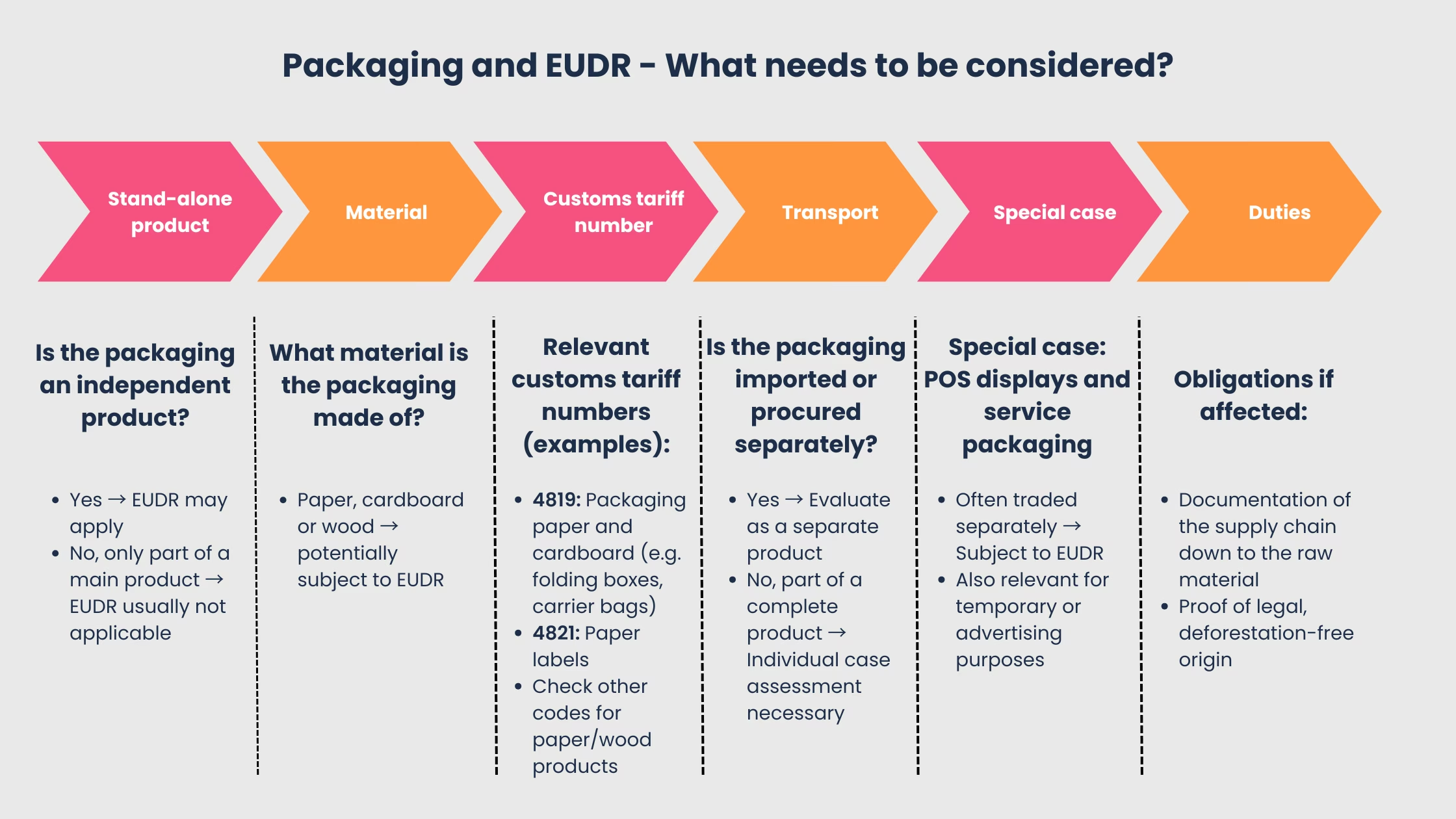
Packaging is a special case within the framework of the EUDR and is often difficult to classify in practice. Whether they actually fall under the regulation depends not only on whether they are traded as independent products, but above all on their function in the specific flow of goods: Is the packaging placed on the market as a product "in its own right" (standalone/empty) or is it used exclusively to support, protect or carry another product?
According to the current FAQ/Guidance line:
In practice, commodity codes such as:
It remains particularly tricky with service packaging and POS displays. If these are produced and procured separately and placed on the market as independent goods, they may be subject to EUDR, depending on the material and classification in Annex I.
A key point in the assessment is therefore the combination of customs tariff number (CN/TARIC), function assignment and the question of whether the packaging material is provided standalone or exclusively as packaging for another product. In addition, it is worth taking a look at the current FAQs of the European Commission, which are updated regularly.
Note for adjacent materials: Due to the latest amendments (ex 49), classic printed products are no longer the typical "scope trigger" in the EUDR context.
Paper-based product and user instructions accompany almost every technical or electrical device. Many companies are therefore wondering whether these accompanying materials - often regarded as an inconspicuous part of the final packaging - can be covered separately by the EUDR. The correct classification is crucial in order to avoid legal risks due to incorrect classification.
Many instructions, installation instructions or warranty cards are made of printed paper and therefore generally count as printed products. For the EUDR, however, the decisive factor is whether a product is included as a "relevant product" in Annex I and is placed on the market as an independent product. In this context, the legal framework has recently changed: Printed products ("ex 49") are no longer the typical connecting factor for EUDR, meaning that classic printed products such as brochures, leaflets or manuals should no longer be classified as subject to EUDR across the board.
In practice, this means that product instructions, inserts or warranty cards that merely accompany a delivery do not generally trigger an independent EUDR obligation - especially if they are not traded separately (e.g. sold/imported as a separate printed product).
Nevertheless, it is worth taking a proper inventory: as soon as documents are procured or placed on the market as separate goods (e.g. large print runs as merchandise, separately imported documentation packages), classification should continue to be based on Annex I and the specific customs tariff classification. The decisive factor here is not so much the "printed image", but whether the product falls under a covered product category and appears as a separate article in the movement of goods.
The EUDR also contains an exception for "correspondence". This refers to items that are used exclusively for communication, such as personally addressed letters, notifications or comparable business correspondence. Such consignments are not considered as "placing on the market" of a relevant product and are therefore generally not subject to EUDR.
In practice, however, this remains a marginal case: most inserts (e.g. standard instructions, warranty cards, assembly instructions) are not individually addressed, but mass-produced goods. At the same time, the framework has recently changed: Printed products ("ex 49") are no longer the typical scope connecting factor, meaning that these materials are now much less likely to be EUDR-relevant "on their own".
However, the logic of the individual case is important: If a "correspondence" consignment itself contains a relevant product (e.g. a recorded wood/paper product as goods), a declaration of due diligence may still be required for this - the exception does not automatically protect the relevant content.
For companies, this means that it is worth defining correspondence as a clear category - but in practice focusing more on the distinction between "accompanying material/packaging" vs. "standalone goods" and tariff classification in accordance with Annex I.
Not only secondary packaging, but also POS (point of sale) materials, sales displays and marketing materials are traded across borders as part of modern goods logistics. The extent to which these fall under the EUDR depends on their material composition, their function and their individual tariff classification.
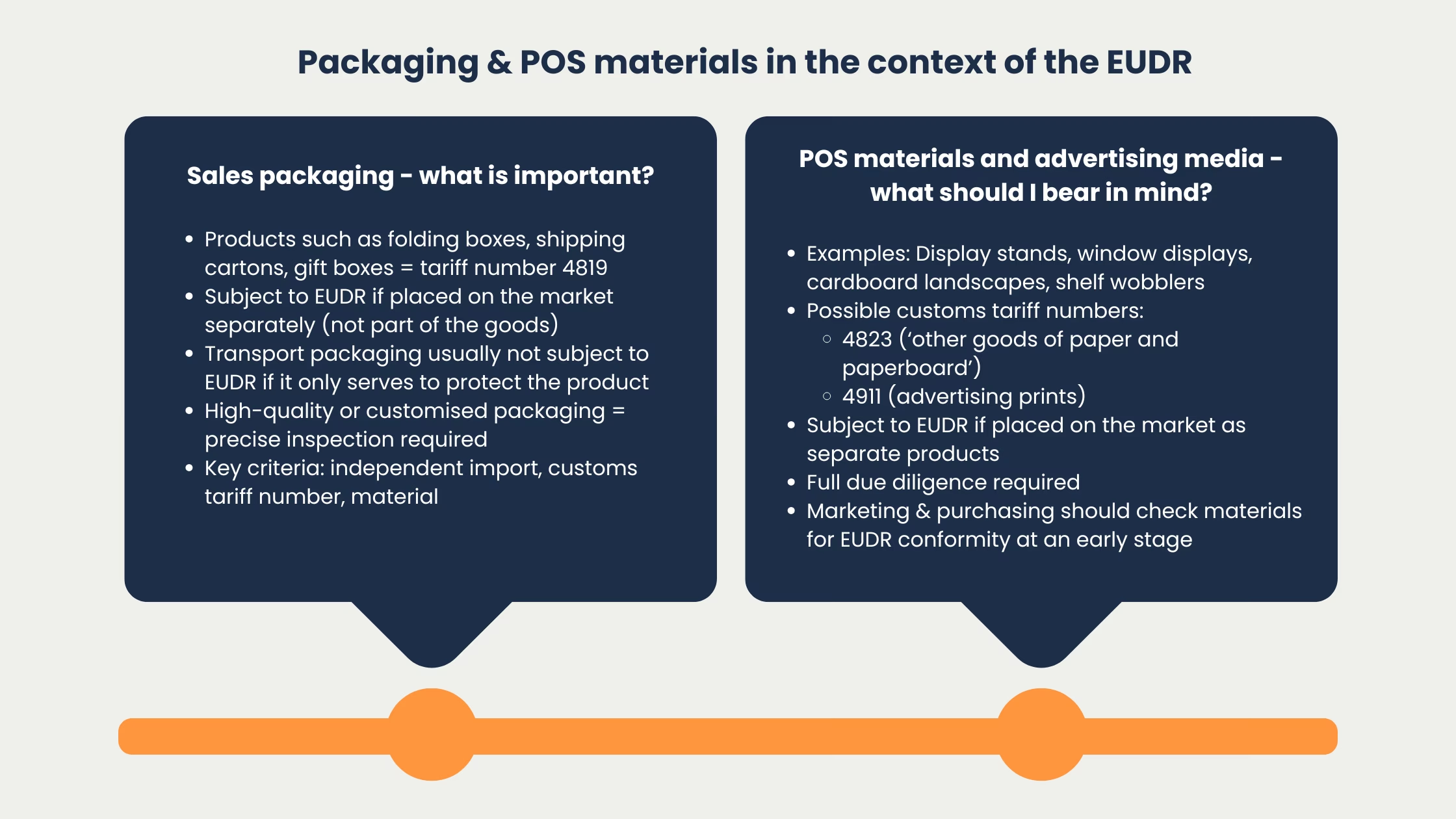
We encounter sales packaging every day: from folding cartons for food to shipping boxes and elaborate gift boxes. In the customs tariff, packaging made of paper, cardboard and paperboard is often classified under 4819 (e.g. folding boxes, cartons, carrier bags). However, the decisive factor for the EUDR is not just the goods code, but how the packaging is used and provided in the actual flow of goods.
According to the current FAQ/guidance line, the following applies: packaging material that is used exclusively to support, protect or carry another product is not covered by the EUDR, regardless of the HS/CN code under which it is classified. In practice, this applies to typical sales and shipping packaging that is delivered together with the goods and does not have the character of goods in its own right.
However, packaging becomes EUDR-relevant if it is placed on the market, imported or distributed as a separate product (standalone/empty) - for example, if a company procures or sells empty folding boxes, gift boxes or packaging components as its own items. In these cases, precise tariff classification and comparison with Annex I as well as the corresponding documentation of the supply chain are key to avoiding risks such as retention of goods or compliance violations.
POS materials - i.e. marketing materials at the point of sale such as stands, window displays, shelf wobblers or cardboard landscapes - are becoming increasingly important in the retail sector. Many are made of printed cardboard, sturdy corrugated cardboard or wood. Whether these products fall under the EUDR depends on two points in particular:
A recent clarification is important here: materials that are used exclusively to support, protect or carry other products are not considered "relevant products" - regardless of the CN code. This can play a role for certain POS solutions in particular if they are functionally more likely to be classified as a carrier/packaging solution.
In practice, POS displays made of paper/cardboard are often listed under product codes from Chapter 48 (e.g. "other articles of paper and paperboard" such as 4823, depending on the specific design). Advertising prints as a separate product category (Chapter 49, e.g. 4911), on the other hand, are no longer the typical scope link, as printed products ("ex 49") have been removed from Annex I.
An example: An internationally active electrical appliance manufacturer has large-format displays made of printed cardboard produced for its market entry and rolls these out centrally in stores. If these displays are procured and provided as separate goods, companies should clearly document the classification via Annex I/CN Code and - if recorded - set up the EUDR processes (due diligence, evidence, DDS if applicable) accordingly.
Not only packaging, but also inserts, information materials and technical accompanying documents cause uncertainty in practice. However, the decisive factor is that the EUDR is linked to "relevant products" in accordance with Annex I (CN/customs tariff codes) and the framework here has recently changed. Printed products ("ex 49") are no longer part of Annex I, which is why classic printed products are now generally not to be treated as independent EUDR-relevant goods.
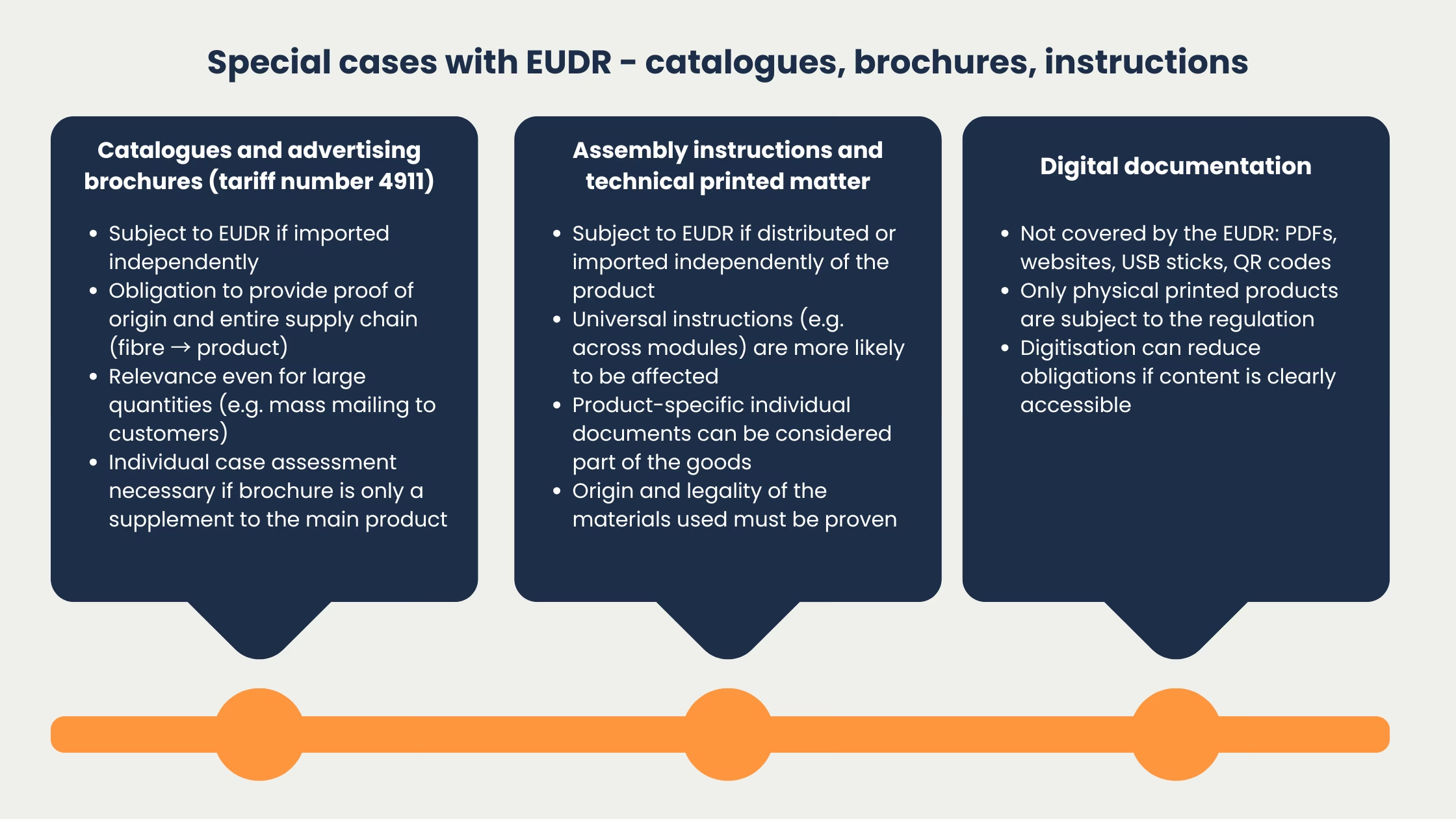
Catalogs, brochures and advertising brochures are often classified under 4911. This classification has long been a frequent trigger for EUDR discussions. Currently, however, it is no longer the relevant "scope trigger", as printed products ("ex 49") have been removed from the annex.
For companies, this means that although advertising materials such as catalogs or brochures should continue to be properly tariffed and documented, they are no longer generally subject to EUDR solely because of their printed product character. Instead, the cases in which other covered paper/wood products (e.g. certain packaging or paper products from Chapter 48) are placed on the market as separate goods will become more relevant.
In practice, assembly instructions, assembly aids or technical drawings are usually also classic print products. This also applies here: As purely printed documents, they are typically no longer the central EUDR use case.
Also important for delivery practice: Documents that are only enclosed with a delivery of goods (e.g. standard instructions in a box) are regularly covered by the accompanying material/packaging exemption as long as they are not marketed as independent goods or traded separately.
Digital documentation (PDF, online manual, QR code link) is not covered by the EUDR - the regulation is aimed at physically relevant products. Consistent digitalization can therefore help to reduce complexity in the accompanying material.
In the case of physical data carriers (e.g. USB sticks), the data record is - as before - not relevant, but only whether paper/wood components included in the specific flow of goods are placed on the market as independent products.
The classification and implementation of EUDR obligations is challenging, especially for companies with complex or international supply chains. A proper risk analysis and effective internal processes are key for manufacturers, importers and distributors. It is important to note that the EUDR is linked to "relevant products" in accordance with Annex I (CN/tariff codes) and the framework has recently changed in certain areas (including the deletion of printed products "ex 49").
Particularly relevant are companies that import, manufacture, store or market wood or paper-based products as standalone goods, such as packaging/packaging components, labels, POS displays or certain paper/cardboard products, provided they fall under Annex I.
At the same time, a key clarification from the FAQs applies: materials that are used exclusively to support, protect or carry another product (support/protect/carry) are not to be treated as a "relevant product" - regardless of the CN/HS Code. In practice, this applies to many typical shipping and sales packaging as well as accompanying materials that only "accompany" the product.
Companies should establish a clear inspection process that systematically evaluates all affected items, ideally integrated into existing quality, customs or audit routines. Three inspection steps have proven themselves in practice:
For relevant products, companies must prepare the due diligence information in such a way that it can be converted into a due diligence statement (DDS). This includes information such as product/CN code, quantity, country of production and - depending on the product - geolocation data.
Submission and administration is carried out via the European Commission's information system, which is already live.
Many companies are dependent on information from their suppliers. Therefore, customers should request and regularly update EUDR-relevant evidence in a standardized manner - especially where items are procured and placed on the market standalone (e.g. empty packaging, POS material as goods, labels). The core is a standardized data set that maps the DDS obligations (including geolocation where applicable).
Chain-of-custody certificates (CoC) prove the complete traceability of a raw material - such as wood or paper - along the entire supply chain, from its origin to the finished product. They confirm that the material comes from a certified, legal source and has not been mixed with non-certified raw materials during processing and trade. In the context of the EUDR, chain of custody certificates help to fulfill the required duty of proof and due diligence, even if they alone do not automatically guarantee full legal compliance.
The EUDR covers numerous wood and paper-based products - but not everything made of these materials automatically falls within the scope of application. Annex I and the correct classification of goods (CN/TARIC code) as well as the functional relationship in the flow of goods are always decisive. In the case of packaging and POS materials in particular, the central distinction is often decisive in practice: Is it a standalone product - or does the material only serve to support, protect or carry another product? According to the current FAQ/guidance line, the latter is generally not to be treated as a "relevant product".
At the same time, the focus has recently shifted: Classic printed products are no longer the typical scope connection point (due to the "ex 49" adjustment, among other things). This makes it all the more important to properly classify the articles that are actually relevant - especially where packaging, displays or packaging components are procured and placed on the market as independent products.
The most important recommendation is therefore: companies should quickly carry out an inventory of all potentially relevant wood and paper products that are imported, distributed or exported standalone and systematically check them against Annex I. The next step is to set up data and evidence in such a way that they can be transferred to a due diligence declaration (DDS) - including clear responsibilities and robust supplier processes. Operational implementation is increasingly becoming a data and process project thanks to the European Commission's information system.
With regard to the timetable, companies should make consistent use of the remaining lead time: The obligations will apply from December 30, 2026 (large/medium companies) and from June 30, 2027 (micro/small companies). Those who make structured preparations now will reduce compliance risks, avoid supply disruptions and position themselves as responsible market players at an early stage.
All packaging made of paper, cardboard, paperboard or wood that is placed on the market or imported as independent goods is affected. This includes sales packaging, shipping cartons and often also promotional packaging. Pure transport packaging is not always subject to EUDR if it is an integral part of another product and not a product in its own right.
POS displays and advertising materials made of paper, cardboard or wood are affected by the EUDR as soon as they are produced, imported or distributed as independent goods. Companies should check the relevant product group and customs tariff number and keep the necessary proof of the supply chain.
Yes, if instructions for use, assembly instructions or other accompanying documents are listed as separate goods, they are affected by the EUDR. Examples include components of a set or separate brochures. If they are non-individual, mass-produced instructions, they are regularly subject to EUDR.
Digital manuals and digital instructions on websites, apps or data carriers are not covered by the EUDR. Only physically existing printed works and paper products are affected by the EU Deforestation Regulation. Companies can therefore partially reduce their impact by changing their media.
Proof must be provided for all stages of the supply chain - from fiber production to the end product. This includes confirmations from suppliers, chain of custody certificates and proof of origin. Regular updating and integration of all evidence into internal compliance processes is recommended to ensure legal security for all packaging and POS materials.

 DE
DE