ESG & Sustainability - Reading time: 15 Min
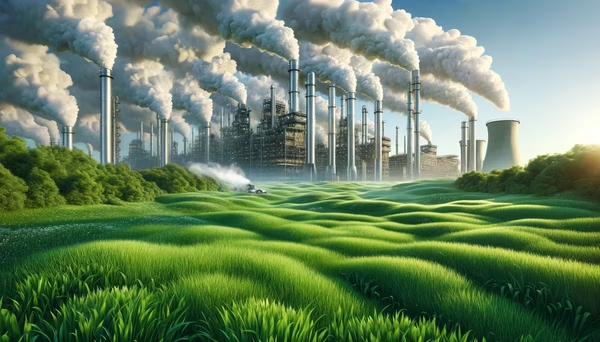
Sustainability has long been a purchasing criterion and therefore also a marketing lever. More and more companies are advertising with "green", "climate-neutral" or "sustainable", but not every claim stands up to scrutiny. The problem: environmental claims are often difficult for consumers to verify. At the same time, EU studies show that a large proportion of claims are vague, misleading or unsubstantiated. When communication creates a sustainable image without the actual performance behind it keeping pace. This is exactly where greenwashing begins. In this article, we show you what exactly is behind greenwashing, which tricks are used particularly often and how you can tell whether a company is really acting sustainably or just pretending to be. You'll also get an overview of the most important EU regulations and practical tips on how companies can clearly substantiate their sustainability claims and communicate them credibly.
The deliberate deception of consumers, investors or the public through misleading or exaggerated claims about environmental friendliness and sustainability.
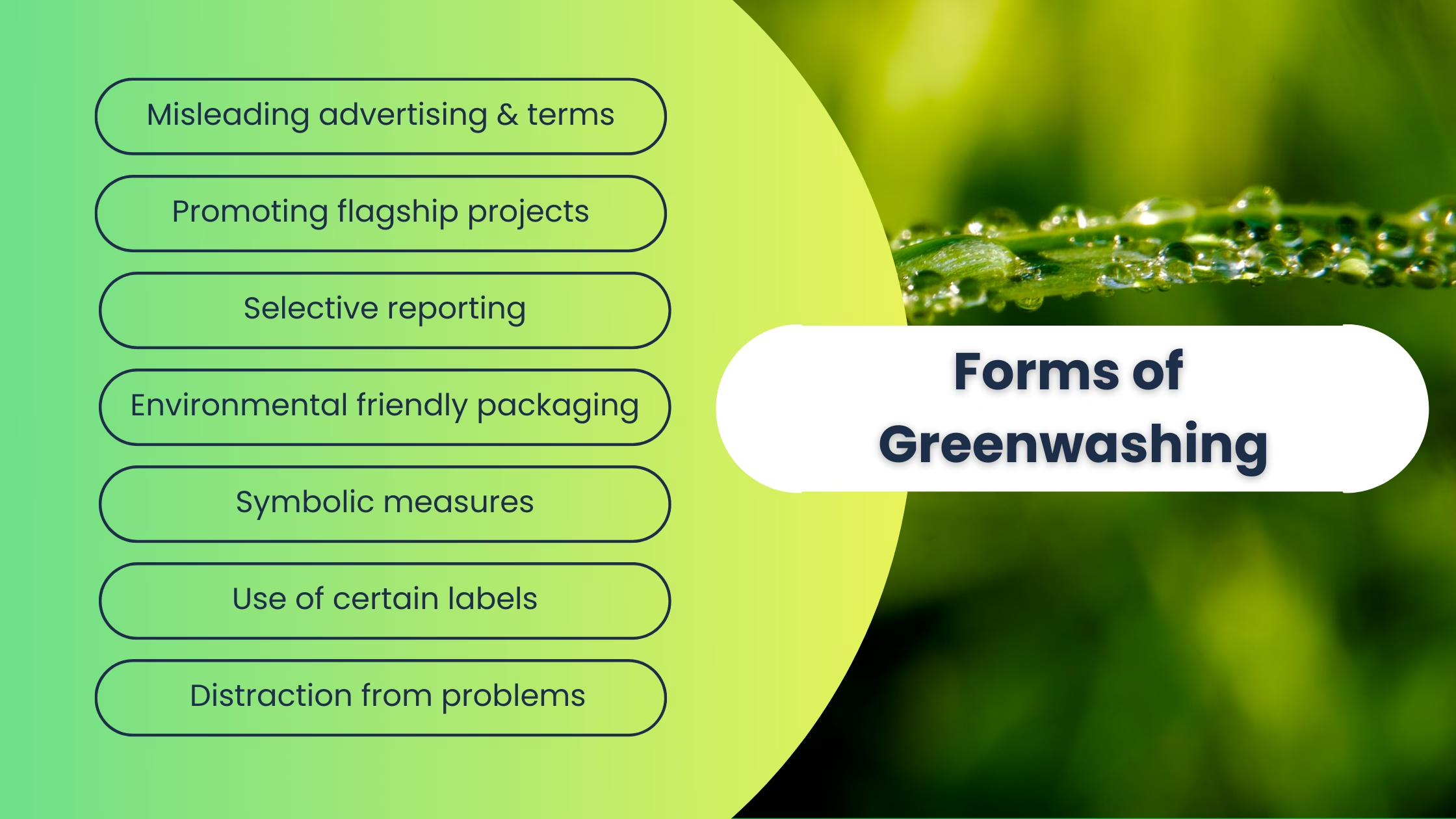
According to the EU, the following forms are particularly critical:
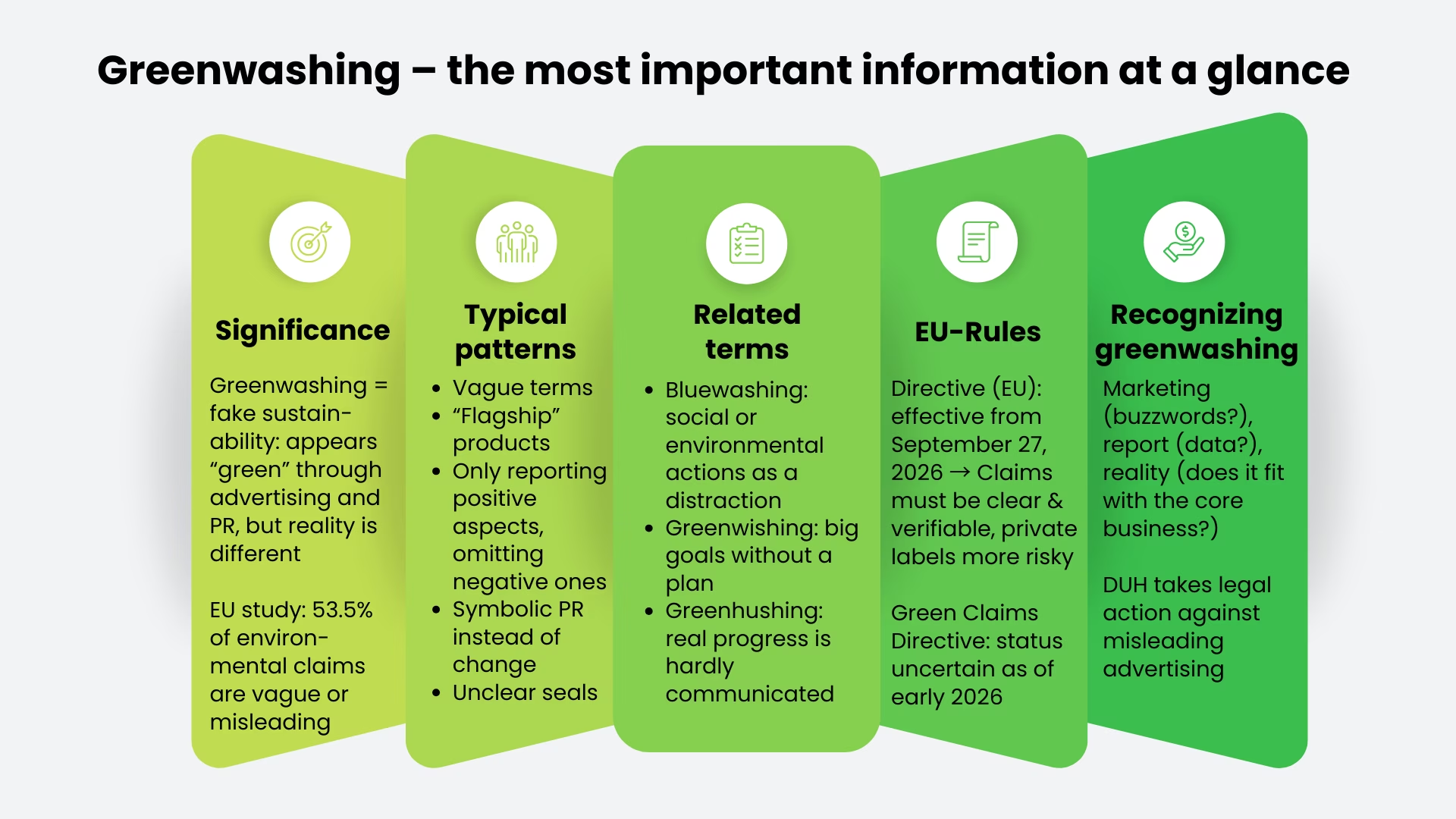
Greenwashing means something like "fake sustainability". A company appears sustainable to the outside world, which is mainly reinforced by advertising and PR, but in reality there is often less behind it than it promises. This is difficult for consumers to see through. This is precisely why terms such as "green", "environmentally friendly" or "climate neutral" are so susceptible to exaggeration, vague statements or a lack of evidence.
A study conducted by the EU Commission in 2020 came to a clear conclusion: over half of the environmental claims examined - 53.5% to be precise - were vague, misleading or insufficiently substantiated. This shows quite clearly why you should not simply believe "green" advertising promises without checking them.
Greenwashing often manifests itself in recurring patterns, for example through:
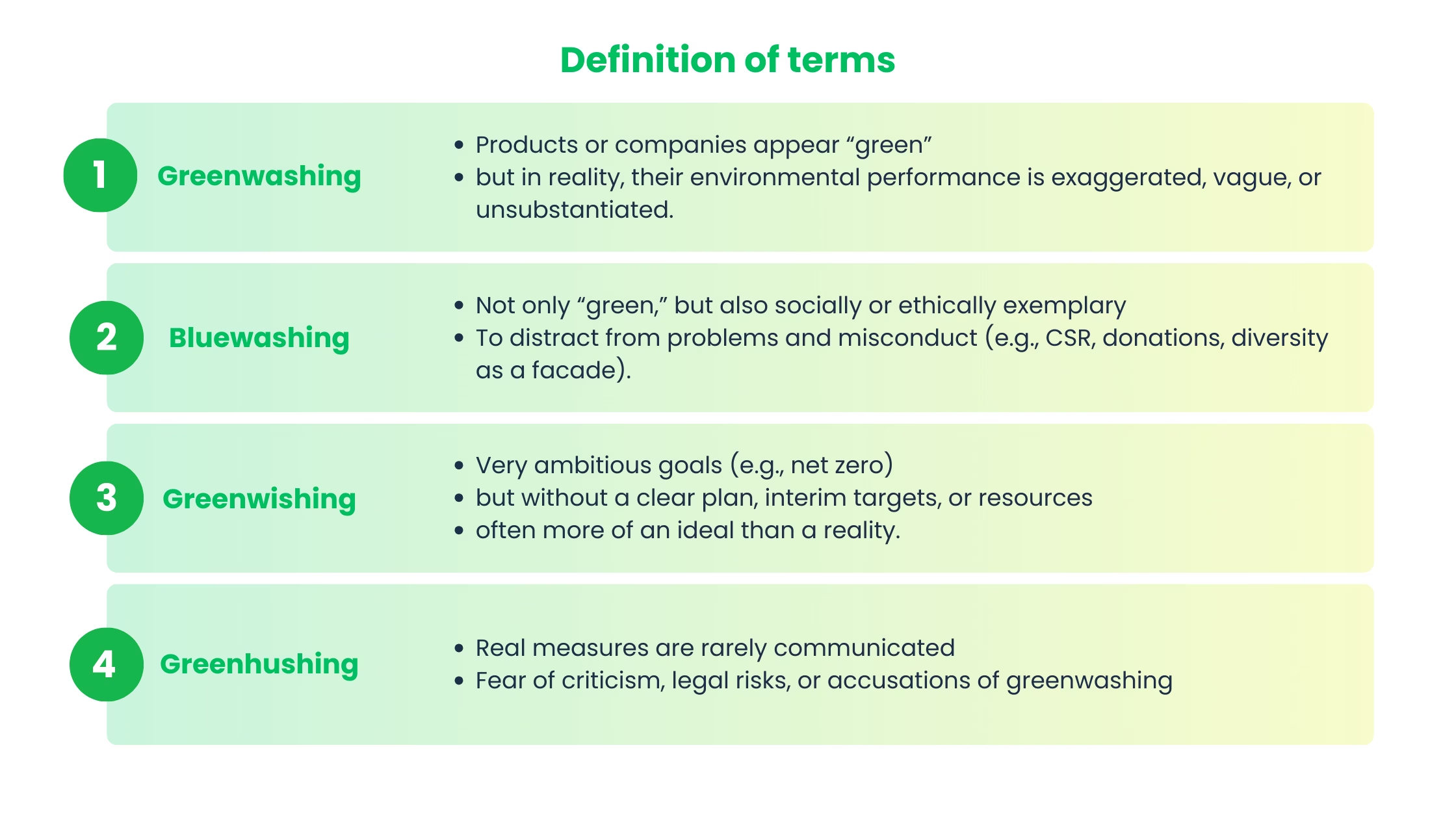
Bluewashing
Bluewashing means that a company shows the outside world how socially or environmentally friendly it is so that people talk less about its actual problems, such as unfair working conditions or questionable behavior.
Greenwishing
Overambitious sustainability targets are communicated (e.g. "Net Zero by 2030") without a realistic plan, interim targets or resources. This quickly looks untrustworthy.
Greenhushing
Companies are deliberately reluctant to communicate real progress in sustainability, often for fear of criticism or accusations of greenwashing. This can reduce transparency and the pressure to make progress.
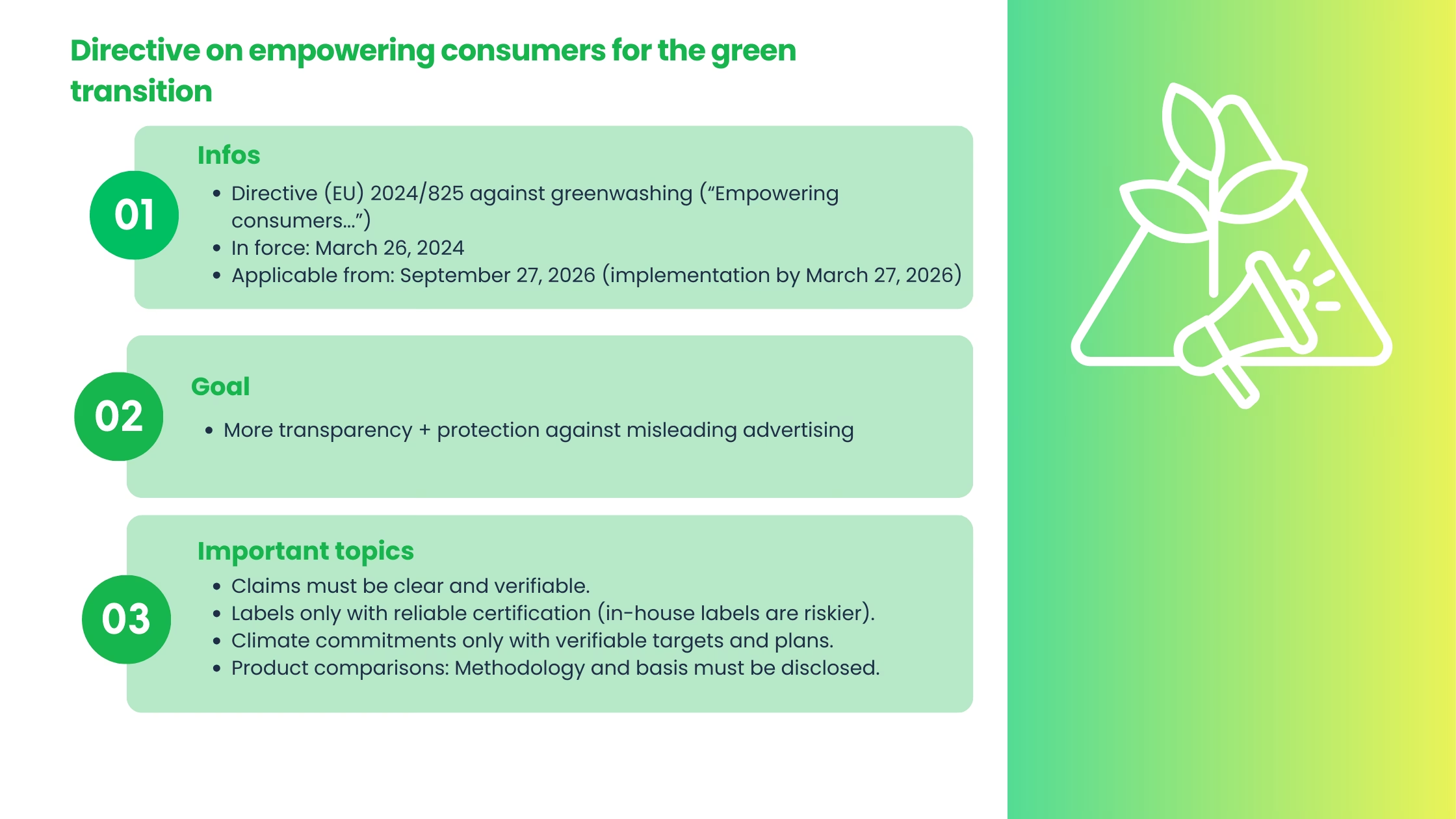
Directive (EU) 2024/825 "Empowering consumers for the green transition"
This EU directive is intended to curb misleading sustainability advertising.
Key impact: Environmental and sustainability claims must be clear, specific and verifiable. Labels without transparent, reliable criteria ("house labels") are becoming much riskier.
Green Claims Directive - current status (beginning of 2026)
These statements are particularly important and should only be used if they are clearly substantiated and limited:
Remember: The more general and absolute a claim sounds, the higher the risk.
Three perspectives help to test statements:
Deutsche Umwelthilfe (DUH) is taking action against misleading environmental advertising, including legal proceedings against companies that market fossil products as "climate neutral" or "green gas". This shows that Greenwashing is not only a reputational risk, but can also become legally relevant.
"Green" often stands for the environment and sustainability. This is exactly what greenwashing is all about: companies present themselves as environmentally friendly to the outside world, for example through advertising, PR or "green" messages, although in practice there is often little behind this. In short: greenwashing attempts to cover up a lack of genuine commitment by formulating statements in a vague, misleading or unfounded way, while still creating a sustainable impression.
There is usually a marketing strategy behind this: a company tries to present itself as environmentally conscious and environmentally friendly without really changing much. To achieve this, individual "green" details are often emphasized. For example, more sustainable packaging, while problematic points are barely mentioned. This quickly creates the impression that the company is taking responsibility for the environment and nature, although the overall picture shows otherwise.
However, it is not always immediately clear whether this is authentic environmental commitment, fake sustainability or greenwashing. It is not always easy to distinguish between greenwashing and genuine environmental commitment. Increases in efficiency are fundamentally positive. However, it is questionable if they are used specifically to circumvent stricter regulations or to increase sales. In order to create more transparency, environmental claims in advertising are to be regulated by law throughout the EU in future. This is precisely why it is worth taking a look at ESG (Environmental, Social, Governance): ESG makes sustainability measurable and verifiable with the help of clear criteria, reliable data and comprehensible processes.
Examples of greenwashing can now be found in almost all sectors, be it the energy industry, fashion companies or the food sector. Even banks and the tourism industry are now trying to find sustainable investment opportunities and offers. It is particularly noticeable that companies with environmentally harmful core businesses are often increasingly trying to present themselves or their services as "green". The distinction between authentic green marketing and greenwashing is often blurred. It has to be decided on a case-by-case basis whether it is a case of sham sustainability or not.
The term greenwashing was coined back in the 1970s, but has only become increasingly important in recent years. The background to this is increasing environmental awareness: More and more people are paying attention to ecological and social criteria when consuming. At the same time, "sustainability" has become a sales argument. This also increased the incentive to present products or companies as greener than they actually are. As the market for sustainable products grew, so did the spread of greenwashing.
Greenwashing can quickly mislead consumers. They think they are buying a "fair" or "green" product, although this is often not the case. There is hardly any time to take a closer look, especially when doing the weekly shop. And even if you consciously want to buy more sustainably, it is not so easy to recognize such tricks.
The EU Commission has therefore launched an EU-wide package of measures to combat misleading sustainability advertising. The centerpiece is Directive (EU) 2024/825 ("Empowering consumers for the green transition"). It was adopted on February 28, 2024 and entered into force on March 26, 2024. Member states must transpose the directive into national law by March 27, 2026; the new requirements will apply in practice from September 27, 2026.
For companies, this means that environmental and sustainability promises must no longer just sound good, they must be clearly formulated and verifiably documented. Labels are also becoming stricter: they should only be used if they are backed by a transparent and reliable certification system. Own "house labels" without clear criteria will therefore become much riskier. Anyone who violates this will face official measures and sanctions, depending on the implementation in the respective country.
The aim of the new rules is to better protect consumers from misleading "green" advertising and to bring more clarity to communication. For companies, this means that those who promise sustainability must also provide verifiable evidence and work more transparently. In the long term, this should help to make genuine environmental measures more visible and sustainable action more widely accepted.
Significant changes and measures
Objective of the directive
The aim of the directive is to enable consumers to better assess environmental claims and thus decide more confidently which products are really more sustainable. To this end, information should become clearer and more reliable. If "green" promises are comprehensible, this strengthens trust and at the same time ensures fair competition: companies that actually produce more sustainably should also be able to stand out honestly.
Effects on traders
In future, companies will have to substantiate environmental and social claims with concrete, verifiable data. They will also have to explain more transparently what environmental and social characteristics their products actually have. This also means that marketing messages must be checked more carefully and often adapted so that all statements comply with the new legal requirements.
These measures are intended to create a higher level of transparency and trust in the market, benefiting both consumers and responsible companies.
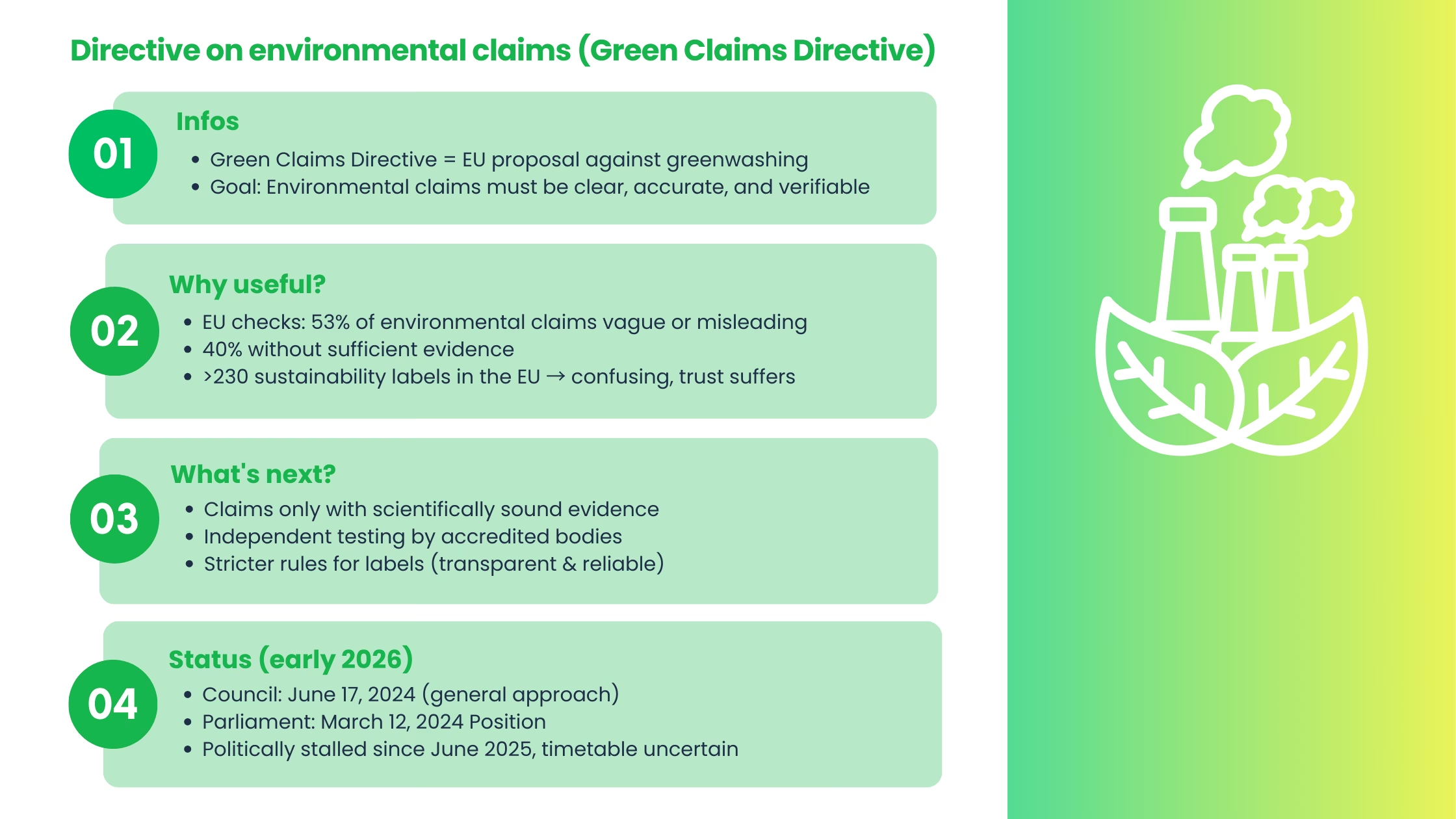
The Green Claims Directive is a proposal by the EU Commission to curb greenwashing. The idea behind it: Environmental claims made by companies should be clearly formulated, correct and verifiable. This will make it easier for consumers to decide which products really are more environmentally friendly and "green" claims will regain trust.
Background and necessity
Investigations by the EU Commission reveal a clear problem: around 53% of environmental claims are so vague or exaggerated that they are misleading. In 40% of cases, there is even a lack of comprehensible evidence. What's more, there are over 230 different sustainability labels in the EU, which vary greatly in terms of strictness and transparency. This makes it unnecessarily difficult for consumers to correctly classify "green" claims and confidence in truly sustainable products suffers.
Objectives of the Green Claims Directive
Important measures of the directive
Current status
On June 17, 2024, the Council of the European Union adopted its negotiating position ("General Approach") on the Green Claims Directive. This paved the way for negotiations with the European Parliament; the Parliament had already adopted its position on March 12, 2024.
However, the process has been effectively stalled since June 2025: the European Commission announced that it might withdraw the proposal, as a result of which planned trilogue negotiations were suspended or postponed. The further timetable is therefore considered uncertain (as at the beginning of 2026).
Significance for companies and consumers
The Green Claims Directive aims to better protect consumers from misleading environmental claims. Environmental claims and sustainability labels should only be permitted if they are well-founded, clearly explained and independently verifiable. This should also make competition fairer: Companies that really do work more sustainably should be able to stand out honestly and consumers should be able to compare environmental information more easily.
For companies, this means above all that environmental communication must be based much more on data and clear processes. Every statement needs a clear framework, for example, whether it relates to an individual product or the entire company. In addition, the methodology and evidence must be documented in a comprehensible manner.
Labels are also becoming stricter: proprietary "house seals" without clear criteria and without external testing are becoming significantly riskier. Although this makes the coordination between marketing, sustainability and legal more complex, it also reduces the risk of warnings, official proceedings and reputational damage. The bottom line is that it provides more clarity and security for companies that are serious.
This would be an advantage for consumers: environmental information would become clearer and more reliable because terms such as "environmentally friendly", "green" or "climate neutral" could only be used under certain conditions. However, it is important to note that the Green Claims Directive has not yet been adopted as of February 2026. The process is politically deadlocked and it remains to be seen how it will proceed and when it will even come into force.
The pressure to make sustainability statements truly verifiable is also increasing internationally. Standards such as ISO 14001 help companies to set up environmental management properly, i.e. to define clear objectives, responsibilities and controls instead of just communicating "green". And reporting standards such as GRI (increasingly also ESRS/CSRD in the EU) ensure that sustainability information becomes more uniform and easier to compare and verify.
For companies, this means that anyone making environmental or sustainability promises will increasingly need reliable data, clear system boundaries and documented evidence in future. For consumers, this increases the chance of being able to better classify "green" claims and distinguish real progress from marketing.
At a time when climate change and its effects are becoming ever more present, people's awareness of the environment and their desire for a more sustainable lifestyle continues to grow. This development is leading to an increasing demand for fairly produced goods, renewable energies and environmentally friendly manufacturing processes as well as green technologies. Companies recognize an opportunity to advertise these aspects in a targeted manner, even if this is sometimes done with misleading information.
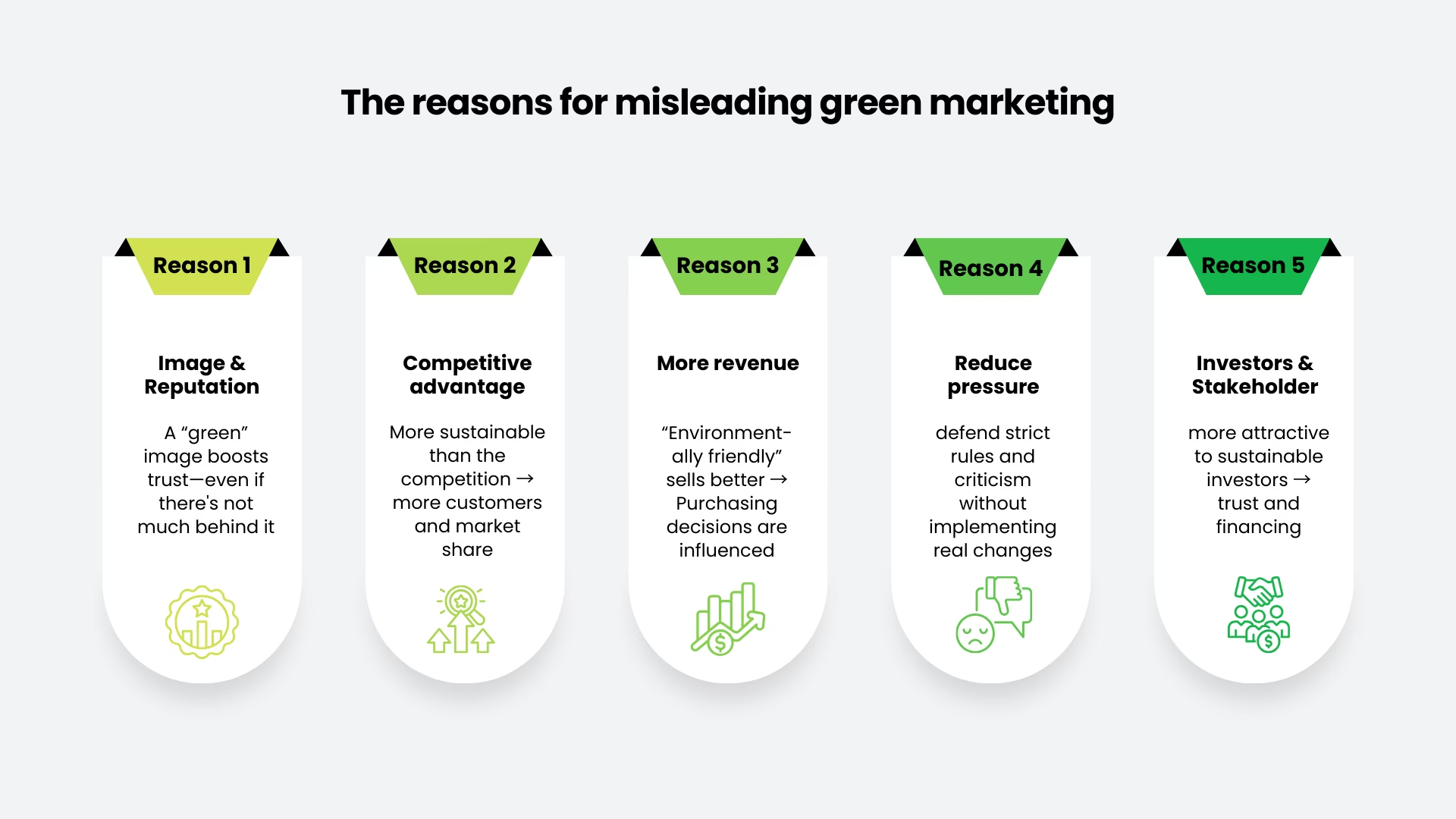
The practice of green marketing, where companies deliberately present an environmentally friendly image without taking appropriate measures, is widespread and indispensable in today's business world. But why do companies resort to this questionable tactic? Here are some reasons that explain why companies are greenwashing more and more.
One of the main reasons why companies resort to eco-fraud is to improve their image and reputation. In a society that is becoming increasingly environmentally conscious, companies want to present a positive image as environmentally friendly and sustainable. This is the only way they can gain the trust of consumers in the long term and stand out from the competition. Even if a company's environmental initiatives are minimal or non-existent, presenting a green image can help to create a positive public image.
Some companies deliberately use greenwashing to gain a competitive advantage. Particularly in sectors where "environmentally friendly" is a strong selling point, the impression of being more sustainable than the competition can attract new customers and secure market share.
Sustainability fraud can also be used to promote the marketing and sale of products or services. By labeling their products or services as environmentally friendly, companies can create a positive perception among consumers and influence purchasing behavior. This can lead to higher sales and profits.
Some companies also engage in greenwashing to avoid external pressure. By presenting themselves as "green" to the outside world, they hope to avert stricter regulations or defuse criticism without really changing anything fundamental or implementing tangible measures for environmental protection.
Greenwashing can also serve to impress investors and other stakeholders. Those who present themselves as particularly "green" appear more attractive to sustainability-oriented investors and can thus gain the trust of shareholders, partners or the public, even if the facts behind them are thin on the ground.
Bluewashing means that a company polishes up its image by placing a strong emphasis on social or ecological actions and thus distracting attention from its own problems. For example, sustainability programs, "good working conditions" or social commitment are emphasized, while ethical missteps or questionable behaviour remain in the background. This can also happen through fundraising campaigns, charity projects or diversity statements, sometimes even with the slogan "corporate social responsibility", in order to appear responsible to the outside world without really acting consistently internally.
These topics are increasingly taking center stage and are highlighted as an integral part of the company. The aim is to give consumers the impression that the company or brand is particularly sustainable, socially committed and environmentally conscious. However, this is often just a marketing strategy with empty promises that companies use to make themselves stand out and deliberately deceive consumers.
In contrast to bluewashing, the term greenwashing is much more common and better known. Greenwashing refers to a marketing practice in which products or services are falsely presented as environmentally friendly when in fact they are not. This tactic aims to exploit consumer interest in environmentally friendly and sustainable products for their own purposes. Fake sustainability is often used to give consumers the impression that a product is less harmful to the environment than it really is or that it is even an environmentally friendly alternative.
Bluewashing often goes one step further than greenwashing. It is not just about appearing "green", but also about presenting a particularly social and responsible image to the outside world. Positive initiatives are brought to the fore in order to distract attention from possible ethical problems. What really helps, however, are clear, transparent statements and independent audits that show what is actually behind the promises.
Greenwashing means that a company announces very ambitious sustainability targets, but it is difficult to see how this is realistically to be achieved. In contrast to classic greenwashing, this is not always intentional or deceptive; it is often simply overly optimistic promises or strategic targets that are not (yet) backed up by a clear plan.
Long-term announcements such as "net zero by 2030" or "completely climate neutral" are typical, without a concrete plan of action, interim targets or sufficient resources. Greenwishing often arises from the desire to appear ambitious and future-oriented. However, it becomes problematic when there is a permanent gap between ambition and actual implementation. A lack of transparency, unclear timelines or undefined system boundaries can lead to well-intentioned goals being perceived as untrustworthy.
Greenwashing is the opposite of greenwashing: companies deliberately communicate their actual sustainability measures cautiously or not at all. This is often due to concerns about public criticism, legal risks or accusations of greenwashing.
Particularly in an increasingly regulated environment, some companies choose not to advertise sustainability progress aggressively so as not to provide a target. However, this can lead to positive developments remaining invisible and transparency being lost. In the long term, there is a risk that social and corporate progress in the area of sustainability will become less visible, even though improvements are actually taking place.
Greenwashing can look very different. Some companies focus primarily on PR and attractive campaigns without really changing their production or supply chain. Others stick terms such as "sustainable" or "green" on their products, even though no clear standards have been met. This quickly creates a false image - among customers, investors and other stakeholders. This can severely damage credibility and cost trust. This makes it all the more important to be aware of typical greenwashing patterns and to critically examine statements so that genuine sustainability is not confused with good marketing.
It is possible for companies to run deceptive advertising campaigns suggesting that their products or services are more environmentally friendly than is actually the case. This can be done by using green colors, images of nature or environmental slogans without taking appropriate environmental measures. Misleading terms and phrases such as "environmentally friendly", "regional" or "natural" are often used. Terms such as these are not legally protected and are therefore, in the worst case, just empty words used as a marketing tool. The terms "organic" and "eco", on the other hand, are legally protected and may only be used for products that are actually organically grown. In contrast, terms such as "natural cosmetics" or "organic cosmetics" are not legally protected, which is often used for cosmetic products in particular. It therefore makes sense for consumers to look out for organic labels.
Companies often heavily advertise their so-called lighthouse products or services, which are supposed to be particularly sustainable. Despite this, the main business of these companies can still be harmful to the environment and have little impact on sustainability. Fashion companies in the fast fashion sector in particular advertise individual collections or garments made from recycled fibers or organic cotton. However, this does not change the fundamental problem of the business model, which continues to rely on frequent collection changes. Furthermore, the use of certified organic cotton says nothing about the working conditions during harvesting or the general production of the raw material.
Some companies report in great detail on their environmental projects, but almost only show the positive aspects. Critical issues or negative effects of their business are omitted or played down. This creates an embellished image that only partially reflects reality. Sustainability communication only becomes truly credible when not only successes but also challenges and conflicting goals are openly named. Then customers, investors and other stakeholders can better assess how serious a company really is about environmental protection.
A common example is the use of environmentally friendly packaging. Companies often use ecological packaging to give the impression that their products are sustainable. However, this often overlooks the fact that packaging is only a small part of a product's overall environmental problem. Important environmental aspects are often ignored. In terms of apparent sustainability, packaging reveals a lot about a company's credibility: it provides information about a company's actual activities. Recycled paper, recyclable cardboard and little or no use of plastic are clear signs of companies that are highly unlikely to sell greenwashing products.
Some companies rely on superficial actions such as sponsoring environmental events or participating in environmental campaigns. This gives the impression that they are actively committed to environmental protection. However, the reality often remains hidden, because behind this façade little or nothing is done to actually improve their own environmental footprint. It is important that companies not only rely on outward appearances, but also take concrete measures to effectively reduce their environmental impact.
Some companies use environmental labels or seals that have not been independently tested. This looks trustworthy on the packaging. However, this often says little about whether sustainable standards are really being met. Particularly critical are in-house labels for which there are no clear rules or controls. Labels such as "green" or "climate neutral" should also not be blindly believed: "climate neutral" often means that emissions are offset - not necessarily that they have actually been significantly reduced.
One particularly problematic form of greenwashing is distraction: companies make a big deal out of small, "green" measures so that nobody takes a closer look at the parts of the business that are really harmful to the environment. This puts nice side projects in the foreground, while the crucial questions about the actual environmental impact remain in the background. It is therefore important to look not only at the nice messages, but also at the overall picture and whether a company is transparent and is making a tangible difference.
Greenwashing can have many faces and that is exactly what makes it so difficult for consumers. It is often difficult to tell whether a product has really been manufactured more sustainably or is just being marketed as such. This has a strong influence on purchasing decisions and ultimately harms the companies that actually work seriously. Because once people have been deceived, they quickly lose trust - not just in one provider, but in "green" promises as a whole. For some, bogus sustainability is therefore primarily a means of selling more and polishing up their image.
Certain environmental and sustainability claims are currently the focus of particular attention from authorities, consumer protection organizations and competitors. Anyone using such claims should be able to clearly define, document and substantiate them.
These terms are among the most sensitive claims. It becomes particularly problematic when:
Without a clear reduction path, transparent system boundaries and verifiable data, such statements are open to legal challenge.
Very general terms without a concrete explanation are increasingly considered risky. The decisive factor is:
Blanket "green claims" without substantiation can be classified as misleading.
The term is only unproblematic if:
"Technically recyclable" is not synonymous with "is actually recycled".
This claim is also often misleading. Questions that need to be clarified:
Partial improvements must not be presented as complete sustainability performance.
"Regional" is not clearly defined in law. It becomes problematic when:
Transparency rather than buzzwords is recommended here.
The bigger and more general a sustainability promise sounds, the quicker it can become a problem. Statements such as "climate-neutral", "environmentally friendly" or "sustainable" are particularly tricky. Especially if it is not clear exactly what this refers to. Does it apply to a single product, a location or the entire company? What is the method behind it? And is the effect really true in practice?
Environmental communication only becomes credible if it is comprehensible. This includes clearly stating the framework, clearly documenting data and evidence and not selling partial improvements as a major overall achievement. Those who do this consistently not only reduce legal and reputational risks, but also build trust in the long term.
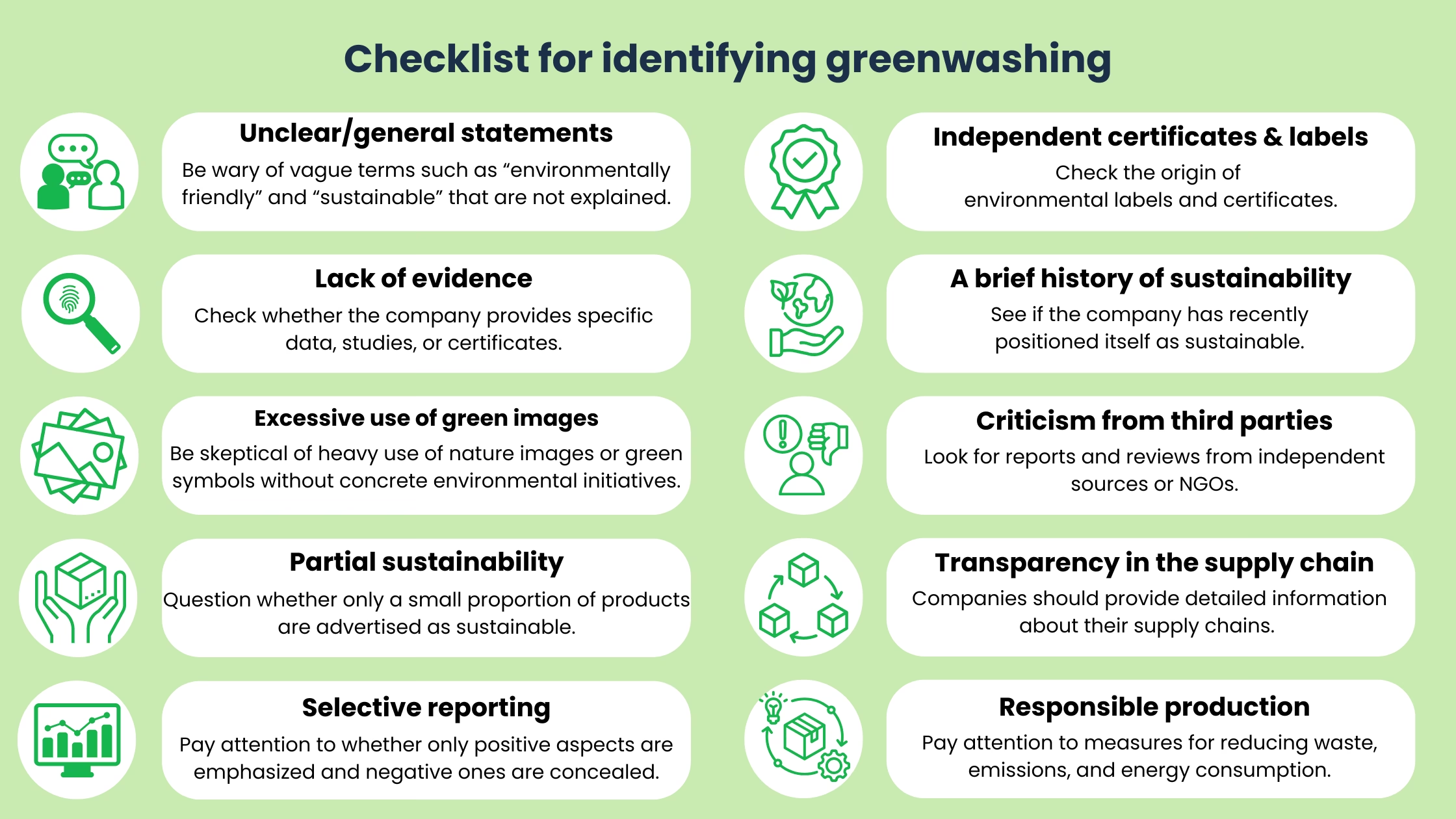
To detect sustainability fraud at a company, there are various signs and methods that consumers, investors and other stakeholders can use to check the credibility of environmental claims and sustainability practices. Often, however, this can be difficult to detect. Nevertheless, there are some key indicators and methods to identify greenwashing at a company:
To recognize pseudo-sustainability, it is worth taking a look at the advertising, packaging and the company's website. A typical warning signal is a large number of green symbols, images of nature or slogans such as "environmentally friendly", without any explanation of exactly what this means. Therefore: don't just rely on the visual appearance, but check whether there is concrete data, evidence or comprehensible information. Only then will the "green" image really match reality.
In order to completely rule out greenwashing, a company's environmental and sustainability reports should also be analyzed. This is the only way to ensure that all comprehensive information about the company's environmental goals, measures and results are included. A superficial or vague report could omit critical details and obscure the true extent of environmental sustainability efforts. Therefore, it is worth reading the reports thoroughly to get a comprehensive picture of how the company is fulfilling its environmental responsibilities and whether it is acting in a truly transparent and responsible manner.
It helps to get your own impression of the company, preferably from trustworthy sources. Also look into the past: have there ever been environmental problems, scandals or criticism of certain practices? Such research often quickly reveals how seriously a company really takes sustainability. After all, what counts in the end is transparency and a willingness to take responsibility, and it is precisely on this that the long-term trust of customers, investors and other stakeholders depends.
To assess how serious a company is, it helps to look at industry standards and certifications. This makes it easier to assess whether the company is really working systematically on environmental and social issues, or whether it is just using fine words. Recognized standards such as ISO 14001 (environmental management) or certifications such as B Corp.
ISO 14001 is an internationally recognized standard that helps companies to identify, monitor and reduce environmental impacts. By implementing ISO 14001, companies can improve their environmental performance and commit to pursuing sustainable practices. ISO 14001 certification signals that the company takes its environmental responsibility seriously and is taking concrete measures to improve its environmental performance. B-Corp certification, on the other hand, focuses not only on environmental aspects, but also on social and societal concerns. Companies that meet the strict criteria for B Corp certification have proven that they not only operate profitably, but also have a positive impact on the environment and society. B Corp certification is therefore a clear indication that a company lives up to its claim of environmental sustainability and is committed to a holistic approach to value creation.
Reputable companies are transparent. They openly show what environmental goals they are pursuing, what measures they are implementing and what the actual results are. This also includes accepting criticism and answering questions clearly instead of evading them. It is precisely this openness that forms the basis for trust and long-term cooperation. And it helps to improve environmental performance step by step, not just for image, but with real effect.
Companies should keep an eye on developments and innovations in the area of sustainability. In this way, they will notice early on which solutions are gaining acceptance and where they need to catch up in order not to fall behind. Those who really want to lead the way regularly review processes and products and develop them further. This is not only good for their image, but can also bring real progress and position the company as a pioneer in the industry.
It is also important whether a company remains consistent and credible in its environmental claims. Anyone who makes big promises but fails to keep them quickly ends up being accused of greenwashing. This is why sustainability goals should always be backed up by concrete measures and transparent reports. This is the only way to build trust and maintain it in the long term.
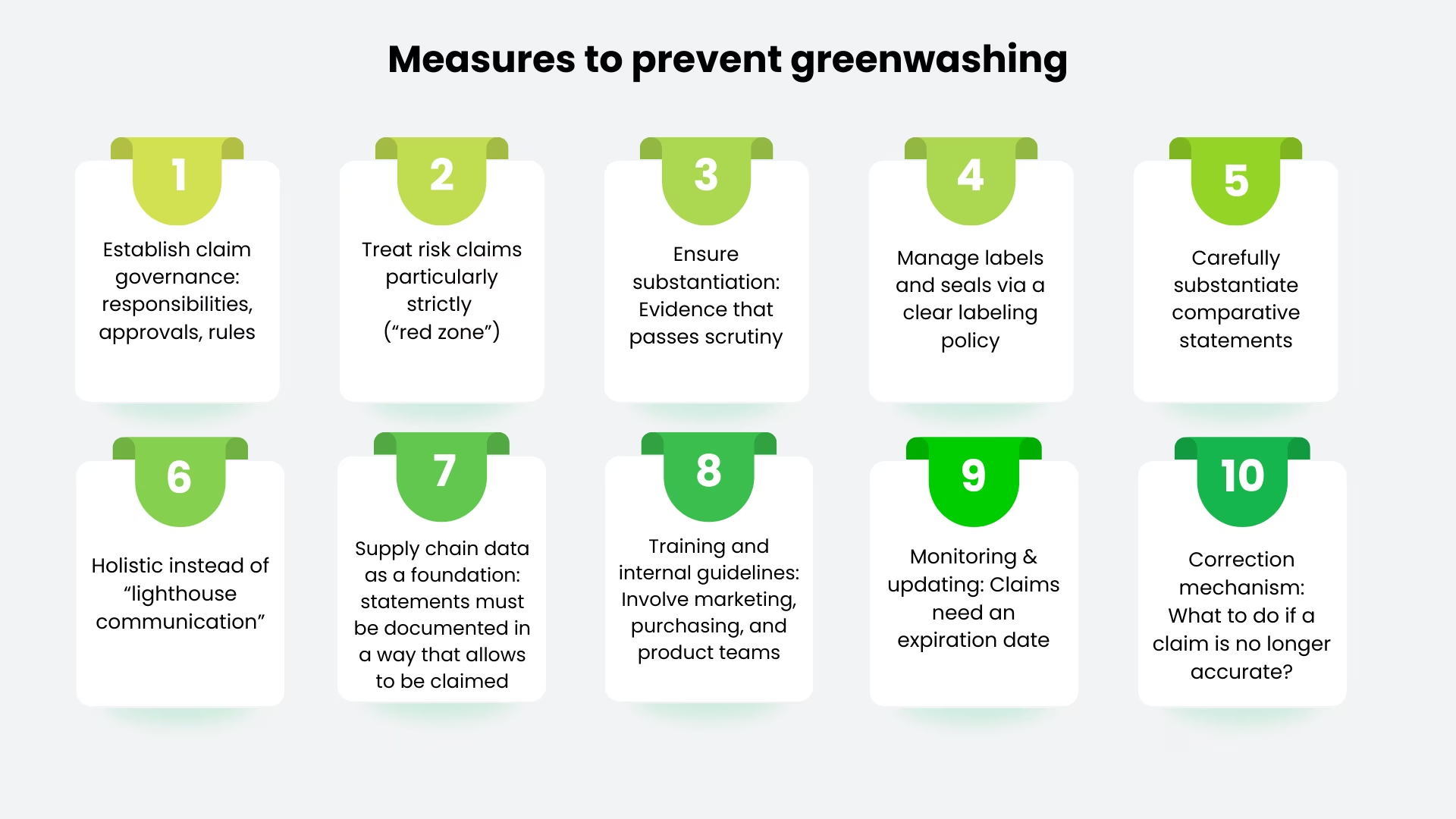
Anyone communicating sustainability should avoid greenwashing at all costs, otherwise credibility will quickly suffer. To prevent this from happening in the first place, companies can take a few clear measures:
It is crucial that companies are authentic in communicating their sustainability efforts. By disclosing relevant information and data, they create transparency and enable their stakeholders to verify the statements and messages. Authenticity is the key to building trust and avoiding eco-fraud.
Regular reports on environmental targets and results help to maintain credibility. It is crucial to show progress clearly, preferably with concrete figures and what has actually been achieved. This reduces the risk of greenwashing and trust can grow.
An important step against greenwashing is to make purchasing and production truly sustainable. This means that the supply chain must be designed in such a way that it does not place an unnecessary burden on the environment and people. This requires clear standards and regular checks along the entire value chain.
To avoid greenwashing, companies should check environmental promises thoroughly before publishing them and only say what they can back up with data. It is just as important not only to show the positive aspects, but also to honestly state limitations, open issues and challenges. It is precisely this openness that ultimately makes sustainability communication credible.
Independent certifications can create trust. If an external body checks what a company actually implements, sustainability statements are much more credible. Such seals show: There are clear criteria and not just good words.
Companies should set themselves long-term sustainability goals and implement them step by step. This only works with concrete measures and investments, for example in more efficient processes or more environmentally friendly technologies. This creates real progress instead of empty promises.
If companies implement these points consistently, sustainability becomes tangible and credible and not just a marketing message. This strengthens the trust of customers, investors and other stakeholders and helps to build more sustainable structures in the economy in the long term. In short: those who work cleanly and communicate transparently can gain and retain trust in the long term.
Companies use greenwashing to give themselves an environmentally friendly image without having any real environmental impact. Two common methods are the use of misleading environmental labels and the staging of fake sustainability in advertising and marketing campaigns. Here we take a look at some examples of companies that have been guilty of this questionable practice:
Volkswagen - Dieselgate
In 2015, the Dieselgate scandal rocked the automotive industry. Volkswagen was found to have installed software in its diesel vehicles that simulated lower pollutant levels during emissions tests than in real driving conditions. This manipulation affected around 11 million vehicles worldwide. The consequences were drastic: Volkswagen had to pay billions in fines, there were recalls and sales collapsed. The scandal led to a considerable loss of trust among consumers and caused lasting damage to the company's reputation. Volkswagen responded by focusing more on the development of electric vehicles and announcing a comprehensive restructuring towards sustainable mobility.
H&M - fast fashion and fake sustainability
H&M is often cited as an example of greenwashing. The company repeatedly advertises "sustainable" collections such as the Conscious Collection, which is said to consist of recycled materials, among other things. However, critics say that these products only make up a small part of the range and the basic model of fast fashion with quick collection changes and cheap mass production remains. At the same time, H&M has tried to become more transparent, for example by publishing more information about suppliers and sustainability measures on its website.
Nestlé - Environmental and social issues
Nestlé, one of the world's largest food companies, has often presented itself as environmentally friendly and socially responsible. At the same time, however, the company has been repeatedly criticized for unethical business practices. Allegations include the overuse of water sources in water-scarce regions, environmental pollution from plastic packaging and human rights violations such as child labor in cocoa production. Despite these problems, Nestlé has tried to improve its sustainability goals in recent years, for example by committing to reducing plastic waste and introducing projects to support sustainable agriculture.
BP - The green image and the reality
BP has tried to position itself as a pioneer for sustainable energy through its extensive advertising campaigns. Despite these efforts, BP remains responsible for one of the biggest environmental disasters in history: the 2010 Gulf of Mexico oil spill, which caused enormous environmental damage and cost BP billions in fines and compensation. Following the disaster, BP invested heavily in renewable energy and adapted its business strategy to play a leading role in sustainable energy. Nevertheless, consumer confidence remains severely affected by past events.
These examples show that sustainability fraud continues to be a problematic reality. It is critical that consumers and stakeholders look critically behind the scenes and hold companies accountable to effect real environmental change. Only through transparency and honest efforts can companies truly help protect our planet.
Patagonia - Authentic sustainability
Patagonia is often seen as a positive counterexample to greenwashing. The company has long been committed to concrete measures, such as recycled materials, fair working conditions and support for environmental projects. Patagonia is also known for donating 1% of its turnover to environmental protection and being comparatively open about its supply chains and production. Because these points are not only communicated but also consistently implemented, Patagonia has built up a very credible reputation in the area of sustainability over the years.
IKEA - Sustainability in practice
IKEA has also taken extensive measures to become more sustainable. The company has set itself the goal of becoming fully circular by 2030 by using recyclable materials and renewable energy. IKEA has introduced initiatives such as the buy-back program for old furniture to extend the life cycle of its products and reduce waste. In addition, the company is continuously working to increase transparency in its supply chains and improve working conditions at its suppliers. These serious efforts have helped IKEA to be perceived as a credible player in the field of environmental sustainability.
These examples show that there are both problematic and positive approaches to dealing with environmental promises. It is crucial that consumers and stakeholders look critically behind the scenes and hold companies accountable to effect real environmental change. Only through transparency and honest efforts can companies truly contribute to protecting our planet.
Greenwashing is not prevented with fancy words, but with a clean system behind it: clear responsibilities, reliable data and fixed processes. Anyone who communicates sustainability should always be able to explain what the statement refers to, how it is substantiated and how it has been checked. In practice, this works best when companies bring three things together: clear rules for claims (governance), solid evidence (substantiation) and regular checks.
The most important lever is a binding process for sustainability claims. A claim approval process (e.g. 4-eyes principle), in which at least Marketing/Communication, Sustainability and Legal/Compliance are involved, has proven its worth. This prevents strong claims from being published without being methodically and legally validated.
A central claim library (e.g. as a table or internal wiki) is also helpful: All claims used are stored there, including scope, system boundaries, data sources, methodology, validity date and responsible parties. In addition, there should be a short claim guideline (do's/don'ts, mandatory information, permissible terms, rules for comparisons).
Some terms are particularly sensitive. They should only be used if the scope is clear and there is strong evidence. These include, in particular, statements such as "climate-neutral, CO₂-neutral, Net Zero", "environmentally friendly, sustainable, green", "recyclable", "plastic-free" or "regional".
A "red zone" should apply internally to such statements: no publication without documented evidence, clear restrictions and approval by Legal or Compliance. The more general the term, the greater the risk that it will be interpreted as misleading.
Every central claim needs a solid foundation. A short claim factsheet (1-2 pages) per statement has proven itself in practice. This should contain at least
Important: Statements should not only be "internally verifiable", but should also be made externally comprehensible as far as possible (e.g. via a subpage, report or QR link). Transparency is a key credibility factor.
Sustainability labels are a particularly sensitive area. Companies should define a label policy that specifies:
Independent certifications and regular external audits can increase credibility, but they are no substitute for the obligation to explain claims clearly and define them correctly.
Many greenwashing accusations arise from unclear or selective comparisons ("better", "less", "reduced"). The following therefore applies: If you make comparisons, you must be transparent about what you are comparing and how it was measured. Statements should be comprehensible, fair and complete and must not pick out only one favorable aspect while ignoring other relevant environmental impacts.
A common problem is when a company highlights individual "green" projects while hardly anything changes in the core business. To avoid this impression, sustainability should not just be a marketing issue, but should be firmly integrated into everyday life - for example in product development, purchasing, production, logistics and management. Communication is particularly credible when it shows how sustainability really flows into decisions and processes and does not just appear in campaigns.
Many greenwashing risks arise where sustainability claims are not backed up by good supply chain data and clear processes. Anyone who advertises human rights, working conditions or standards at suppliers, for example, should also be able to prove this - with a documented risk assessment, specific preventative and remedial measures and a check on whether these measures are effective. In our article on the Supply Chain Due Diligence Act (LKSG), we show how such due diligence obligations can be implemented in practice.
Greenwashing often does not happen out of malicious intent, but because departments do not work together well enough. Training should therefore not only raise awareness, but also provide clear rules and practical guidance, for example:
In this way, sustainability communication becomes a common standard rather than an individual achievement.
Sustainability statements must remain up to date. There should therefore be fixed review cycles (e.g. every six months or annually): Is data still valid? Have supply chains changed? Are there new standards or new findings? Claims should have an expiry date and be consistently adjusted or paused in the event of changes.
Credibility also comes from dealing with mistakes. Companies should define what happens if a claim is no longer tenable:
This reduces risks and strengthens trust in the long term.
Conclusion: If you want to avoid greenwashing, you need a system: clear approval processes, reliable evidence, clean data (especially in the supply chain) and regular updates. This not only makes sustainability promises more legally compliant, but also more credible and real progress becomes visible without ending in marketing platitudes.
Deutsche Umwelthilfe (DUH) is actively taking action against greenwashing. It publicizes misleading environmental advertising, takes legal action against it and puts pressure on companies to clearly substantiate their promises so that consumers are better protected.
One of DUH's key instruments is the initiation of legal proceedings against companies that use misleading advertising to present an environmentally friendly image. DUH also uncovers cases in which fossil fuels such as natural gas are advertised as "climate-neutral" without these claims being substantiated. In this context, DUH has initiated legal proceedings against several gas suppliers who market fossil natural gas as "green gas".
The organization also criticizes companies that advertise with unsubstantiated sustainability targets. In addition, DUH calls for clear and comprehensible labeling of products to ensure that consumers can make informed decisions. This includes the demand for an EU-wide labeling requirement for renewable raw materials in products such as candles.
With these activities, DUH is helping to curb greenwashing. At the same time, it ensures that environmental promises become more credible and that consumers are better protected when it comes to "sustainable" products.
The meaning of greenwashing goes far beyond "poor communication": in most cases, greenwashing is a verification and process problem. If terms such as "climate-neutral", "environmentally friendly" or "recyclable" are used without clear system boundaries, reliable data and transparent methodology, a claim quickly becomes a legal, reputational and economic risk. This is why the EU is gradually tightening the requirements for environmental advertising. Associations and organizations such as DUH are also showing that misleading sustainability promises are increasingly being consistently attacked.
The key consequence for companies is that sustainability communication needs a system. If you want to manage claims properly, you should establish clear responsibilities, approval processes and documented evidence, ideally via a claim library, claim factsheets and a fixed review cycle. This makes claims verifiable, keeps them up to date and allows them to be adjusted in good time in the event of changes. For consumers, this ideally means fewer buzzwords, more transparency and a better chance of distinguishing genuine sustainability performance from clever marketing.
Greenwashing refers to the attempt by companies to present themselves as more sustainable than they actually are. This often happens through vague, exaggerated or unsubstantiated environmental promises in advertising and communication.
Greenwashing deceives consumers, distorts competition and harms companies that really do work sustainably. It also undermines trust in "green" claims overall.
Typical signs are very general terms such as "environmentally friendly" or "sustainable" without any concrete explanation, a lack of evidence, individual "house seals" or heavily advertised individual measures for problematic core business.
Terms such as "climate-neutral", "CO₂-neutral", "net zero", "recyclable", "plastic-free" or "regional" are particularly sensitive. They should only be used if they are clearly defined and can be substantiated.
Greenwashing refers to misleading environmental promises. Bluewashing goes further and also includes exaggerated or strategic emphasis on social responsibility to distract from problems.
Greenwishing describes overambitious sustainability goals without a realistic implementation plan. There is not necessarily a lack of good intentions, but the concrete implementation often remains unclear.
Greenhushing is the opposite of greenwashing: companies are deliberately reluctant to communicate real progress in sustainability, often for fear of criticism or legal risks.
The EU is significantly tightening the requirements for environmental advertising. In future, environmental and sustainability claims must be clear, specific and verifiable. The Green Claims Directive has not yet been politically adopted (as of 2026).
In addition to reputational damage, there is the threat of warnings, official proceedings and fines. The loss of trust among customers, investors and business partners can also have considerable economic consequences.
Through clear processes, reliable data and documented evidence. Sustainability statements should be checked via fixed approval processes, clearly documented and regularly updated.

 DE
DE