CSRD - Reading time: 8 Min

The NFRD was the EU starting point for mandatory non-financial reporting. Today, it is primarily relevant as the predecessor to the CSRD. For many companies, the CSRD/ESRS already applies or is imminent (depending on the wave and national implementation). This article therefore provides an overview of what the NFRD required, to whom it applied and what the transition to the CSRD looks like in practice.
The NFRD is an EU directive on non-financial reporting on environmental, social and governance (ESG) issues.
Capital market-oriented companies, banks and insurance companies:
More transparency about corporate sustainability and fulfillment of social responsibility.
The NFRD was replaced by the CSRD from 2025 and significantly expanded - more companies, stricter standards, digital reporting obligations.
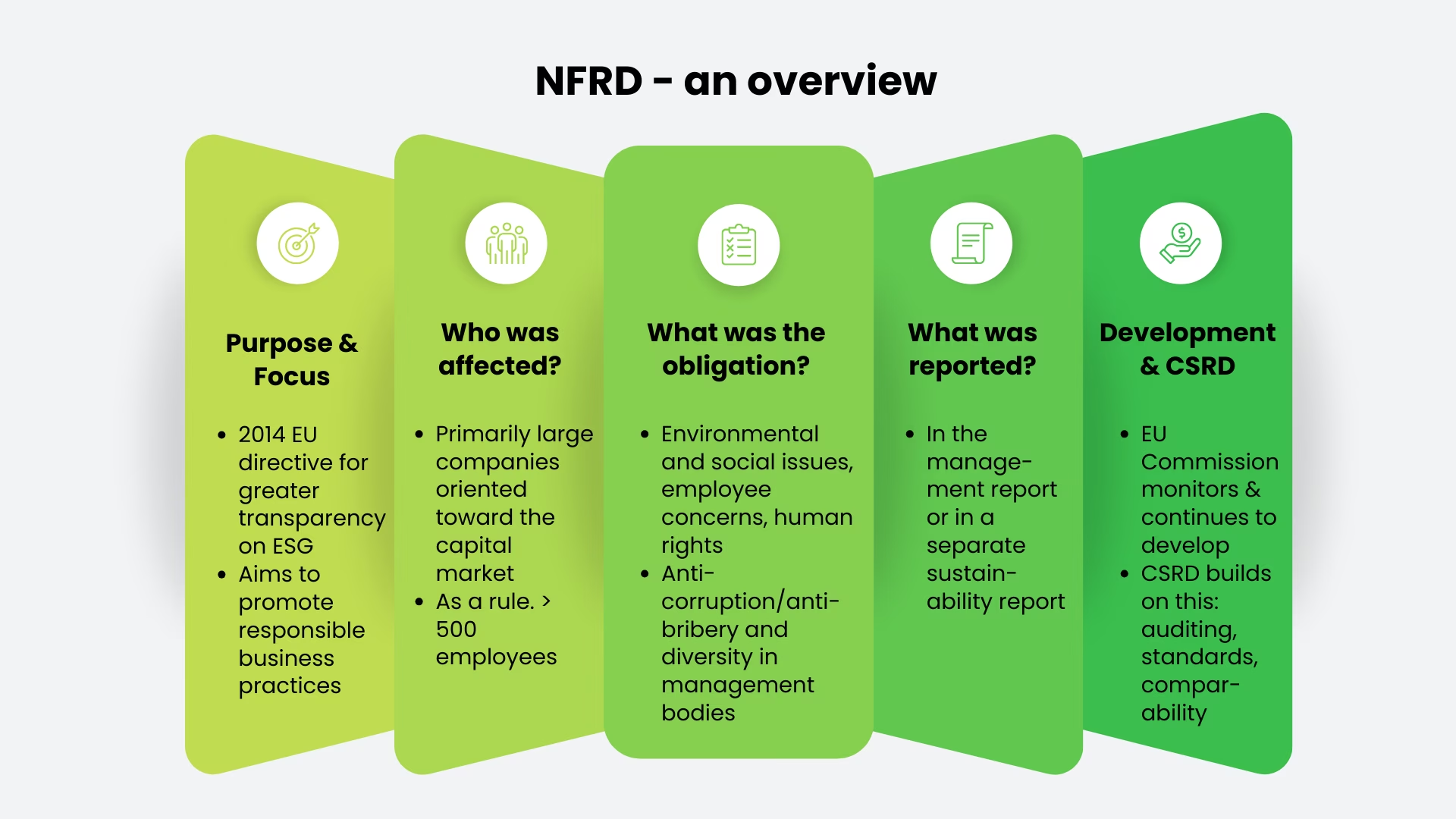
The Non-Financial Reporting Directive (NFRD ) is an EU directive that obliges capital market-oriented companies to report on non-financial information. This directive, which was introduced in 2014, aims to increase transparency with regard to environmental, social and governance (ESG) aspects and thus promote responsible business practices. This affects certain large companies with more than 500 employees, which must disclose detailed reports on their environmental and social impact, employee matters, human rights, anti-corruption and anti-bribery and diversity policies.
This reporting obligation increases the transparency and accountability of large companies and strengthens the trust of investors, customers and the public. The requirements must be published in the management reports of the companies or in separate sustainability reports. The reporting is intended to make companies' ESG strategies and results transparent and enable comparability by setting clear and strict disclosure requirements.
The European Commission monitors compliance with the directive and works continuously on its further development. The introduction and development of the NFRD marked a significant milestone in the history of ESG reporting and laid the foundation for the forthcoming Corporate Sustainability Reporting Directive (CSRD), which will expand on the NFRD and introduce additional requirements.
Thetransition from the NFRD to the CSRDpresents companies with new challenges, but also offers them the opportunity to improve their sustainability strategies and increase their competitiveness. The CSRD brings with it stricter audit requirements and harmonized European reporting standards to further increase transparency and comparability.
The Non-Financial Reporting Directive (NFRD) is an EU directive that obliges companies to disclose non-financial information. It was introduced in 2014 with the aim of making reporting more transparent, particularly in areas such as environmental, social and governance (ESG). This should make it easier for stakeholders to understand how responsibly a company is actually acting.
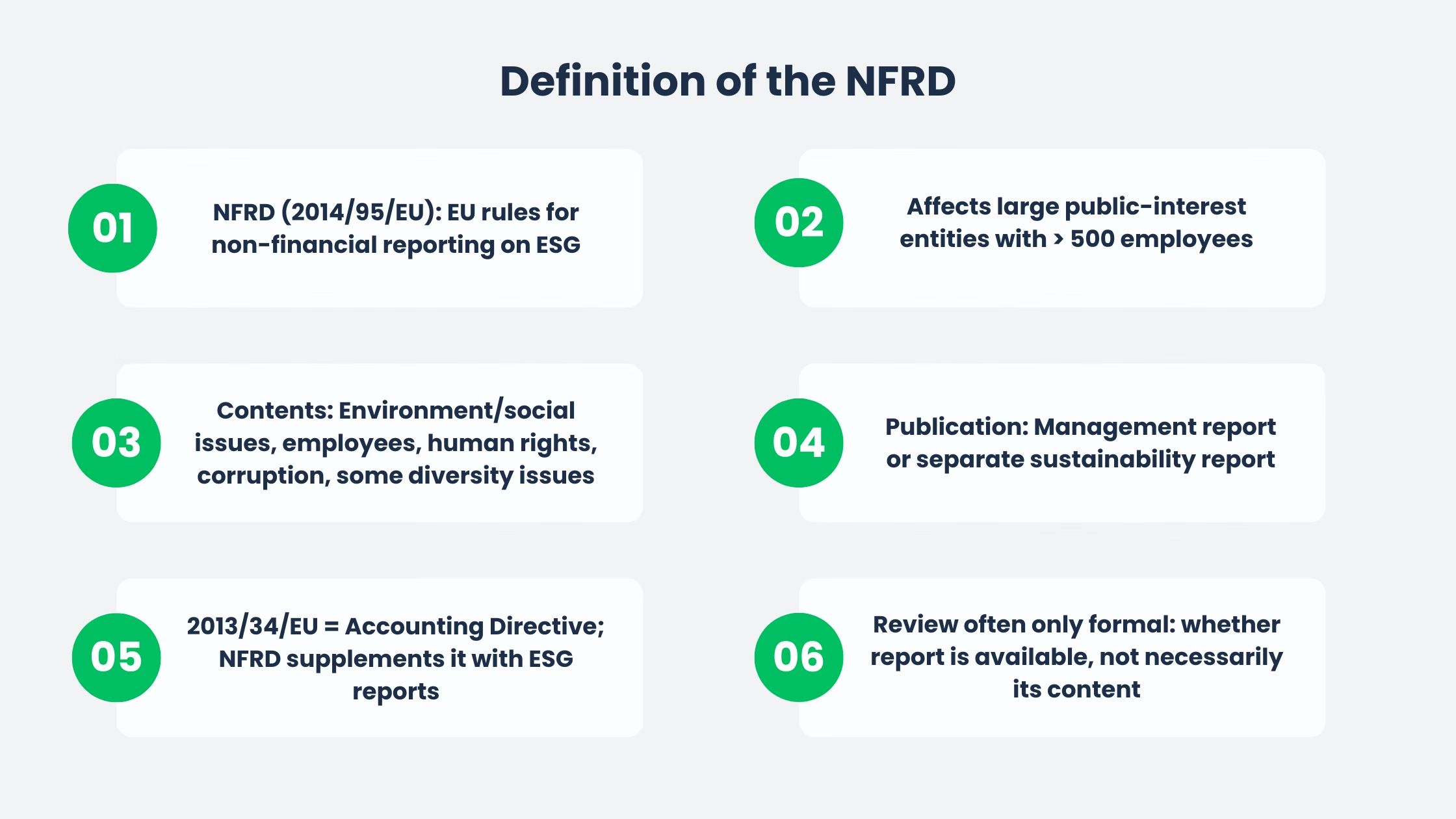
The NFRD(Directive 2014/95/EU) applied to certain large companies and groups that are classified as "public interest entities". If they had an annual average of more than 500 employees, they had to publish a non-financial statement. This included, for example, information on environmental and social issues, employee matters, human rights and the fight against corruption. Directive 2013/34/EU is the Accounting Directive and primarily regulates annual financial statements, consolidated financial statements and management reports. The NFRD (2014/95/EU) builds on this and supplements these requirements with the obligation for non-financial reporting.
The directive required companies to publish this information either in the management report or in a separate sustainability report. In it, they should explain how they deal with issues such as the environment and social issues and what they specifically do to avoid or reduce risks to people and the environment.
An important point of the NFRD was that companies had to disclose how they are positioned with regard to environmental, social and governance (ESG) issues, i.e. what strategy they are pursuing and what results they are achieving. This was intended to create more trust and at the same time increase the pressure to operate more sustainably. Because the reports were structured according to similar guidelines, it was also easier to compare companies with one another. This created more competition to see who was really acting responsibly.
With the directive on non-financial reporting, the EU has taken an important step towards anchoring sustainable business practices more firmly in companies and gearing the markets as a whole towards a "greener" future. For some companies, the implementation was initially complex and unfamiliar. However, many also saw it as a real opportunity: Those who report transparently at an early stage and take sustainability seriously can clearly set themselves apart and benefit from this in the long term.
The European Commission has ensured that the requirements are adhered to and, if necessary, has developed the directive further so that it meets new requirements. Overall, the NFRD has ensured that companies report more transparently and integrate sustainability more strongly into their work, a step towards a more responsible economy.
Under the NFRD, in many cases there was no obligation to audit the content as there was under the CSRD. Auditors often had to primarily check whether a non-financial statement or a separate report was provided.
The introduction of the Non-Financial Reporting Directive marked a significant milestone in the history of ESG reporting. But how did this directive come about and what are its objectives? A look at the historical development and background provides interesting insights into the origins and purpose of this groundbreaking regulation.
The idea behind the obligation to disclose non-financial information originated in the early 2000s. At that time, there was a growing awareness in the EU that companies were not only economically responsible, but also socially and environmentally responsible.
At the same time, global issues such as climate change, social inequalities and various corporate scandals came to a head. This increased the pressure for companies to be more open about how they operate and what impact they have. The EU has therefore recognized this: Clear, binding rules are needed to make sustainability reports more standardized and comparable.
The EU adopted the NFRD in 2014 and it was implemented in Germany via the CSR Directive Implementation Act (CSR-RUG). Since then, certain large companies with more than 500 employees have had to report on how they are positioned with regard to environmental and social issues.
The idea behind this: To clarify the environmental and social impact of business activities - and what the company is specifically doing to identify and reduce risks in these areas.
The obligation to disclose non-financial information was an important step towards a more sustainable economy. Because the reports are prepared according to similar guidelines, companies can be better compared with each other. This also creates more competition: those who work more sustainably can demonstrate this more clearly.
Specifically, companies must provide information, for example on environmental issues, social issues, employee rights, human rights and the fight against corruption. This openness strengthens the trust of customers, investors and other stakeholders and helps companies to be more responsible and stable in the long term.
An important reason for the directive was to provide investors and other stakeholders with better information. If companies show how they deal with environmental, social and governance (ESG) issues, others can better assess this and evaluate risks more easily.
The directive is also intended to encourage companies to act more sustainably, i.e. to work in a way that is good for people and the environment in the long term.
The directive on non-financial reporting was not the end, but rather the beginning. Since then, the EU has continued to develop the rules because requirements and expectations are constantly changing. With the upcoming Corporate Sustainability Reporting Directive (CSRD), the NFRD will be expanded, so to speak. New and stricter requirements will be added to make sustainability reports even more transparent and companies more comparable with one another.
The Directive on Transparency of Non-Financial Business Practices has a decisive influence on how companies report on their sustainable activities. It ensures that sustainability becomes an integral part of corporate strategy and thus contributes to a more responsible and sustainable economy.
Is your company now subject to the CSRD? Our guide will provide you with all the information you need to implement the directive in a compliant manner.

The European Union has developed two important directives to promote sustainability in companies: the Non-Financial Reporting Directive (NFRD) and the Corporate Sustainability Reporting Directive (CSRD). Both directives aim to promote transparency and accountability. However, there are significant differences and similarities that need to be considered.
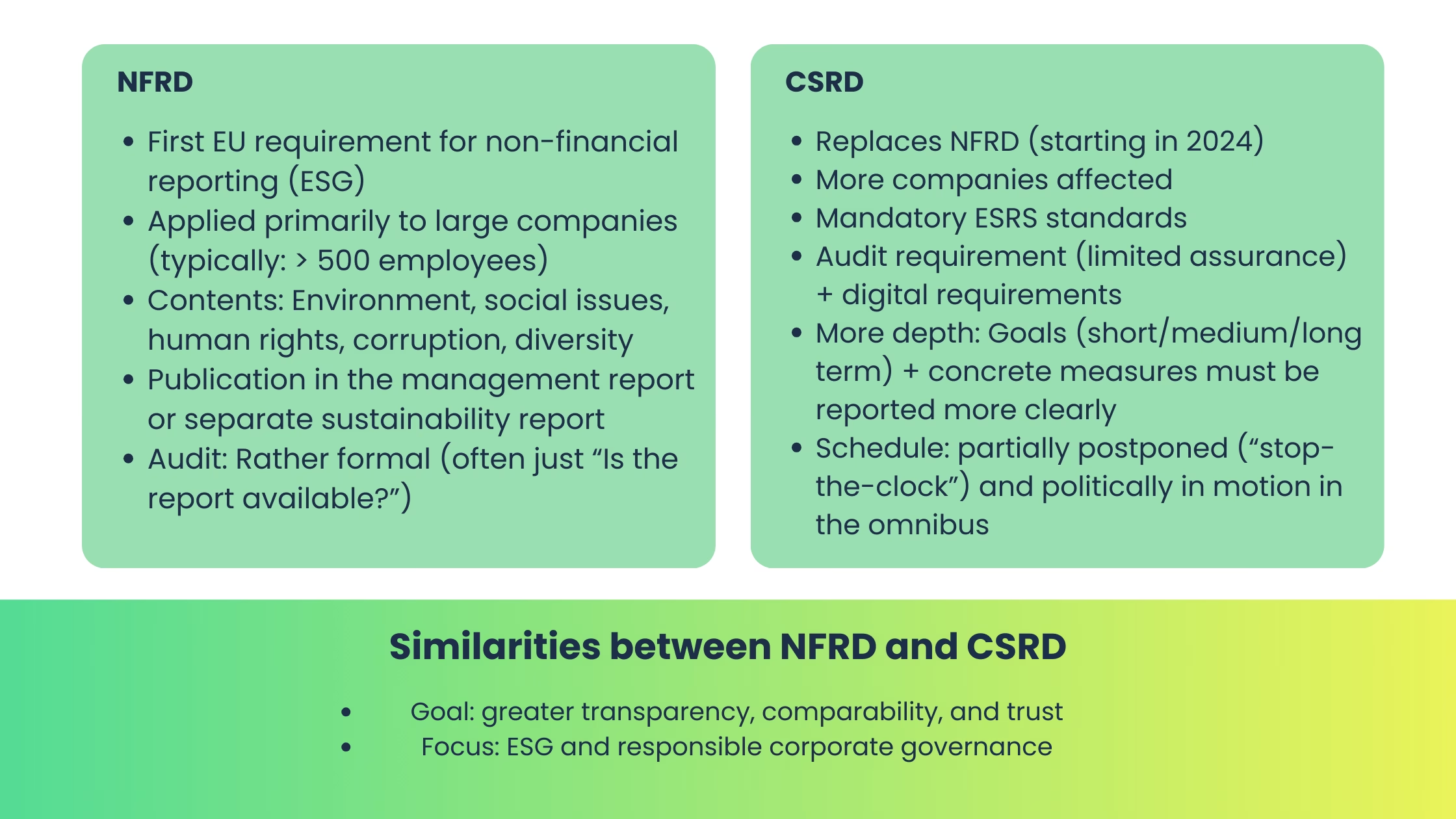
The NFRD was the first EU directive that required large companies to report on non-financial information. The aim was to create uniform standards for the disclosure of environmental, social and governance aspects. Companies with more than 500 employees had to submit reports on their sustainability practices, employee matters, human rights, anti-corruption and diversity. These reports were to be included in the management reports or published as separate sustainability reports.
The CSRD has replaced the NFRD since 2024 and introduces mandatory ESRS standards, limited assurance and digital requirements. However, the "stop-the-clock" Directive (EU) 2025/794 has postponed the entry dates for many companies by two years. At the same time, the CSRD scope of application is being politically reshaped as part of the omnibus package (provisional agreement Dec 2025). While the NFRD was only applied to large companies, the CSRD (more on the CSRD) now also includes listed small and medium-sized enterprises (SMEs) and other large companies that were previously not covered by the Non-Financial Disclosure Regulation. This leads to a significant expansion of the scope of application.
Another important difference is the scope and depth of reporting. The CSRD requires more detailed and comprehensive disclosures on ESG criteria. Public interest entities must now disclose specific information on their short, medium and long-term sustainability goals and the measures they are taking to achieve these goals. The CSRD also requires reports to be prepared in accordance with uniform European standards and audited by independent third parties.
Both directives aim to improve the transparency and comparability of sustainability reporting and strengthen the confidence of investors and the public. Both the regulation on the disclosure of non-financial information and the CSRD promote more sustainable corporate governance and contribute to a responsible economic system.
The change from the NFRD to the CSRD entails more comprehensive and stricter reporting obligations. Companies face new challenges, but must also adapt to improved standards and practices.
One of the main changes is the expansion of the scope of the CSRD. Companies that were not previously required to report must now prepare for the new requirements. This requires a thorough review and adaptation of their internal processes for data collection and reporting.
The CSRD introduces stricter auditing requirements. While reports under the old regulation were based on self-certification, the information under the CSRD must be verified by independent auditors. This is intended to increase the credibility and reliability of the reports and strengthen stakeholder confidence.
The CSRD also introduces harmonized European reporting standards to ensure that all companies report according to the same criteria. This makes it easier to compare and evaluate sustainability performance across different companies and sectors.
The change from the Non-Financial Reporting Directive to the CSRD brings new challenges for companies, but also offers opportunities. Companies can improve their sustainability strategies and become more competitive. Compliance with the new regulations helps to minimize legal risks, strengthen investor and customer confidence and contribute to a sustainable future.
Fulfill all NFRD and CSRD requirements in one tool
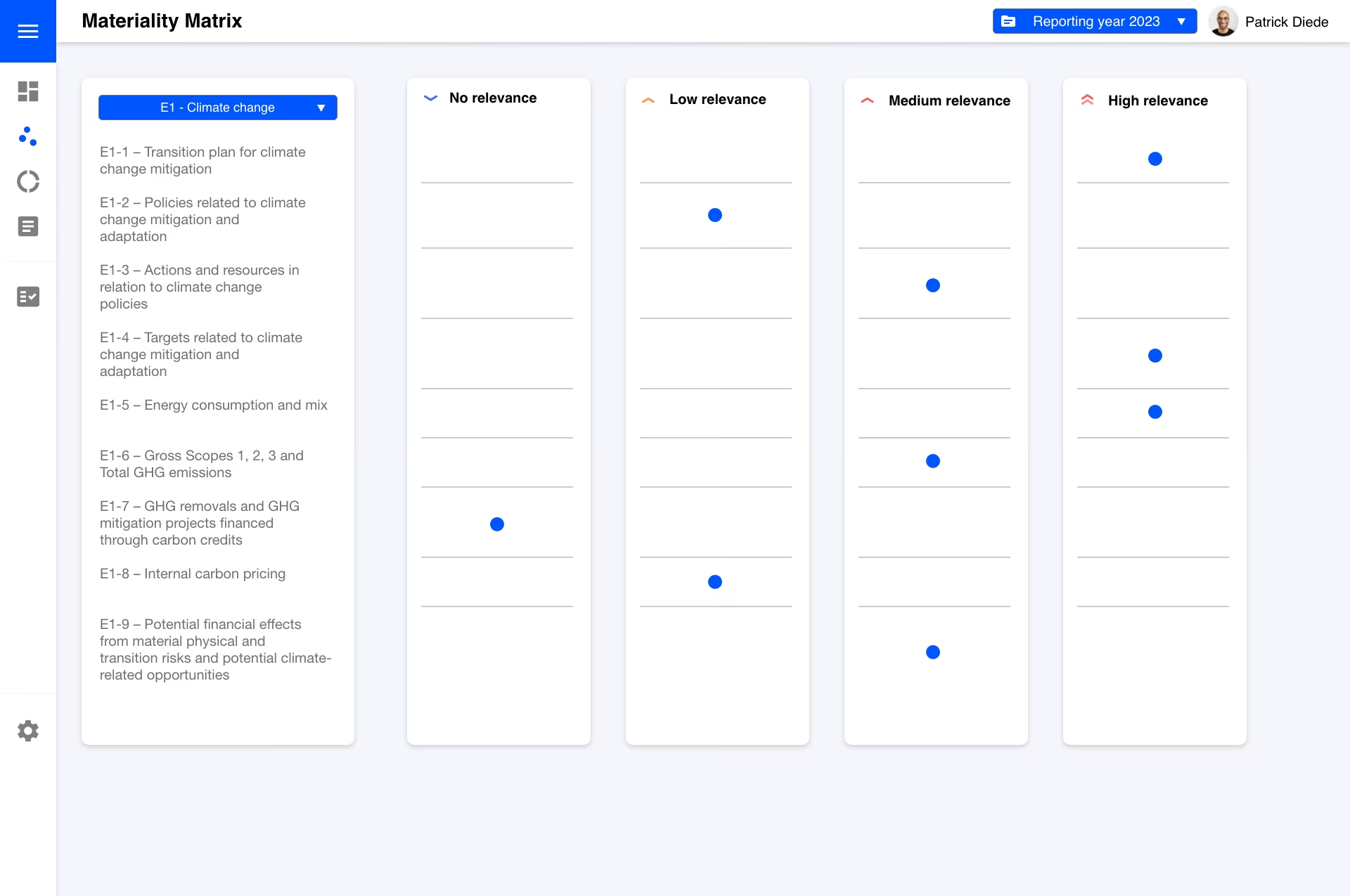
The directive was aimed at large companies that play a significant role in the European economy. But which companies are specifically obliged to report?
It applies to all companies that meet the following criteria:
Large listed companies, credit institutions and insurance companies in the EU must prepare non-financial reports. The aim is to increase the transparency and accountability of these companies and to strengthen the trust of investors, customers and the public.
These companies must regularly report on how they deal with environmental, social and governance issues. This includes, for example, their environmental impact, social issues, employee and human rights as well as how they deal with corruption and bribery. The purpose behind this is clear: companies should work more sustainably and identify problems in these areas at an early stage and avoid them as far as possible.
One important point is that companies must disclose which sustainability goals they are pursuing. They should explain how they incorporate issues such as the environment, social issues and good corporate governance into their decisions and what they are actually doing to become more sustainable. This makes it easier to compare companies with one another. And that increases the pressure to really act sustainably, not just talk about it.
However, there are also exceptions and special regulations that can limit the scope of the directive on non-financial reporting. Small and medium-sized enterprises (SMEs) are generally exempt from the reporting obligation, unless they are listed on a stock exchange. Subsidiaries whose parent company already submits a consolidated report in accordance with NFRD requirements may also be exempt from the individual reporting obligation.
EU member states can define additional requirements or simplifications to the NFRD. Companies must therefore carefully examine the specific regulations of their Member State and ensure that they comply with all national regulations.
The directive on non-financial reporting is flexible and adaptable through exemptions. It promotes standardized reporting in the EU. This supports sustainable corporate governance and increases transparency for all stakeholders.
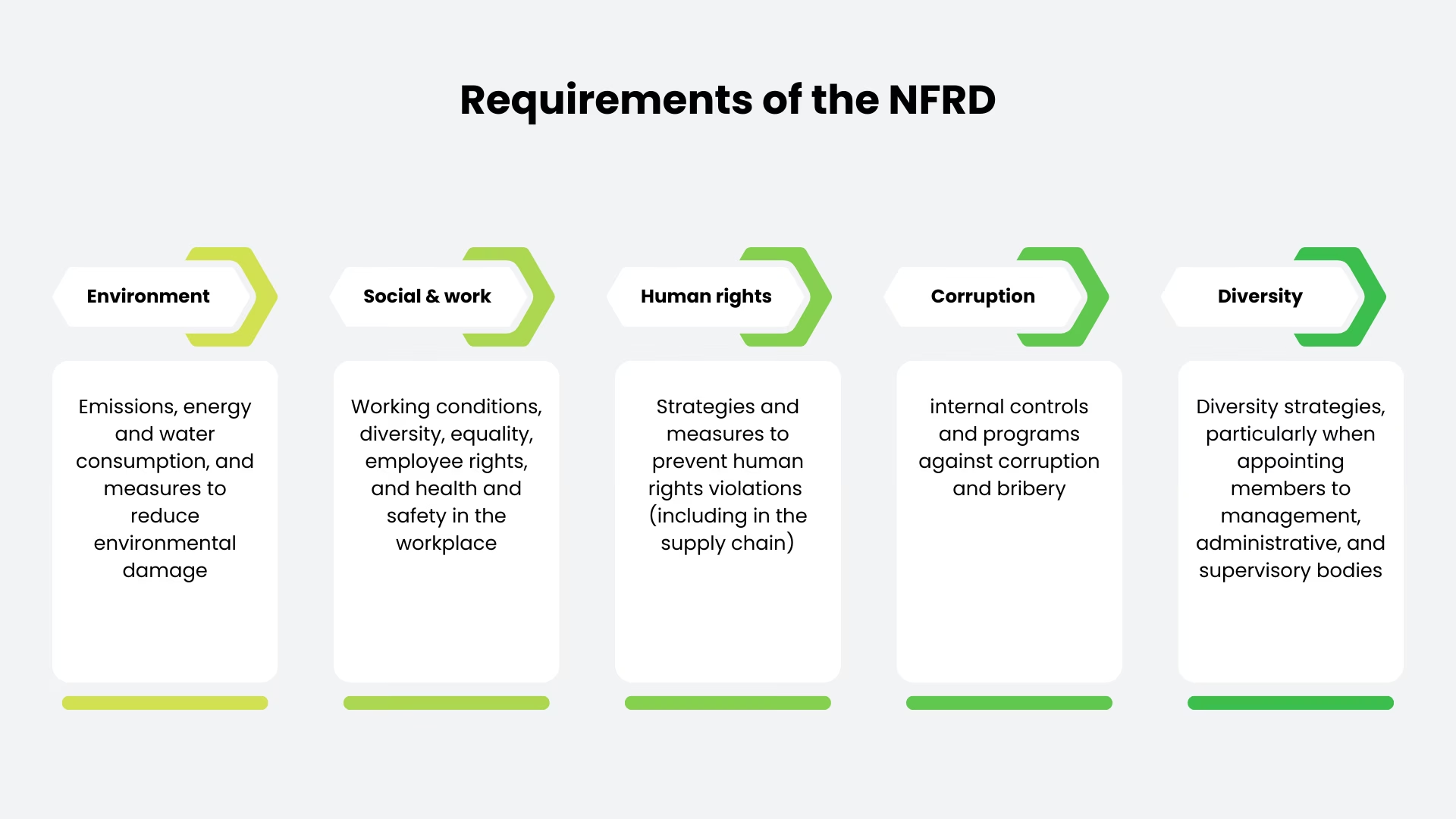
The Non-Financial Reporting Directive provides clear guidelines on what non-financial information companies must disclose. This includes reporting on their environmental issues, social impact and corporate governance.
These reports are intended to achieve one thing above all: greater transparency. This enables investors and other stakeholders to better assess how responsibly a company acts and build trust.
Companies are obliged to disclose information on the following aspects:
This information must be published in the management reports of the companies or in separate sustainability reports. The reports should be prepared in accordance with recognized reporting standards, such as the guidelines of the Global Reporting Initiative (GRI) or the standards of the Sustainability Accounting Standards Board (SASB). This ensures a high level of comparability and reliability of the information.
The preparation of an NFRD report starts with thorough planning. First, the company forms a team from various departments, such as Finance, Sustainability, Human Resources and Legal. This team coordinates the entire reporting process and ensures that all relevant information is collected and presented in a structured manner.
A clear plan is needed for implementation to work: who does what and by when? It is also important to know the exact requirements of the NFRD and to decide early on which standard should be used for reporting, for example GRI or SASB.
Many companies seek additional support for this, for example from external consultants or auditors. This helps to comply with legal requirements and create a report that is clean and comprehensible.
The next step is to collect and analyze relevant data. This is often the most time-consuming part, as a lot of different information has to be collected and evaluated. Companies need to collect data on the environment, social aspects, employee rights, human rights and anti-corruption. This data comes from internal sources such as environmental management systems, employee surveys, supplier evaluations and compliance reports.
The data collected must be analyzed in detail in order to identify trends and risks and derive measures to improve sustainability. A thorough analysis helps to identify weaknesses and develop targeted measures to improve ESG performance. The data must be valid and reliable to ensure stakeholder confidence.
The final step is to write and submit the report. It should be clear and structured to maximize readability. A typical structure could include the following elements:
Once completed, the report should be reviewed by independent auditors to confirm its accuracy and completeness. The report must then be submitted and published in accordance with legal requirements. This can be done on the company website, in annual reports or in special sustainability reports.
The NFRD has significantly advanced sustainability reporting in the EU. Large companies must disclose how they deal with environmental, social and governance issues, such as human rights, employee concerns and the prevention of corruption. This creates transparency, strengthens investor and public confidence and makes risks and progress more visible and comparable.
At the same time, the reporting obligation brings with it new requirements for data collection and processes, but also offers companies opportunities: those who report credibly and consistently integrate sustainability into their strategy can position themselves positively in the market.
The CSRD is a consistent continuation of this approach: The obligations are being expanded and uniform European standards will make reports even more comparable and meaningful in future. Overall, the NFRD is therefore an important step towards more responsible business practices and long-term corporate success. In future, companies must be prepared to expand their disclosure of non-financial information.
The NFRD is an EU directive (2014/95/EU) that requires certain large companies to disclose non-financial information. The focus is on environmental, social and governance (ESG) issues to make sustainability performance more transparent.
No. Directive 2013/34/EU is the Accounting Directive (annual financial statements, management report, etc.). The NFRD (2014/95/EU) supplements this Accounting Directive with the obligation for non-financial reporting.
This mainly affected "public interest entities" such as capital market-oriented companies, banks and insurance companies. As a rule, the prerequisite was an annual average of more than 500 employees.
In addition to the number of employees, size criteria such as total assets and turnover are often used (e.g. total assets > € 20 million or turnover > € 40 million). The decisive factor in the end is the specific classification according to EU and national law.
Companies had to report on environmental issues, social and employee issues, human rights and anti-corruption, among other things. Diversity concepts in management and supervisory bodies were also included.
The information had to be included in the management report or published as a separate non-financial report/sustainability report. It is important that they are officially accessible and comprehensibly documented.
The NFRD should create transparency so that stakeholders can better assess how responsibly a company is acting. At the same time, it should motivate companies to recognize ESG risks earlier and to operate more sustainably.
Under the NFRD, there was often no review of content as under the CSRD. In many cases, the main focus was on checking whether a non-financial statement or report existed at all.
In Germany, this was implemented via the CSR Directive Implementation Act (CSR-RUG). This transposed the EU requirements into national law and integrated them into the reporting processes.
The CSRD replaces the NFRD and significantly expands the reporting obligations: more companies affected, binding standards (ESRS) and digital requirements. The requirements for auditing and the level of detail of the disclosures are also increasing.

 DE
DE